
U.S. uranium production more than tripled in 2025 and was the highest since 2017
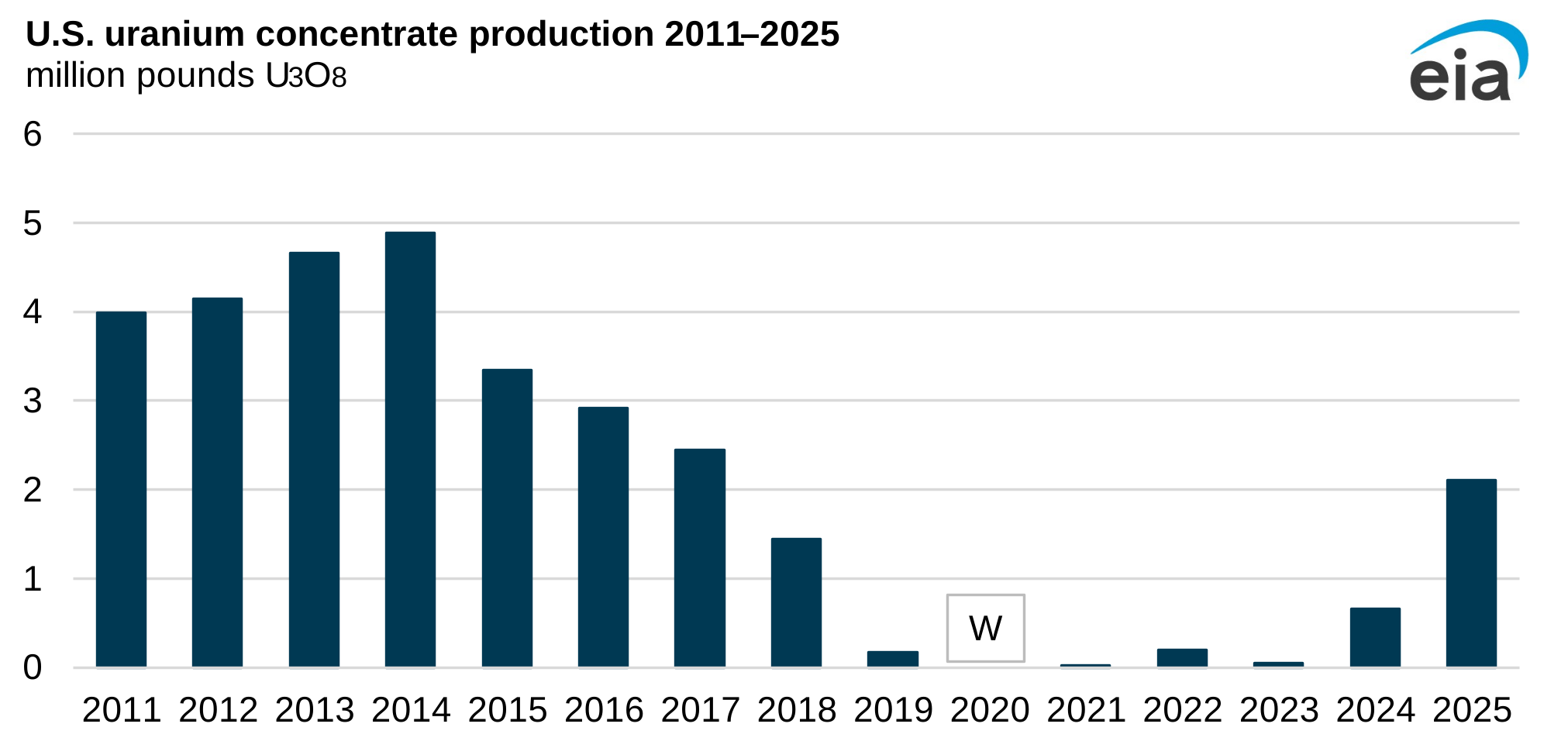
Note: W=Data withheld to avoid disclosure of individual company data.
In 2025, uranium concentrate production in the United States totaled 2.1 million pounds of triuranium octoxide (U3O8), the base component of nuclear reactor fuel. U.S. U3O8 production in 2025 was the most since 2017 and more than triple the volume produced in 2024.
Producing U3O8—often called yellowcake for its powdered, yellow appearance—is one of the first steps in making fuel for nuclear reactors. After uranium ore is mined, it goes through a milling process where uranium is extracted from the ore, producing U3O8, which is then processed at conversion and enrichment facilities. The enriched uranium is made into fuel pellets that are assembled into fuel rods for nuclear reactors.
In 2025, exploration drilling to locate, map, and evaluate underground uranium deposits included 1,824 holes with total footage surpassing 1.0 million feet, up from the 1,324 holes with a total footage of 0.6 million feet drilled in 2024. Development drilling to measure the size, shape, and grade of known uranium deposits totaled 3,708 holes with total footage of 1.30 million feet in 2025, up from 2,462 holes and 1.26 million feet in 2024.
In 2025, owners and operators of U.S. nuclear plants purchased a total of 46.9 million pounds of U3O8 equivalent, down from 55.9 million pounds in 2024. Purchases were made from both domestic and foreign suppliers at a weighted-average price of $58.46 per pound, 11% higher than the 2024 weighted-average price of $52.71 per pound.
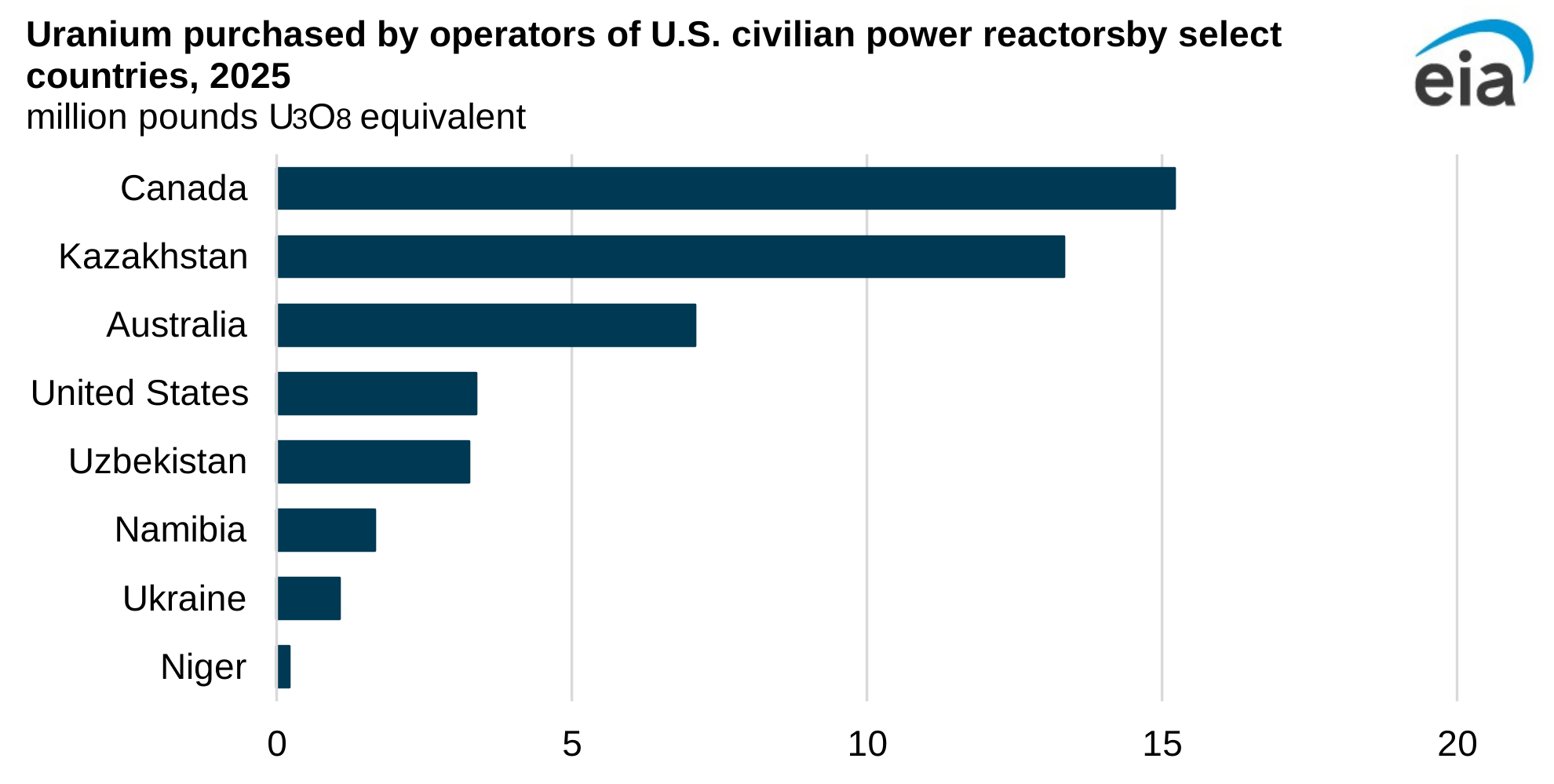
Note: U3O8=triuranium octoxide. Total purchases from foreign countries in 2025 total 43.5 million pounds. Some data are withheld to avoid disclosure of individual company data.
Most of the U3O8 delivered to U.S. nuclear plants in 2025 was of foreign origin, with Canada as the top source at 32% of total deliveries, followed by Kazakhstan (28%) and Australia (15%). U.S.-origin material accounted for 7% of total deliveries in 2025.
More information regarding U.S. uranium production and sourcing is available in EIA’s Domestic Uranium Production Report and Uranium Marketing Annual Report.
Principal contributor: Slade Johnson
Tags: uranium