
Energia Costa Azul, Mexico’s second LNG terminal, shipped first cargo
North America liquefied natural gas export facilities (2016–2031)
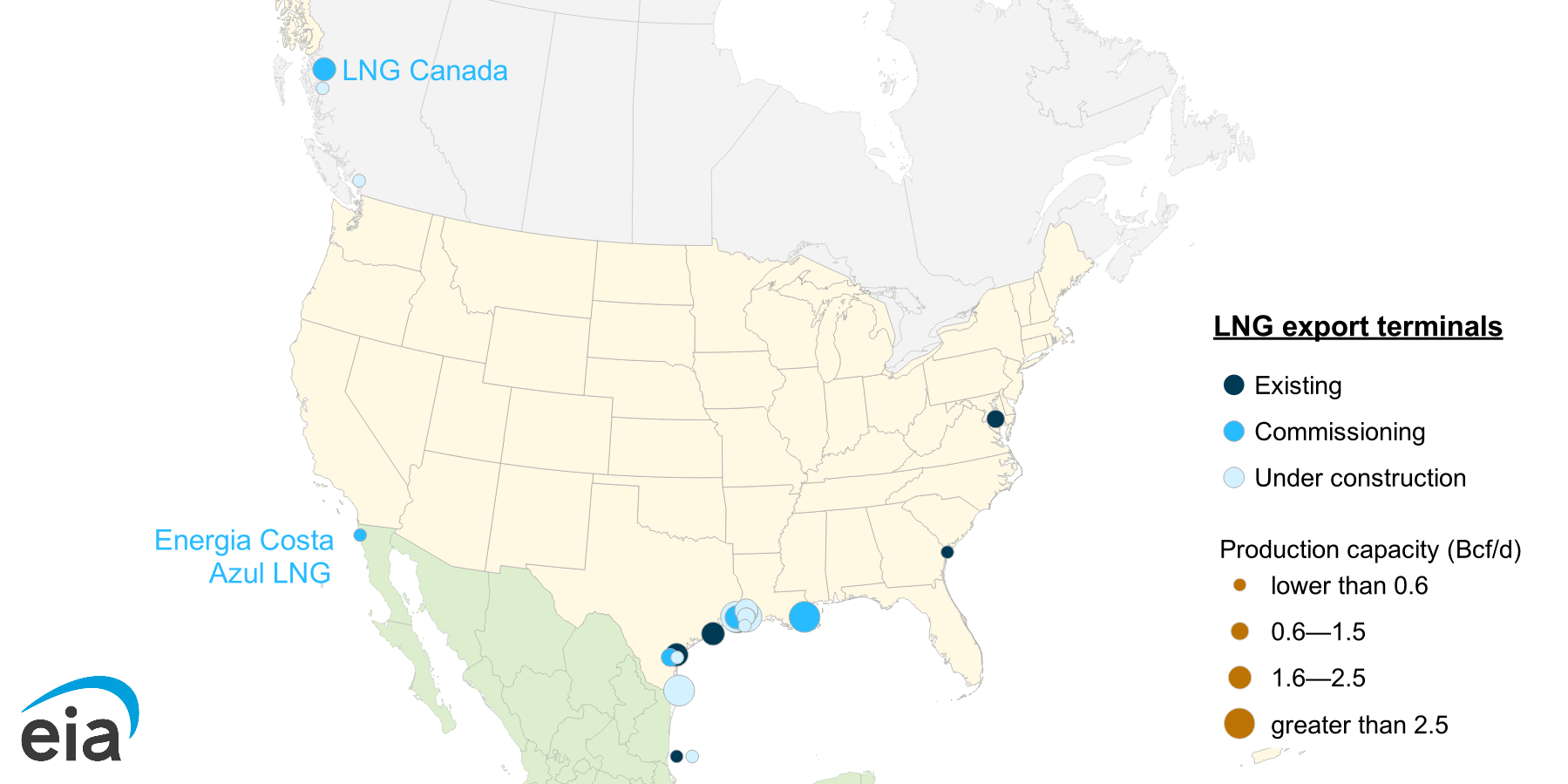
Note: Bcf/d=billion cubic feet per day; LNG=liquefied natural gas; FLNG=floating liquefied natural gas. Sites that are listed as commissioning have introduced feedgas, system testing, and first LNG production and exports but have not started meeting long-term shipping obligations.
Energia Costa Azul, the second liquefied natural gas (LNG) export facility in Mexico, shipped its initial cargo from Phase 1 of the terminal on July 8, according to the project developer. The completion of the project adds 0.4 billion cubic feet per day (Bcf/d) of nominal export capacity from a single train, tripling Mexico’s LNG export capacity. The facility is the first terminal in Mexico and the second in North America, following LNG Canada, to be located on the Pacific Coast, boosting North American export capacity there to 2.2 Bcf/d. The Pacific Coast location allows for shorter shipping routes to importers in Asia.
LNG exports from this project are subject to regulatory approvals by the U.S. Department of Energy (DOE) because the facility is supplied with natural gas sourced from the United States. DOE has authorized 0.50 Bcf/d of LNG exports from Energia Costa Azul Phase 1 to countries that have a Free Trade Agreement (FTA) with the United States and 0.44 Bcf/d of LNG exports to non-FTA countries.
Sempra has proposed a second phase of the project, which if constructed would add 1.6 Bcf/d of nominal export capacity from two large-scale trains.
Principal contributor: Jordan Young