
U.S. wind generation hit record in April 2024, exceeding coal-fired generation
This TIE was updated August 14, 2024 and August 27, 2024 to correct the units.
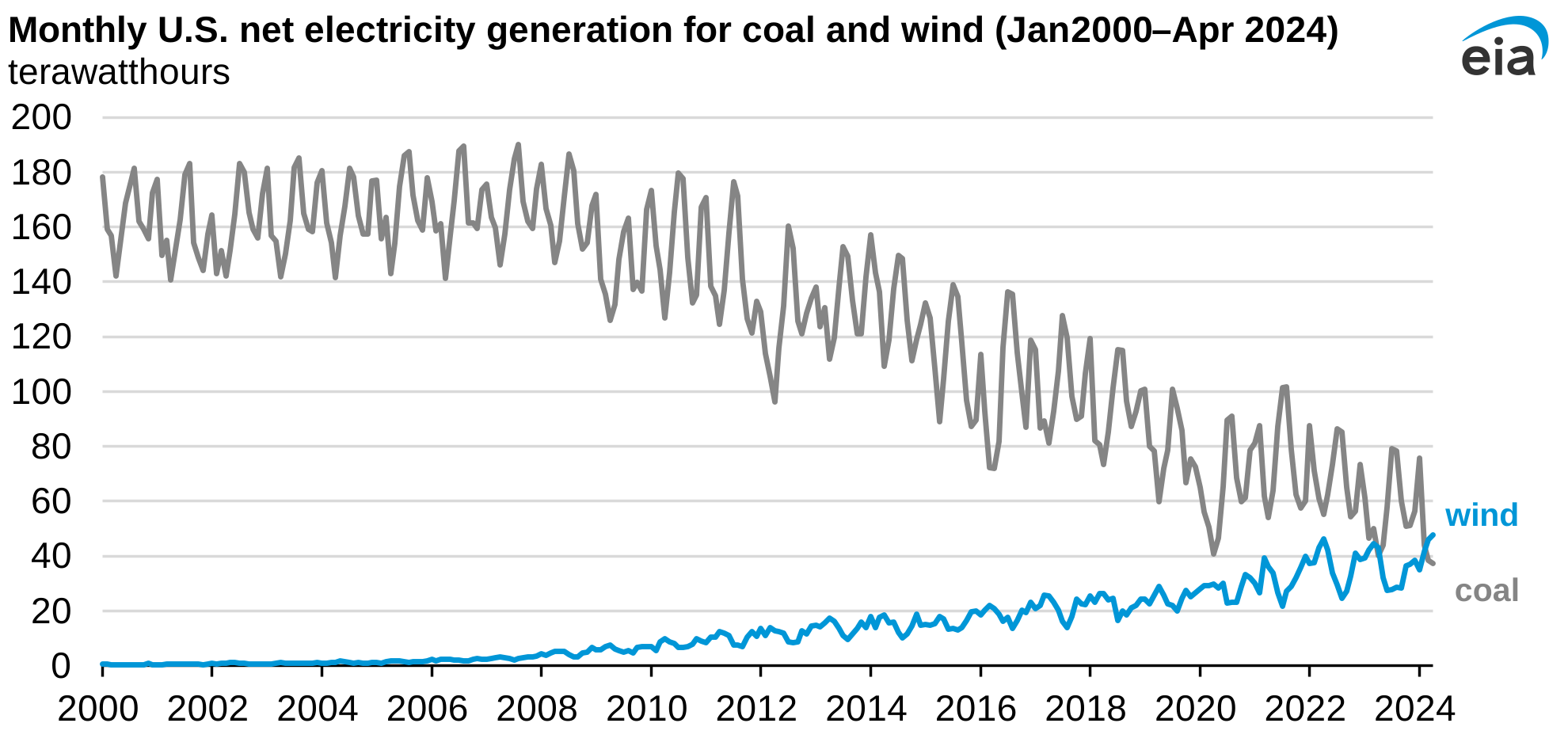
Electricity generation from wind established a new record in the United States in April, and wind generation exceeded coal-fired generation in both March and April, data from our July 2024 Monthly Energy Review show.
U.S. wind generation exceeded coal-fired generation for the first time in April 2023 but did not do so again until 11 months later. This past spring was the first time U.S. wind generation has exceeded coal-fired generation for two months in a row. Wind power generally produces the most electricity in the springtime in the United States.
Wind installations in the United States produced 45.9 terawatthours (TWh) of electricity in March 2024, compared with 38.4 TWh from coal-fired power plants. In April 2024, coal-fired generation fell to 37.2 TWh. Wind generation, meanwhile, increased to a record 47.7 TWh. However, during the first four months of 2024, coal-fired generation was 15% higher than wind generation in the United States.
Recent electricity generation from coal and wind is much different compared with 20 years ago. In March 2004, coal-fired generation produced 154.3 TWh of electricity, while wind produced 1.3 TWh.
Installed wind power generating capacity has increased substantially in the United States over the last 25 years, growing from 2.4 gigawatts (GW) in 2000 to 150.1 GW in April 2024. By contrast, a substantial number of coal plants have retired over the past 25 years, with total coal capacity falling from 315.1 GW in 2000 to 177.1 GW by April 2024.
Other sources of electricity generation have also increased during the time that coal-fired generation has declined. Since 2000, electricity from solar power has increased by 99.1 TWh, and generation from natural gas, which is often more price competitive than coal in electricity market dispatch, has increased by 287.6 TWh.
Following the record wind capacity additions of more than 14.0 GW in both 2020 and 2021, introduction of new U.S. wind facilities has slowed in the last two years. Operators expect 7.1 GW of wind capacity to come online in the United States in 2024, according to our July Monthly Energy Review.
After 22.3 GW of U.S. coal-fired electric generating capacity retired over the past two years, operators plan to slow coal retirements in 2024. Operators plan to retire 2.8 GW of coal-fired capacity in 2024, data from our July Monthly Energy Review show.
Principal contributors: Kimberly Peterson, Mark Morey
Tags: coal, electricity, electric generation, wind