
U.S. natural gas consumption reached multiyear lows this past January and February
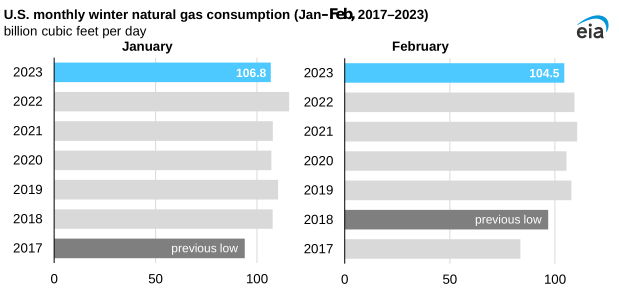
Note: Natural gas consumption in February 2023 is a STEO estimate.
Mild winter temperatures and reduced natural gas consumption in the residential and commercial sectors drove down overall U.S. natural gas consumption this past January and February, according to our Short-Term Energy Outlook (STEO). In January 2023, U.S. natural gas consumption averaged 106.8 billion cubic feet per day (Bcf/d), its lowest January volume since 2017. February 2023 natural gas consumption averaged 104.5 Bcf/d, its lowest February volume since 2018.
U.S. natural gas consumption in January was 8% less than year-ago levels and 3% less than the five-year average (2018–22) for January. February natural gas consumption was 4% less than year-ago levels and 1% less than the five-year February average. Natural gas consumption in the residential and commercial sectors, which was down 16% in January and 12% in February from the same months in 2022, was low because above-average winter temperatures reduced seasonal heating demand.
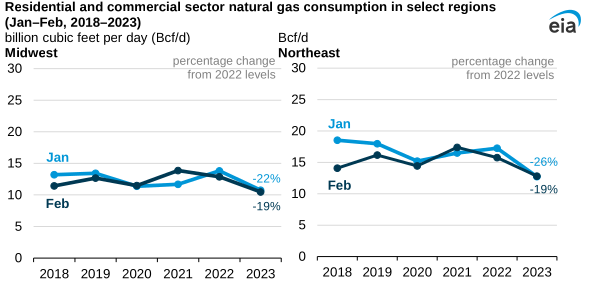
Natural gas accounts for 70% of space-heating fuel in the Midwest Census Region and 52% in the Northeast Census Region, according to our Residential Energy Consumption Survey (RECS). In the Midwest, 20% less natural gas was consumed in the residential and commercial sectors during the first two months of 2023 compared with the first two months of 2022, and 16% less natural gas was consumed than the five-year average for the two months combined.
Similarly, in the Northeast, 23% less natural gas was consumed in the residential and commercial sectors during the first two months of 2023 compared with the same period in 2022, and 22% less natural gas was consumed than the five-year average for the two months combined.
In the West Census Region, temperature anomalies that influence heating demand affect natural gas consumption in the electric power sector more than in the residential and commercial sectors. The West experienced one of the coldest winters in years, with 23% more natural gas consumed in the electric power sector during the first two months of this year than in January and February 2022, and 33% more than the five-year average for the two months combined.
Principal contributor: Katy Fleury