
State tax rates for retail gasoline and diesel increased in 13 states in 2023
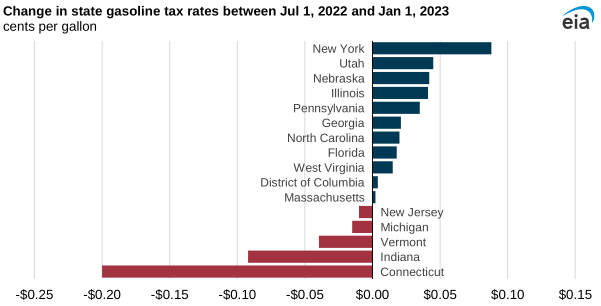
Note: Tax rates increased by $0.001/gal in Arkansas and by $0.0005/gal in Missouri. These states are not shown because the values are so small.
In January 2023, state taxes and fees on gasoline and diesel fuel averaged $0.3163 per gallon (gal) of gasoline and $0.3388/gal of diesel fuel, according to our federal and state motor fuels taxes table. These taxes have increased in 13 states since July 2022.
Illinois surpassed California as the state with the highest taxes ($0.674/gal), while Connecticut temporarily surpassed Alaska as the state with the lowest gasoline taxes ($0.05/gal), although that low tax rate will gradually increase through May 2023.
Several states increased their fuel tax rates in January 2023, and many states ended the fuel-tax holidays they implemented in 2022. For example, New York State taxes for both diesel and gasoline rose $0.088/gal in January 2023 compared with July 2022. Other states, including Florida, Georgia, and Maryland, will also end their suspensions of at least some part of their taxes on motor fuels during 2023.
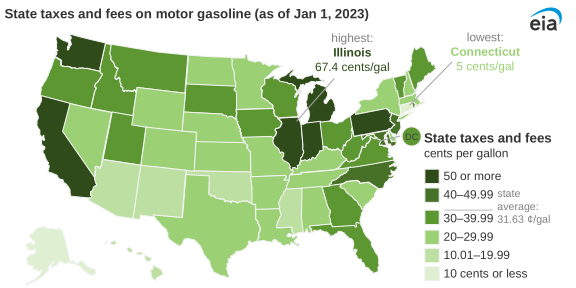
Note: As the gasoline tax rate in Connecticut gradually increases, Alaska will become the lowest gasoline tax state effective February 1, 2023.
In many cases, fuel-tax deferments were possible because of surpluses in state budgets. A National Association of State Budget Officers (NASBO) report shows an average 14.5% year-on-year rise in general fund revenue for the 2022 fiscal year, following a record-setting increase of 16.6% in fiscal year 2021.
The surplus in Connecticut’s Special Transportation Fund funded an eight-month suspension of the state’s gasoline tax in 2022. In 2023, the state plans to phase the tax back in by $0.05/gal per month until the full $0.25/gal gasoline tax is restored by May 1, 2023.
Federal excise tax rates remain at $0.183/gal for gasoline and $0.243/gal for diesel fuel. The Leaking Underground Storage Tank (LUST) Fund adds an additional $0.001/gal federal fee. The 2022 Inflation Reduction Act reinstated the Hazardous Substance Superfund financing rate on domestic crude oil and imported petroleum products, which refinery operators and importers pay. These Superfund taxes include a $0.09 per barrel (b) ($0.002/gal) Oil Spill Liability Trust Fund (OSLTF) tax and a $0.164/b ($0.004/gal) Hazardous Substance Superfund tax. The 2022 law revived a tax that previously expired in 1995, the Hazardous Substance Superfund tax rate. The Superfund tax rate will now be adjusted annually to account for inflation.
Although these taxes often include small fees that finance environmental protection and other dedicated funds, the federal and state governments use most of the revenue to build and maintain roads and other transportation infrastructure. Both federal and state taxes are applied at the wholesale level in the product distribution stream. The businesses involved in these transactions pay the taxes, but the cost is passed on to the ultimate consumer as part of the market price for the product.
Principal contributor: EIA Staff
Tags: prices, gasoline, liquid fuels, taxes, diesel, states, map, oil/petroleum