
Global allowance prices for CO2 emissions increased by over 40% in 2021
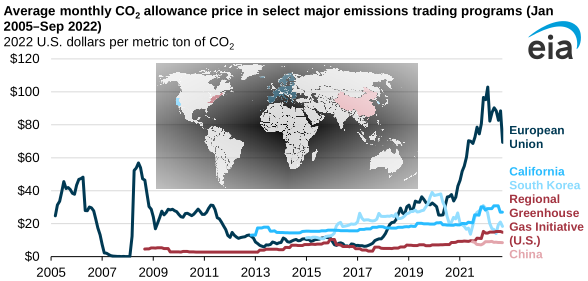
Average allowance prices for CO2 emissions increased by over 40% in four of the world’s five largest carbon emissions trading systems between January 2021 and January 2022, according to data from the International Carbon Action Partnership.
Emissions trading systems are government programs that regulate CO2 emissions. Regulated entities—such as power generators and industrial firms—can buy and sell CO2 emissions allowances, which permit them to release a specified amount of a greenhouse gas.
Five of the largest emissions trading systems (by trading volume) in the world are:
- The European Union’s Emissions Trading System (EU-ETS)
- The Korea Emissions Trading System (KETS)
- The California Cap and Trade Program
- The Regional Greenhouse Gas Initiative (RGGI), covering certain states in the U.S. Northeast and mid-Atlantic
- China’s National Emission Trading System (China-ETS)
The China-ETS is relatively new, coming online in 2021; the other four emissions trading systems have been in place for several years. With the exception of the China-ETS, allowance prices in each of these emissions trading systems significantly increased through 2021.
The most significant increase in allowance prices occurred in the EU-ETS. Between January 2021 and January 2022, the monthly average allowance price for the EU-ETS more than doubled, increasing from $46 per ton to $95 per ton (in inflation adjusted 2022 U.S. dollar terms). Prices in the California Cap and Trade Program increased at a slightly slower rate of 46%, rising from $19 per ton to $28 per ton. Similarly, allowance prices increased in the KETS by 43%, from $21 per ton to $29 per ton. Prices in RGGI increased by 54%, from $9 per ton to $14 per ton.
The rising allowance prices in each of these emissions trading systems are affected by local economies. The COVID-19 pandemic affected all of the emissions trading systems. Many countries experienced economic growth following the initial economic downturn caused by the pandemic. As economies grow, demand for energy increases, much of which is powered by fossil fuels. This increase in fossil fuel consumption raises the value of emissions allowances, as reflected in increased prices.
Many of these emissions trading programs also entered new phases, or stages of implementation, in 2021. The new phases imposed stricter regulations on emissions, which lowered the emissions cap and put upward pressure on allowance prices.
Between January and September 2022, trends in average monthly allowance prices varied widely across emissions trading systems, which may be attributed, in part, to the high degrees of uncertainty in global energy markets this year. During the same time period, average allowance prices decreased by $26 per ton (27%) in the EU-ETS, $11 per ton (37%) in the KETS, $1 per ton (4%) in the California Cap and Trade Program, and by $1 per ton (6%) in the China-ETS. Average allowance prices in RGGI remained relatively unchanged.
Principal contributors: O. Nilay Manzagol, Kevin Nakolan
Tags: prices, international, emissions, CO2 (carbon dioxide)