
Owners of coal-fired generating plants seek greater fuel flexibility
The amount of electric power produced from coal has been steadily declining in the United States over the past 10 years, falling to a 46-year low of 773,393 gigawatthours (GWh) in 2020. Although U.S. coal-fired generation increased by 16% to 898,679 GWh in 2021, we forecast a continued move away from coal. To be more competitive in the electric power market, some coal-fired plants are adding natural gas-fired generation to their coal-fired capacity (a fuel-flexible plant).
The decline in U.S. coal-fired generation has mostly been a result of coal-fired plants becoming uneconomical compared with other sources of fuel for electric power. This loss of competitiveness has resulted in nearly one-third of the U.S. coal-fired fleet retiring since 2008, leaving about 205,000 megawatts (MW) in operation as of June 2022.
Some coal-fired power plant owners have taken steps to make their plants more competitive rather than permanently closing them, including making their plants fuel flexible. Adding this flexibility has allowed the plants to better respond to market conditions by burning the fuel that is most economical at the time.
We identified 13 U.S. thermal plants that converted to fuel flexible in the past five years. Eight plants are located in the southeastern United States, mostly in Florida and the Carolinas. Arizona, Louisiana, Pennsylvania, Missouri, and Oklahoma each have one plant. The 13 plants have a total generating capacity of 16,522 MW.
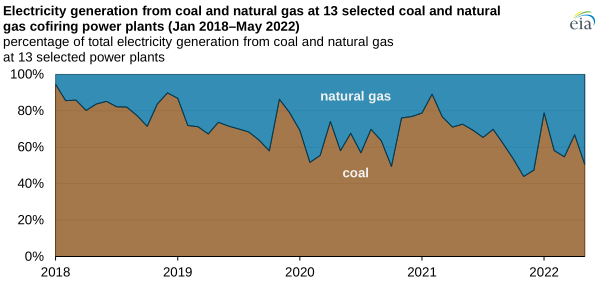
The 13 fuel-flexible plants have collectively diversified their fuel mix, consuming increasing amounts of natural gas. The share of natural gas use versus coal use at these plants increased from 10% natural gas in 2018 to 30% natural gas late in 2019, before reaching 38% natural gas in 2020, according to data from our Power Plant Operations Report. The rise in the natural gas share peaked when natural gas prices sank to very low levels in 2020.
The advantage of being fuel flexible became apparent after 2020, when many of the 13 plants that used large amounts of natural gas when natural gas prices were low could switch back to coal when natural gas prices rose. Coal’s share of generation at these plants rose above 80% during the winter of 2021, when natural gas prices started to rise.
Interestingly, these plants’ share of natural gas use rose again in the fall of 2021 and into 2022, despite a large jump in the average natural gas price. One explanation is that many coal plants could not adequately replenish their coal stockpiles during the fall and winter months of 2021 and 2022. According to data from our Power Plant Operations Report, coal inventories held by U.S. power plants declined by 24% during 2021 and had not been replenished by early 2022. This lack of inventory was primarily due to flat coal production in early 2022, combined with reports of delays in coal deliveries to power plants.
Although the flexibility to use both coal and natural gas may help these power plants extend their operations, competitive pressures in the market remain because the cost to be fuel flexible remains substantial.
Principal contributors: Mark Morey, Scott Jell
Tags: generation, coal, electricity, natural gas, power plants