
New pipelines carrying natural gas plant liquids increase natural gas processing
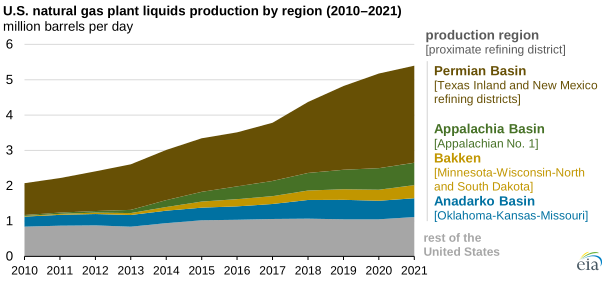
Note: PSM refining district level production data are allocated to proximate production basins.
In 2020 and 2021, more than 2,000 miles of new liquids pipelines were brought into service, according to our Liquids Pipeline Projects database. Several of these recent infrastructure projects were dedicated to transporting a mix of natural gas plant liquids (NGPLs), which are produced at natural gas processing plants from raw natural gas streams.
Natural gas plant liquids must be extracted from raw natural gas streams so the processed natural gas can be sold into the natural gas market. After these NGPLs—a mixture of ethane, propane, butanes, and natural gasoline known as the Y-grade mix—are separated from raw natural gas (primarily methane), they are shipped by pipeline for further processing.
The expanded Y-grade pipeline capacity has allowed natural gas processing plants to process more natural gas and to ship the extracted Y-grade mix at relatively low cost to fractionation plants. At the fractionation plants, the Y-grade mix is further processed into its components, which can then be marketed individually.
Of the 14 Y-grade pipeline projects completed in the past two years, 5 projects, accounting for more than 800,000 barrels per day (b/d) of new capacity, originate in the Permian Basin of West Texas and Southeast New Mexico. Natural gas production in the Permian Basin tends to have more NGPL content relative to the total volume of raw natural gas produced than most other basins in the United States.
The additional capacity to ship Y-grade from the Permian Basin and the completion of two major dry natural gas pipelines in the region (the Permian Express and Whistler) have facilitated growth in natural gas production in the Permian Basin at a time when crude oil production has remained relatively flat. NGPL production for the Texas Inland and the New Mexico refining districts, which overlap the Permian Basin, grew by 19%. Our Drilling Productivity Report (DPR) estimates that gross withdrawals of natural gas grew by 16% in the Permian Basin, nearly as fast as in those districts. During this same period, the DPR estimates that crude oil production in the Permian Basin in October 2021 equaled production levels in December 2019: 4.8 million b/d.
Principal contributor: Warren Wilczewski