
Mixed water supply conditions expected to affect hydropower outlook in Pacific Northwest
Note: GW=gigawatt
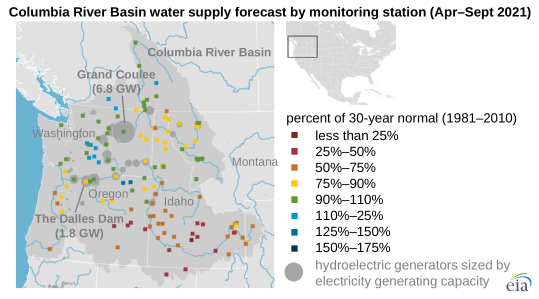
On April 1, the National Oceanic and Atmospheric Administration’s Northwest River Forecast Center (NWRFC) released its latest water supply forecast for the 2021 water year, which runs through September. The forecast shows near-average water supply in the northern half of the Columbia River Basin and below-average supply in the southern half. Abnormal to severe drought, particularly in Oregon, affected some regions in the southern half of the Columbia River Basin. Overall, EIA expects the forecast of near-to-below normal water supply across the region to decrease the electricity generated from hydropower this summer.
The Pacific Northwest, which includes the Columbia River Basin, houses more than one-third of U.S. hydropower capacity and generates enough electricity to power over 4 million homes. As such, hydroelectric supply in the Pacific Northwest can have implications for the use of other electricity-generating fuels in the region, such as natural gas, and for electricity trade with neighboring areas.
Two main factors help predict water supply in the region: seasonal precipitation and snowpack accumulation. The first factor, seasonal precipitation, influences soil moisture. Higher levels of soil moisture contribute to the preservation of the second factor, the region’s snowpack.
The 2021 water year, which began in October 2020, followed a hot and dry summer; precipitation levels were below normal across most of the region. However, both precipitation and snowpack accumulation started returning to normal levels in February 2021. In addition, below-normal temperatures in March helped preserve most of the snowpack.
Operators consider water flow at The Dalles Dam, a hydroelectric plant near the mouth of the Columbia River, to indicate water supply levels for the entire upstream Columbia River System. As of April 7, the NWRFC projects The Dalles Dam water supply forecast for April through September to be 83.7 million acre-feet, approximately 9.7% lower than the 30-year normal (1981–2010).
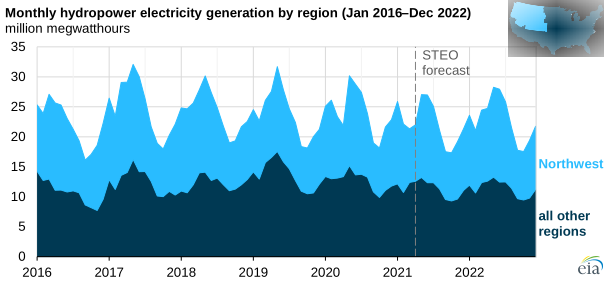
Because water supply and the subsequent hydroelectric generation can vary widely from year to year, these forecasts are closely monitored and used as inputs to our Short-Term Energy Outlook (STEO). The April 2021 STEO forecasts that hydropower plants will generate 267 million megawatthours of electricity in 2021, half of which will come from the Northwest. Overall, we expect hydroelectricity to account for 7% of U.S. electricity generation in 2021, almost one percentage point lower than in 2020.
Principal contributor: Lindsay Aramayo
Tags: production/supply, generation, electricity, Northwest, hydroelectric, map