
U.S. coal consumption continues to decline across all sectors
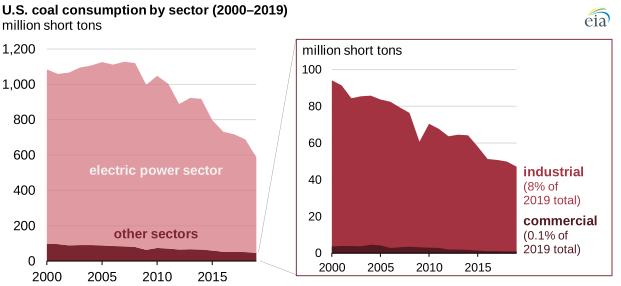
U.S. coal consumption has been declining since its peak in 2007 of 1.1 billion short tons. In 2019, U.S. coal consumption totaled 590 million short tons (MMst). The electric power sector accounts for the majority (more than 90%) of domestic coal consumption, but the industrial and commercial sectors also consume coal. Coal consumption in the industrial and commercial sectors has declined from 98 MMst in 2000 to 48 MMst in 2019.
The industrial sector includes coal consumed in coking plants, in manufacturing facilities, and for other industrial uses. In 2019, 62% of industrial coal consumption in the United States was used in manufacturing. U.S. Energy Information Administration (EIA) data on coal consumption by detailed manufacturing industry, based on North American Industry Classification System (NAICS) codes, show that food manufacturing and nonmetallic mineral products manufacturing consumed more coal than other industries in 2019.
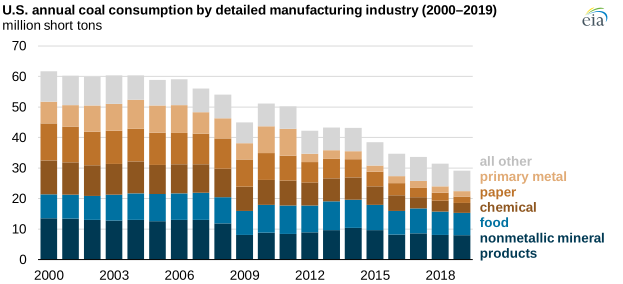
Coal consumption in food manufacturing has remained relatively stable since 2000. Food manufacturing uses coal largely for heating purposes. For example, in sugar manufacturing, sugar cane juice has to be boiled to extract the sugar crystals, requiring intense heat. Coal can also serve a secondary purpose of providing electricity for food processing facilities located in remote areas.
Although coal use has remained stable in food manufacturing, most other manufacturing industries have seen significant declines in coal consumption as a result of fewer facilities and less consumption at remaining facilities. The largest declines have been in the paper manufacturing, chemical manufacturing, and primary metal manufacturing industries.
The primary metal manufacturing industry includes the production of steel, silicon metals, and other metal and iron-based products. From 2010 to 2012, the industry’s coal consumption contracted sharply, dropping from 9 MMst to 3 MMst, and has since remained relatively low. The steel industry was significantly affected by the recession that occurred between 2007 and 2009 and the declines in housing starts, construction, and auto manufacturing that drive steel demand.
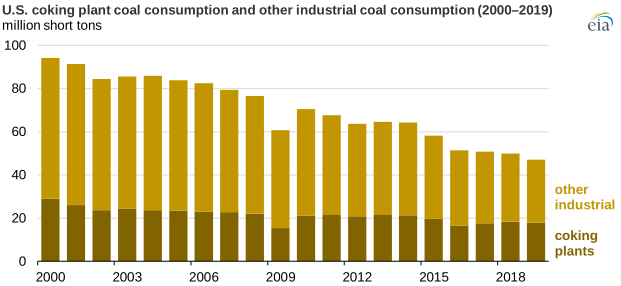
Another industrial use of coal is to produce coke. Coke is created by heating coal at high temperatures to burn off impurities, resulting in nearly pure carbon. Coal coke is used as a fuel in blast furnaces to make steel and smelting iron. Coking plant coal consumption has not declined as drastically as many other manufacturing industries, falling by 38% from 29 MMst in 2000 to 18 MMst in 2019.
The commercial and institutional sector, which includes universities, correctional facilities, and hospitals, accounts for the smallest portion of U.S. coal consumption, measuring less than half of 1% of the U.S. total since 1998. Between 2000 and 2019, commercial and institutional consumption declined from 4.1 MMst to 0.9 MMst. Many of the facilities in the commercial and institutional sector have switched from consuming coal for space heating to consuming natural gas.
Principal contributor: Kim Palacios
Tags: commercial, consumption/demand, coal, industrial