
EIA forecasts natural gas inventories will reach record levels later this year
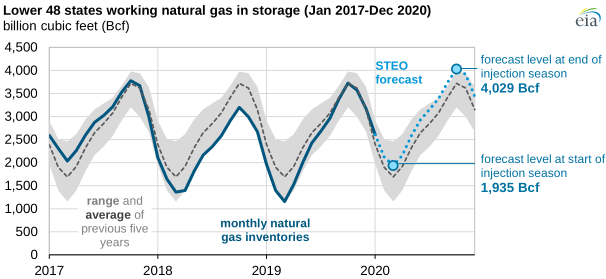
In the U.S. Energy Information Administration’s (EIA) February Short-Term Energy Outlook (STEO), EIA forecasts that the Lower 48 states’ working natural gas in storage will end the 2019–20 winter heating season (November 1–March 31) at 1,935 billion cubic feet (Bcf), with 12% more inventory than the previous five-year average. This increase is the result of mild winter temperatures and continuing strong production. EIA forecasts that net injections during the refill season (April 1–October 31) will bring the total working gas in storage to 4,029 Bcf, which, if realized, would be the largest monthly inventory level on record.
Mild winter temperatures for the current winter have put downward pressure on natural gas prices and led to smaller withdrawals from natural gas into storage. Year-over-year growth in dry natural gas production and natural gas exports—especially liquefied natural gas (LNG)—throughout 2019 also affected natural gas storage levels. On October 11, 2019, the total natural gas in storage surpassed the previous five-year average—an indicator of typical storage levels—for the first time since mid-2017.
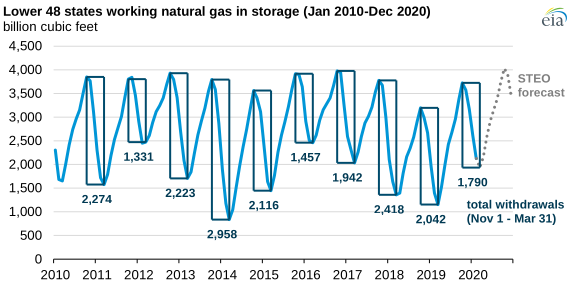
The total natural gas in storage at the start of this heating season was 3,725 Bcf on October 31, 2019. EIA expects withdrawals from working natural gas storage to total 1,790 Bcf at the end of March 2020. If realized, this would be the least natural gas withdrawn during a heating season since the winter of 2015–16, when temperatures were also mild.
Injections into and withdrawals from natural gas storage balance seasonal and other fluctuations in consumption. Natural gas demand is greatest in the winter months, when residential and commercial demand for natural gas for space heating increases. Natural gas consumption in the power sector is greatest in summer months, when overall electricity demand is relatively high because of air conditioning.
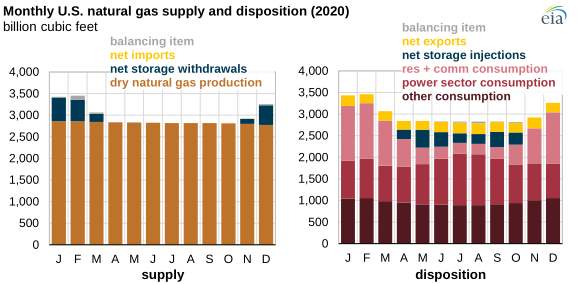
In the latest STEO, EIA expects the total working natural gas in storage will exceed the previous five-year average for the remainder of 2020, despite declines in dry natural gas production, increases in natural gas consumption in the electric power sector, and increases in natural gas exports. EIA expects monthly natural gas production to decline from last year’s record levels in 2020 as lower natural gas prices reduce incentives for natural gas-directed drilling and as lower crude oil prices reduce incentives for oil-directed drilling and associated gas production.
Principal contributor: Jose Villar