
Carbon dioxide emissions from the U.S. power sector have declined 28% since 2005
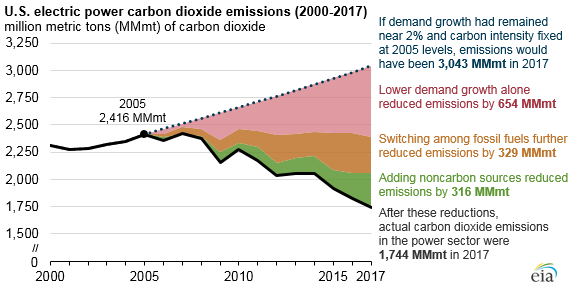
U.S. electric power sector carbon dioxide emissions (CO2) have declined 28% since 2005 because of slower electricity demand growth and changes in the mix of fuels used to generate electricity. EIA has calculated that CO2 emissions from the electric power sector totaled 1,744 million metric tons (MMmt) in 2017, the lowest level since 1987.
In the United States, most of the changes in energy-related CO2 emissions have been in the power sector. Since 2005, as power sector CO2 emissions fell by 28%, CO2 emissions from all other energy sectors fell by only 5%. Slower electricity demand growth and changes in the electricity generation mix have played nearly equal roles in reducing U.S. power sector CO2 emissions.
U.S. electricity demand has decreased in 6 of the past 10 years, as industrial demand has declined and residential and commercial demand has remained relatively flat. If electricity demand had continued to increase at the average rate from 1996 to 2005 (1.9% per year) instead of its actual average rate of -0.1% per year, U.S. power sector CO2 emissions in 2017 would have been about 654 MMmt more than actual 2017 levels. If the mix of fuels used to generate electricity had also stayed the same since 2005, U.S. power sector CO2 emissions would have been another 645 MMt higher in 2017.
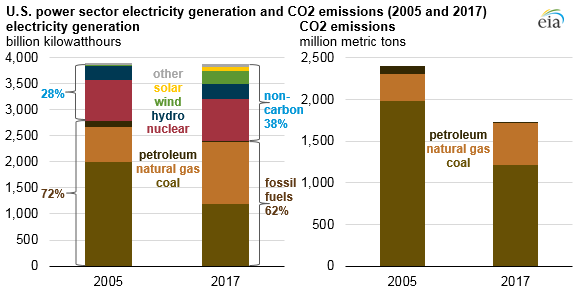
The power sector has become less carbon intensive as natural gas-fired generation displaced coal-fired and petroleum-fired generation and as the noncarbon sources of electricity generation—especially renewables such as wind and solar—have grown. The substitution of natural gas for other fossil fuels has largely been market driven, as ample supplies of lower-priced natural gas and the relative ease of adding natural gas-fired capacity have allowed it to pick up share in electric power generation in many markets. In 2016, natural gas generation surpassed coal as the largest source of electricity generation.
Increases in electricity generation from noncarbon power sources since 2005 also had an effect on emissions from power generation. This growth has been driven largely by state policies and federal tax incentives that encouraged adoption of renewables. In 2005, noncarbon sources accounted for 28% of the U.S. electricity mix. By 2017, that share had grown to 38%. Almost all of this growth was in renewables, including wind and solar, as shares for other noncarbon sources such as nuclear and hydroelectricity remained relatively flat.
Principal contributor: Perry Lindstrom