
More U.S. coal-fired power plants are decommissioning as retirements continue
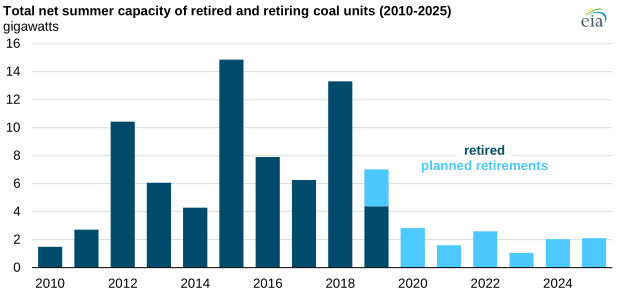
Between 2010 and the first quarter of 2019, U.S. power companies announced the retirement of more than 546 coal-fired power units, totaling about 102 gigawatts (GW) of generating capacity. Plant owners intend to retire another 17 GW of coal-fired capacity by 2025, according to the U.S. Energy Information Administration’s (EIA) Preliminary Monthly Electric Generator Inventory. After a coal unit retires, the power plant site goes through a complex, multi-year process that includes decommissioning, remediation, and redevelopment.
Coal-fired power plants in the United States remain under significant economic pressure. Many plant owners have retired their coal-fired units because of relatively flat electricity demand growth and increased competition from natural gas and renewables. In 2018, plant owners retired more than 13 GW of coal-fired generation capacity, which is the second-highest annual total for U.S. coal retirements in EIA’s dataset; the highest total for coal retirements, at 15 GW, occurred in 2015.
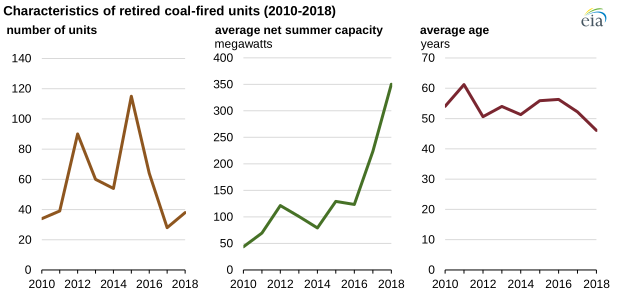
The annual number of retired U.S. coal units has declined since 2015, and the configuration of retired coal capacity has changed. Coal-fired units that retired after 2015 in the United States have generally been larger and younger than the units that retired before 2015. The U.S. coal units that retired in 2018 had an average capacity of 350 megawatts (MW) and an average age of 46 years, compared with an average capacity of 129 MW and average age of 56 years for the coal units that retired in 2015.
During a coal-fired plant’s decommissioning process, the electric-generating equipment—such as precipitators, boilers, turbines, and generators—are shut down and operating permits are terminated. Unused coal and materials associated with both the generation process and the buildings and structures are removed. The electric-generating equipment may be used at other plants or sold as scrap.
Unlike nuclear plant decommissioning, which is closely regulated by the Nuclear Regulatory Commission, the physical process of decommissioning a coal-fired power plant is not as firmly regulated in terms of specific procedure. The time required to physically decommission a coal-fired power plant varies and sometimes overlaps with remediation and redevelopment.
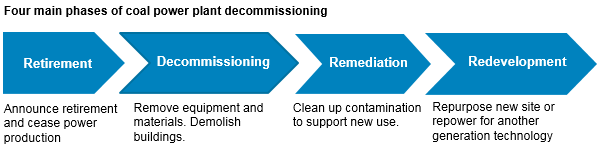
Remediation involves cleaning up hazardous materials to meet federal and state requirements. Remediation of coal combustion residuals (CCR), commonly known as coal ash, is the primary focus in coal plant decommissioning because it is one of the largest U.S. industrial waste streams. CCR can be disposed in onsite landfills or surface impoundments, known as coal ash ponds. CCR also can be moved offsite to be recycled into products such as concrete or wallboard.
The redevelopment of a decommissioned coal-fired plant may involve repurposing the site for another generation technology or some other commercial, industrial, or municipal application. Coal-fired power plants typically occupy land in or near downtown areas or along rivers, and they usually have access to railways, roadways, water, sewers, and other infrastructure.
Repowering a plant with natural gas-fired technology, such as a combined-cycle natural gas turbine plant, requires significantly less space than coal-fired configurations, which could cover hundreds of acres. Repowering a former coal-fired plant with natural gas-fired elements is a viable option for power providers because much of the critical infrastructure is already in place, including transmission lines, substations, and water.
Principal contributors: Slade Johnson, Kien Chau