
U.S. refining capacity decreased during 2025
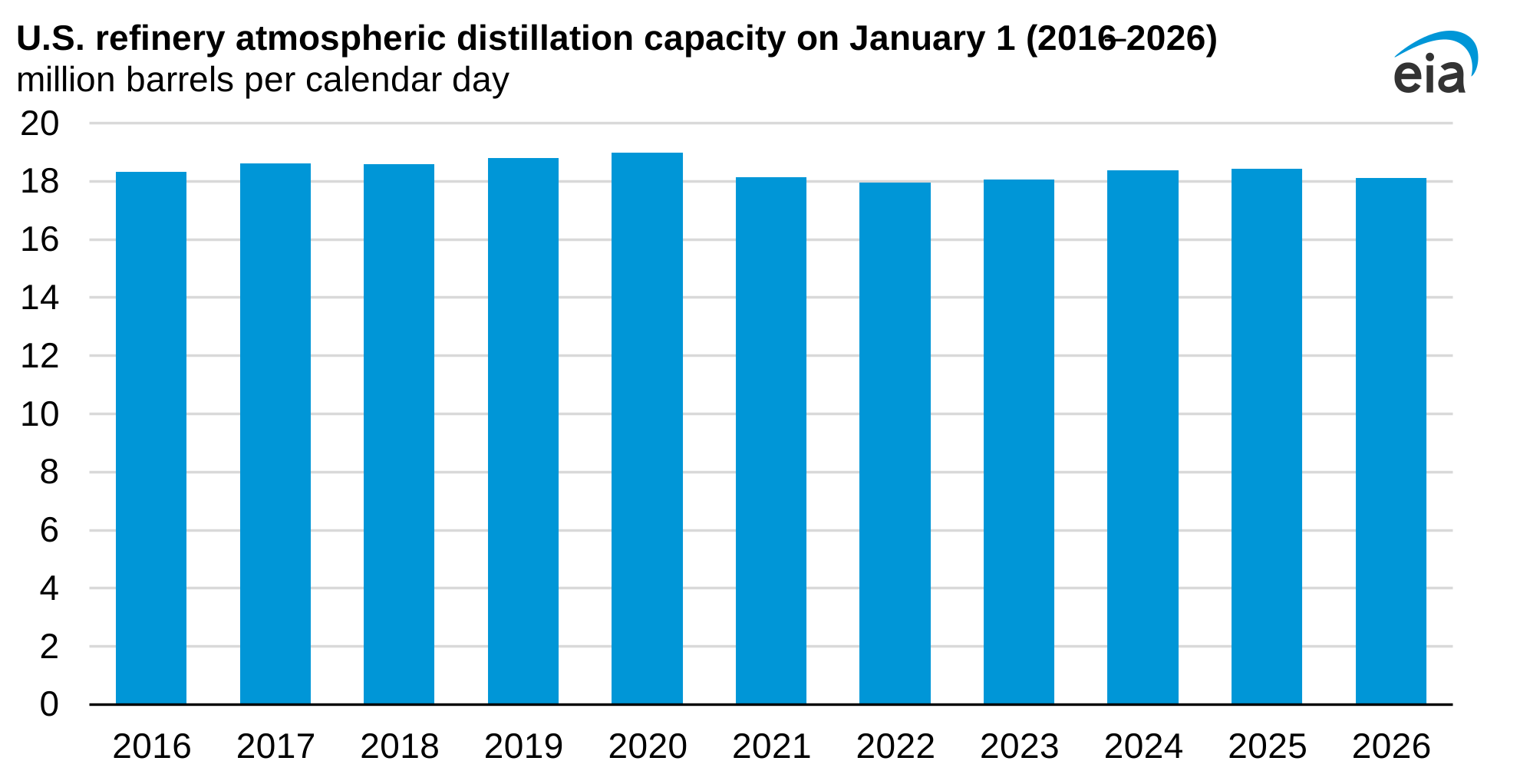
Note: Data reflect refinery capacity as of January 1 of the indicated year.
U.S. operable atmospheric distillation capacity, the primary measure of refinery capacity, totaled 18.2 million barrels per calendar day (b/cd) on January 1, 2026—down over 250,000 b/cd (about 1%) compared with January 1, 2025—according to our latest annual Refinery Capacity Report.
We publish two measures of refinery capacity in the report: barrels per calendar day and barrels per stream day. Calendar day capacity represents the operator’s estimate of the input volume that a distillation unit can process in a 24-hour period under usual operating conditions, factoring in both scheduled and unscheduled maintenance. The calendar day capacity reported by companies may differ slightly from other published figures because of differences in estimation methods.
Stream day capacity reflects the maximum input that a distillation facility can process within a 24-hour period when running at full capacity with an optimal crude oil and product slate and with no allowance for downtime. Stream day capacity is typically about 6% higher than calendar day capacity.
This year’s Refinery Capacity Report includes 130 operable refineries, two fewer than in 2025. LyondellBasell ended refining operations at its 263,776-b/cd refinery in Houston in March 2025, and Phillips 66 ceased operations at its 138,700-b/cd refinery in Los Angeles in October 2025. Combined, the closure of the two facilities represents a reduction in operable U.S. refinery capacity of about 400,000 b/d.
The loss of capacity from the two facilities is partly offset by marginal capacity increases at other, existing refineries.
The Phillips 66 Los Angeles refinery reflects a relatively small share of total U.S. refinery capacity, but its closure marks a 5% reduction in refinery capacity on the West Coast (PADD 5). Valero’s 145,000 b/d Benicia refinery is still included in the report, as it was still operational as of January 1, 2026. However, that refinery has also ceased refining operations, and its capacity was removed from our monthly capacity estimates as of March 2026. Relatively little pipeline capacity exists to supply petroleum products from large refinery hubs on the U.S. Gulf Coast to the West Coast, which means reductions in refinery capacity on the West Coast can have a larger impact on fuel availability in the region compared with other regions in the United States.
Although the LyondellBasell Houston refinery had greater distillation capacity, its closure represented a reduction of only 3% of regional refinery capacity on the U.S. Gulf Coast (PADD 3)—a region where more fuel is produced than consumed. Offset by marginal capacity increases at other U.S. Gulf Coast refineries, regional capacity decreased by less than 2% in 2025.
In 2026, the three-largest refiners in the United States—Marathon, Valero, and ExxonMobil—all reported calendar day capacity increases of less than 1% compared with 2025. These changes likely stem from small-scale process improvements, rather than major capacity expansions. Phillips 66, the fourth-largest refiner in the United States decreased its overall capacity in this year’s report, due to the closure of the Los Angeles refinery. Marginal capacity increases led Chevron to overtake PBF Energy as the fifth-largest refiner in the United States as of this year’s report.
Motiva’s Port Arthur refinery remains the largest U.S. refinery on a barrels-per-calendar-day basis, at 656,000 b/cd, while Marathon’s Galveston Bay refinery remains the largest in the United States on a stream-day basis at 678,000 barrels per stream day.
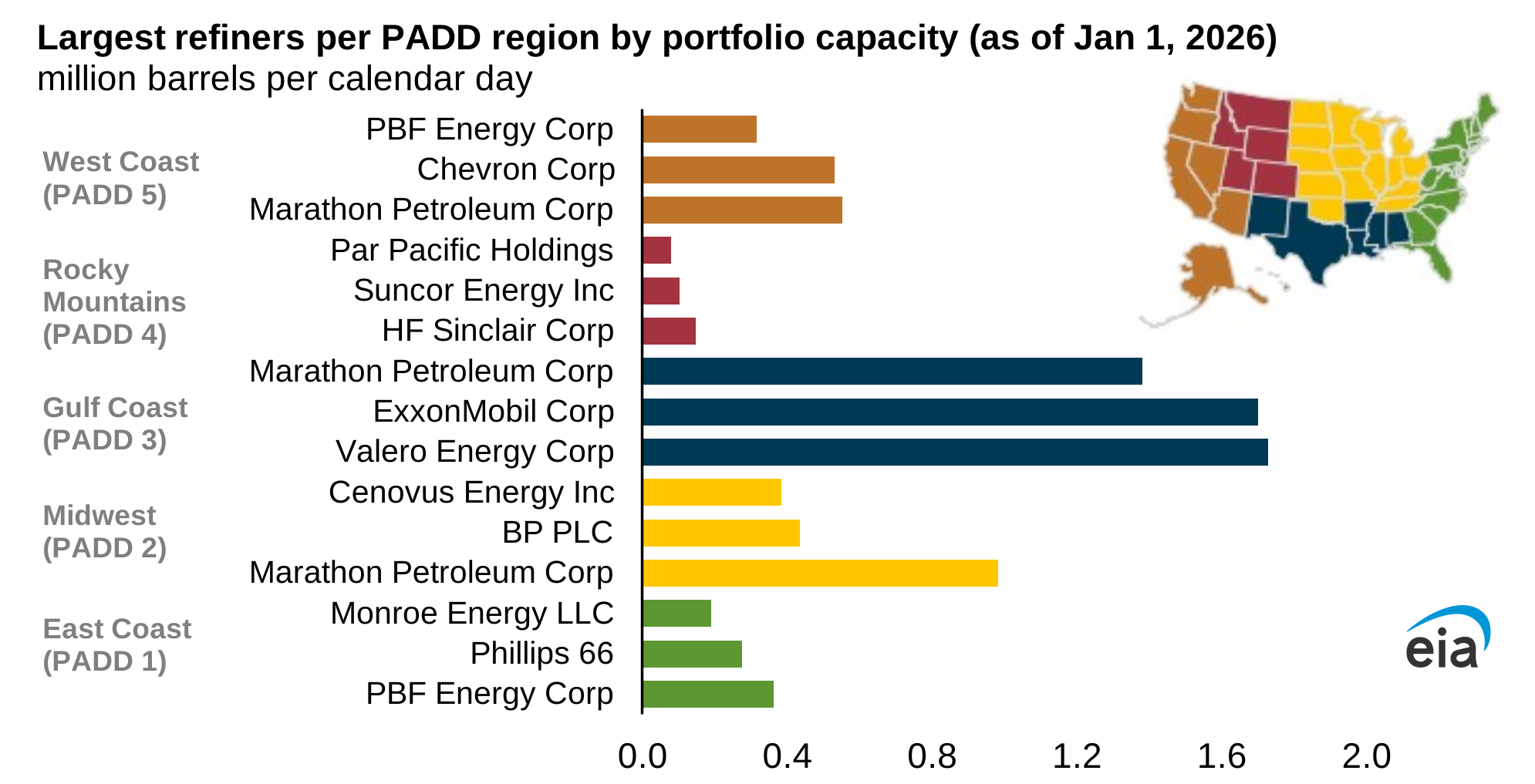
The 2026 Refinery Capacity Report captures U.S. refining capacity changes in effect as of January 1, 2026. Changes in refinery capacity made since January 1 are not reflected.
Principal contributors: Kevin Hack, Carolyn Hronis
Tags: refinery capacity, capacity, refineries, refining