
More U.S. homes used LEDs over other bulb types for indoor lighting in 2024
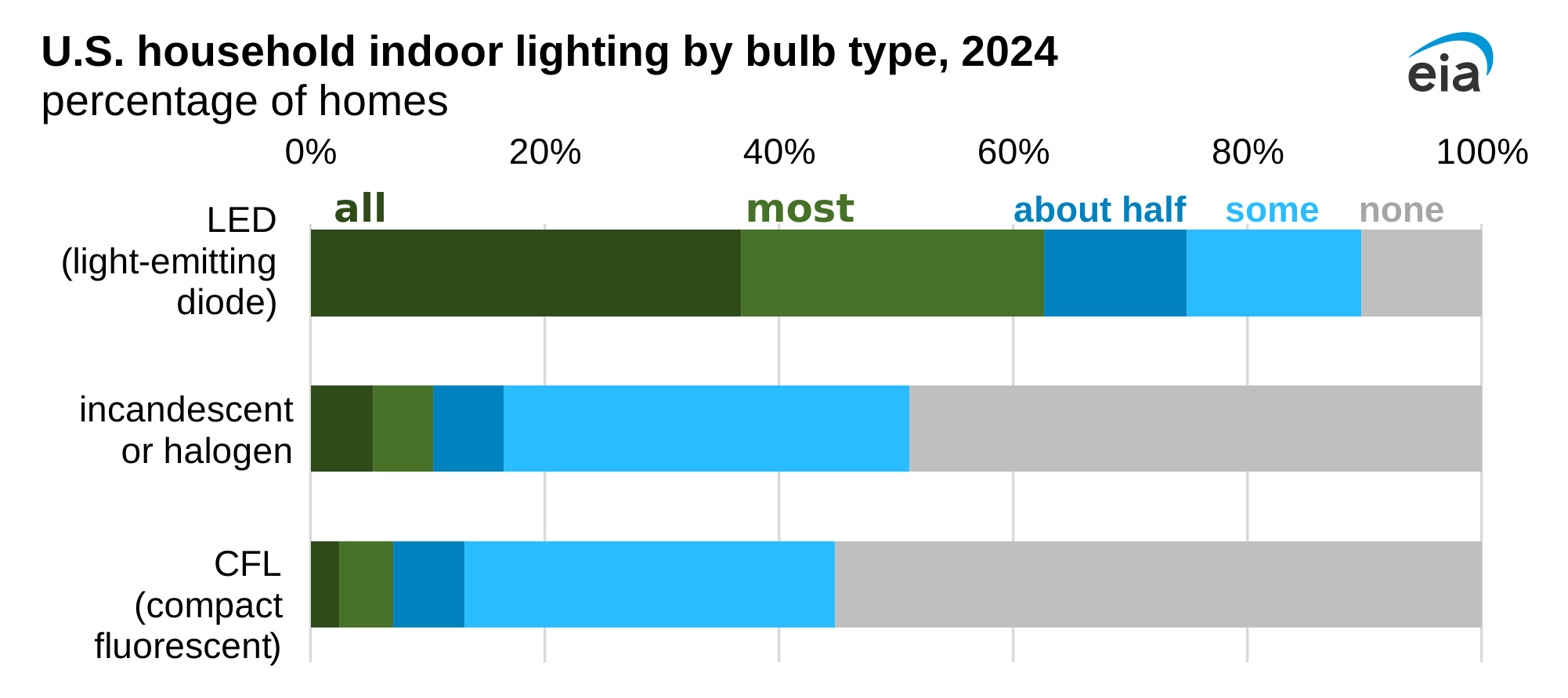
Although homes can have a mix of bulbs for indoor lighting, 90% of U.S. households reported using light-emitting diode (LED) bulbs, according to the most recent results of the Residential Energy Consumption Survey (RECS). Over one-third of households (37%) used LED bulbs for all indoor lighting. In contrast, 5% of households reported using incandescent or halogen bulbs and 2% used compact fluorescent (CFL) bulbs for all indoor lighting.
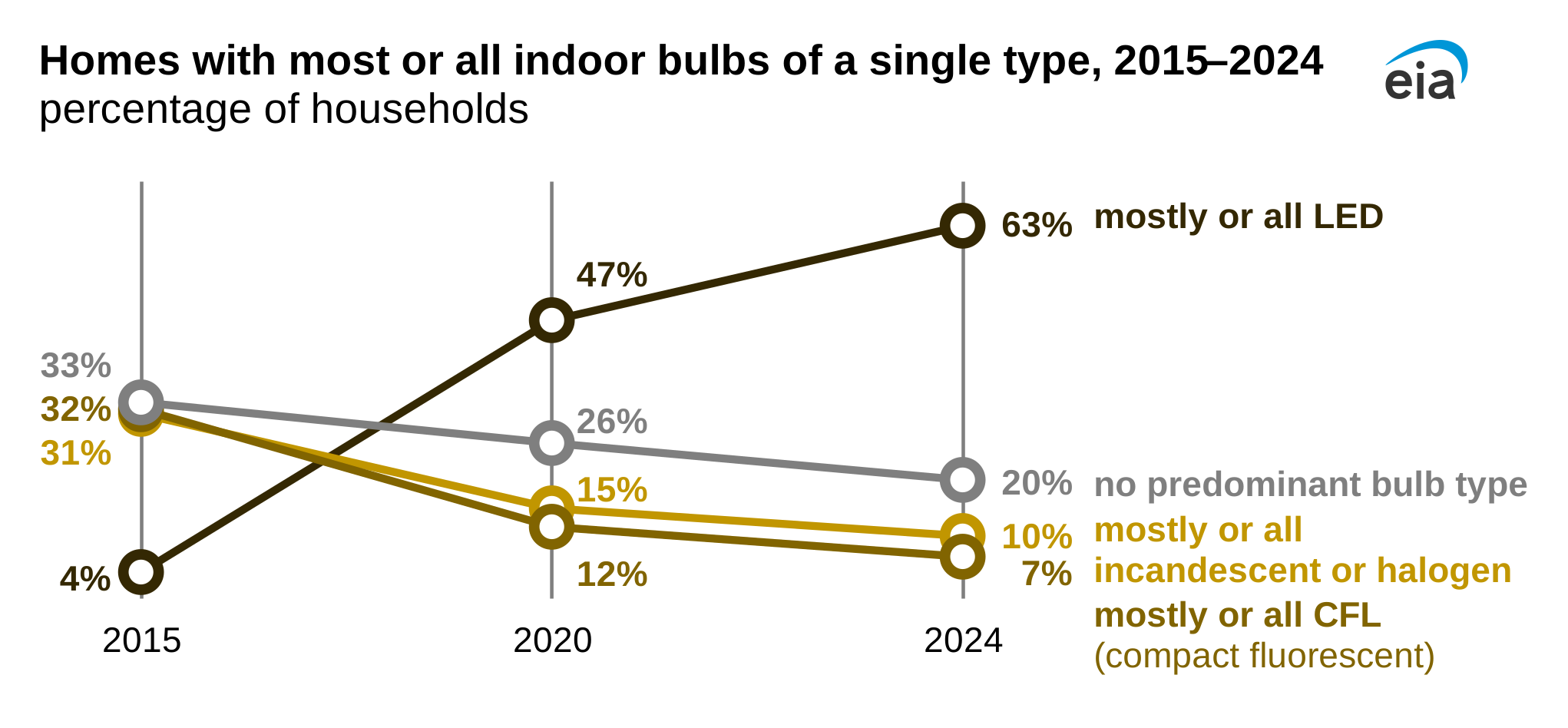
With the emergence of more energy-efficient lighting options, indoor lighting trends have changed over time. In 2015, the share of households using mostly LED bulbs for indoor lighting was 4%—by 2024, this share increased to 63%. From 2015 to 2024, the share of households using mostly CFL bulbs for indoor lighting fell from 32% to 7%, and the share of households using mostly incandescent or halogen bulbs for indoor lighting fell from 31% to 10%.
Households in apartments (57%) and mobile homes (56%) were less likely to use LED bulbs for all or most of their indoor lighting than households in single-family detached (65%) and single-family attached homes (63%). Newer homes were more likely to use LED bulbs for indoor lighting—71% of homes built between 2020 and 2024 used mostly or all LED, and more than half (51%) of these homes used LED bulbs for all indoor lighting.
LED bulbs were also used more often for outdoor lighting. Of an estimated 58 million homes with outdoor lights left on all night, 77% used at least one LED bulb. The shares of homes using at least one incandescent or halogen bulb (20%) or CFL bulb (11%) for outdoor lights left on all night were significantly smaller.
Home automation technology allows for both indoor and outdoor lighting to be controlled through smart speakers. An estimated 47 million households (36%) had at least one smart speaker, and nearly 14 million of those households reported using these devices to control lighting.
The 2024 RECS collected data on household energy use from 16,676 respondents who completed the survey using self-administered web or mail questionnaires during late 2024 and early 2025. In addition to data on lighting, the initial 2024 RECS results include estimates on structural and geographic characteristics, appliances, electronics, demographic characteristics, square footage, and household energy insecurity, as well as key estimates for all 50 states and the District of Columbia. Additional results on several topics, including space heating, air conditioning, energy consumption, and energy end uses, will be released in spring 2027.
Principal contributor: Chrishelle Lawrence