
Crude oil production in Texas’s Eagle Ford region has been increasing since February 2022
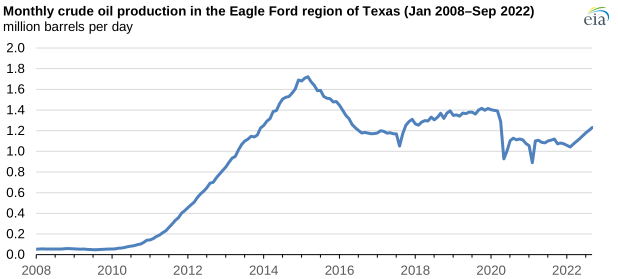
According to our latest Drilling Productivity Report, we estimate that crude oil production in the Eagle Ford region in southern Texas will average 1.2 million barrels per day (b/d) during September 2022. Despite recent increases, less crude oil is being produced in the Eagle Ford region than before the pandemic—1.4 million b/d in April 2020—and much less than the all-time high of 1.7 million b/d in March 2015.
Because prices increased, we estimate that economically recoverable oil resources (the amount of recoverable oil that producers believe can be profitably produced) in the Eagle Ford formation, increased to 8.4 billion barrels in the first half of 2022, an increase from 0.5 billion barrels in 2020. Between 2020 and the first half of 2022, crude oil prices more than doubled, according to our analysis, incentivizing future development in previously marginal areas.
This analysis of the Eagle Ford formation focuses on proved reserves and economically recoverable resources. Proved reserves are volumes of crude oil and natural gas that data demonstrate with reasonable certainty can be recoverable in future years from known reservoirs, considering existing economic and operating conditions. In contrast, economically recoverable resources vary considerably depending on price and cost assumptions. Economically recoverable resources represent a less certain estimate of future crude oil and natural gas volumes and production.
If prices are too low to provide a return on the investment of developing the well, producers will not invest in drilling the well. The Eagle Ford formation produces both crude oil and natural gas, so profitability is not only based on past crude oil or natural gas production rates but also on producers’ forecasts of future prices for natural gas and crude oil.
Principal contributor: Troy Cook
Tags: production/supply, Texas, liquid fuels, crude oil, oil/petroleum, states, drilling, Eagle Ford