
EIA expects U.S. energy-related carbon dioxide emissions to increase in 2022 and 2023
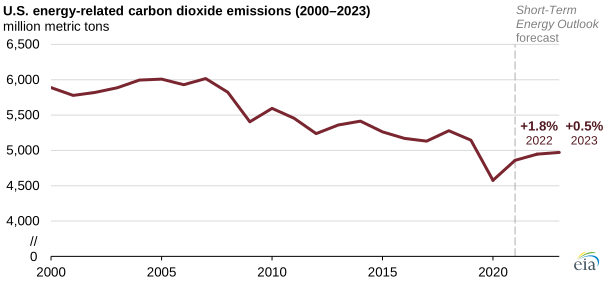
In our latest Short-Term Energy Outlook, we forecast that U.S. energy-related carbon dioxide (CO2) emissions will increase in both 2022 and 2023 but remain below 2019 levels. In 2020, U.S. energy-related CO2 emissions decreased by 11% as energy use declined during the onset of the COVID-19 pandemic. As the U.S. economy began to return to pre-COVID activity, CO2 emissions increased by an estimated 6% in 2021. We expect increasing economic activity, along with other factors, will result in those emissions increasing by another 2% in 2022 and remaining virtually flat in 2023.
We forecast that, by 2023, U.S. energy-related CO2 emissions will total 4,971 million metric tons (MMmt)—still 3% below the 5,144 MMmt of CO2 emissions generated in 2019 and 17% below the peak level of 6,016 MMmt in 2007.
U.S. petroleum-related CO2 emissions increased 8% in 2021, and we forecast that they will increase by another 5% in 2022 and an additional 1% in 2023 as travel activity continues to increase. We forecast that in 2022, the number of vehicle miles traveled in the United States, which affects motor gasoline and diesel consumption, will return to 2019 levels and that air travel will increase by 4% over 2019.
We expect U.S. CO2 emissions from natural gas to rise by 1% in both 2022 and 2023. Two of the most common uses of natural gas are electricity generation and heating, so both energy prices and weather influence U.S. natural gas consumption. We forecast that the electric power sector’s consumption of natural gas will decline in 2022 because of competition from renewable energy sources.
We forecast that coal CO2 emissions will fall by 3% in 2022 and remain mostly flat in 2023. In the United States, coal is primarily used to generate electricity. As renewable sources have become less expensive, they have displaced coal consumption in the electric power sector and led to several coal-fired power plants retiring.
Principal contributor: Kevin Nakolan