
Texas used twice as much energy as California and three times as much as Florida in 2023
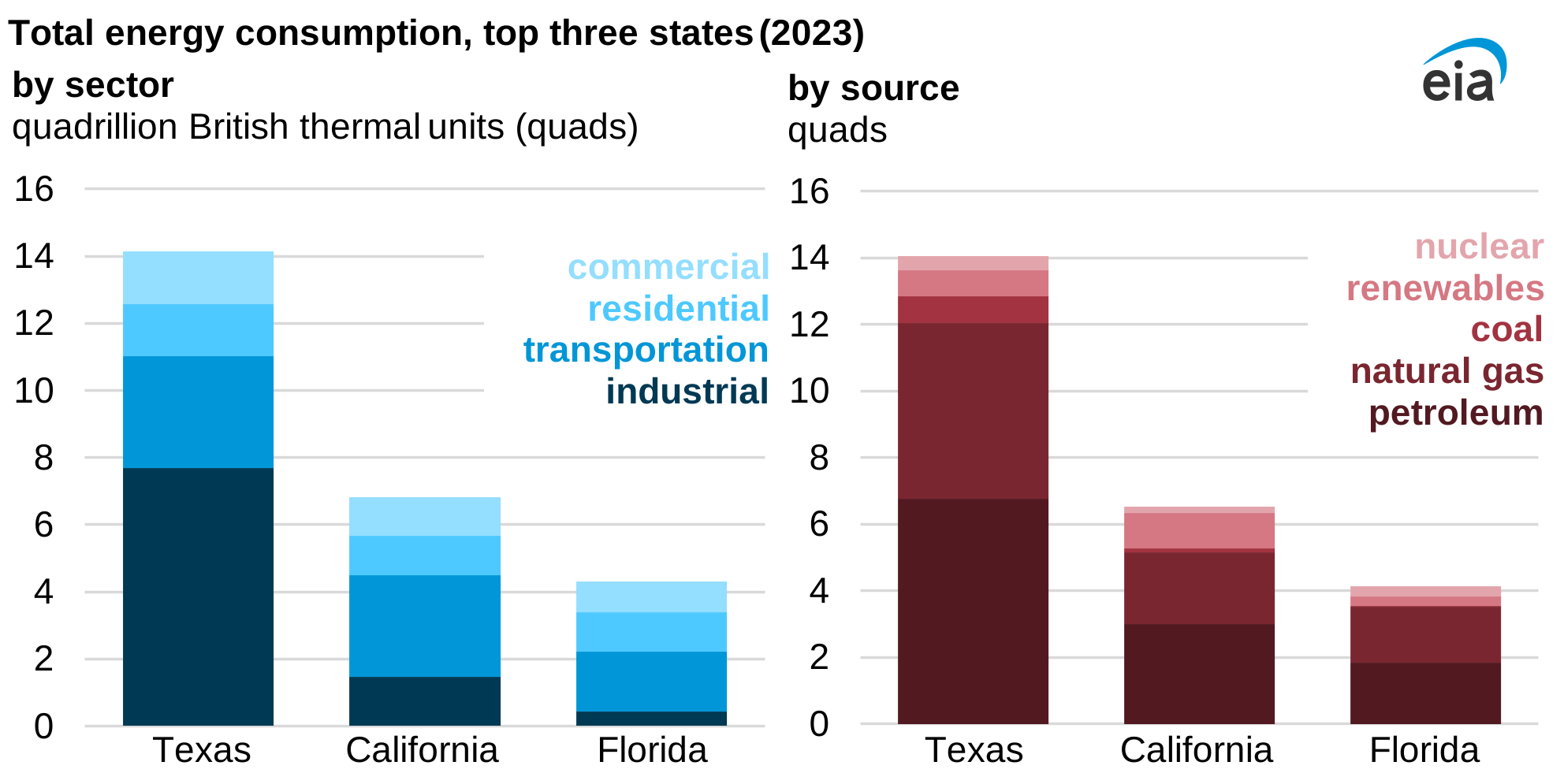
Data values: Total energy consumption by end-use sector and primary energy consumption by source
In 2023, Texas consumed more energy than any other state. Total energy consumption in Texas was twice as much as in California, the second-highest consuming state, and more than three times as much as in Florida, the third-highest consuming state, according to recently released data in our State Energy Data System (SEDS). U.S. total energy use peaked in 2007, and between 2007 and 2023, Texas’s energy consumption increased 21%, while U.S. energy use decreased 5%. According to our SEDS data, most of the energy consumption growth in Texas is attributable to increased industrial activity, population, and electricity demand.
In 2023, energy consumption in Texas was higher than in any other state for every sector. Texas also consumed more coal, natural gas, and petroleum than any other state, and it was second only to California in total renewable energy consumption. In 2023, Texas’s industrial sector alone consumed more energy than all the sectors in California combined, and Texas’s petroleum consumption alone nearly equaled all of California’s energy consumption.
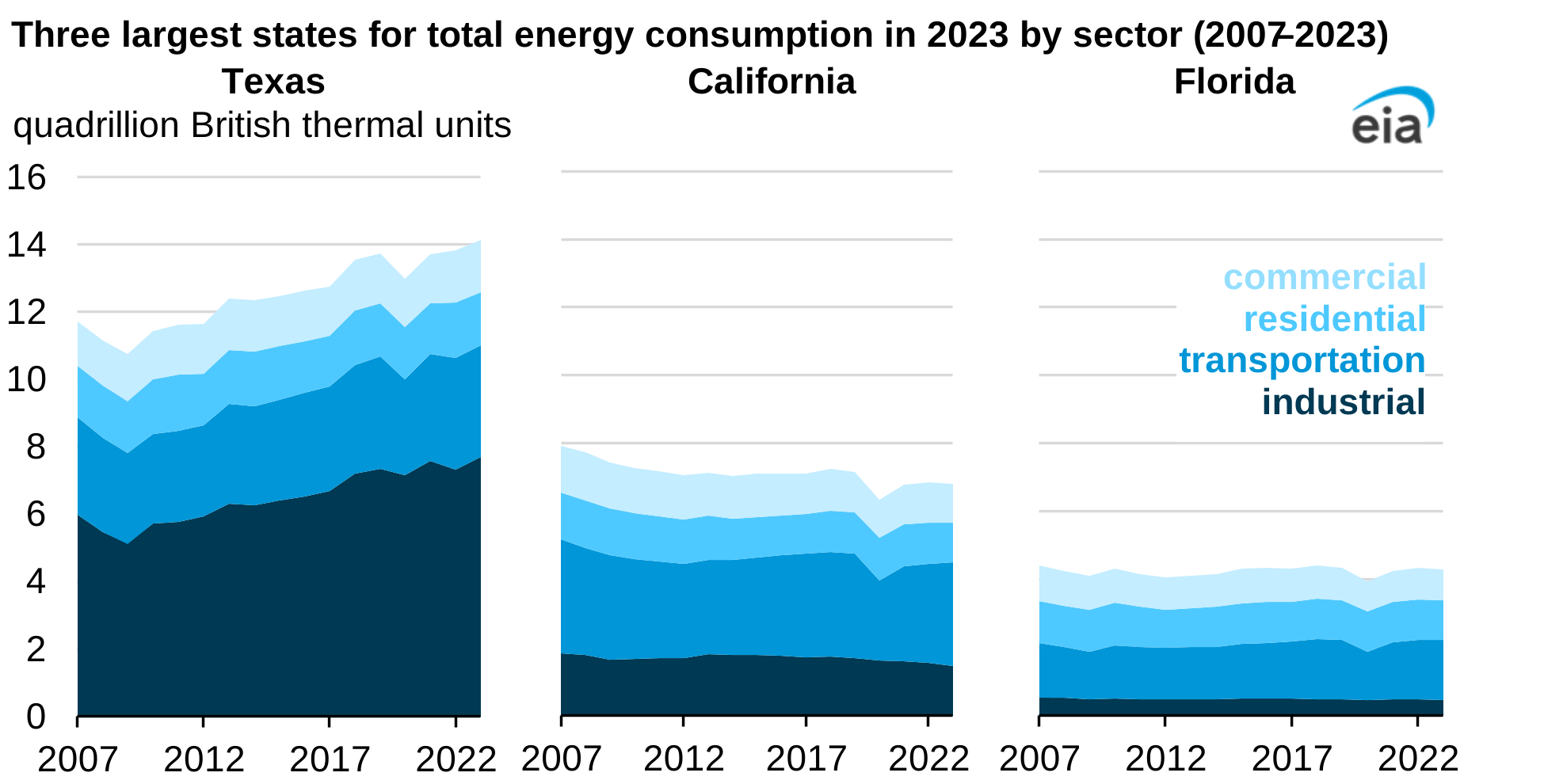
Data values: Total energy consumption by state
Between 2007 and 2023, Texas’s industrial sector energy use grew 28%, while U.S. total industrial sector energy use declined 3%. The industrial sector, which includes Texas’s energy-intensive chemical manufacturing, oil and natural gas extraction, petroleum refining, and agriculture industries, is the state's largest energy-consuming sector.
Between 2007 and 2023, the population in Texas grew 29%, significantly more than the national average of 12%. Texas’s energy use increased by 18% in the commercial sector, 15% in the transportation sector, and 3% in the residential sector during the same period partly because of the state’s population growth.
Unlike most states, nearly all of Texas’s electricity grid is disconnected from the nation’s regional grid, making Texas largely dependent on its own resources to meet in-state electricity demand. Between 2007 and 2023, Texas’s electric power sector energy consumption increased 6% to help support population growth, while U.S. total electric power demand increased 3% during the same period. We expect electricity demand in Texas to grow rapidly in 2025 and 2026 as data centers and cryptocurrency facilities come online.
By contrast, total energy use declined 14% in California and 2% in Florida between 2007 and 2023 in part because of decreased industrial and electric power sector energy use. During the same period, industrial sector energy consumption decreased by 20% in California partially because of reduced oil and natural gas extraction activities.
The electric power sectors in California and Florida are now more efficient than in the past, mostly because of reduced in-state use of coal to generate electricity. Significantly more coal is needed to produce a kilowatthour of electricity than other sources, such as natural gas, wind, and solar. The electric power sector in California consumed 19% less energy in 2023 than in 2007. In Florida, electric power sector energy consumption decreased 4% over the same period. California significantly increased in-state electricity generation from solar and wind over that period, while Florida increased its generation from natural gas and solar.
In our State Energy Data System, we convert different energy sources to common units of heat, called British thermal units (Btu). We use Btu to compare different types of energy that are not usually directly comparable, such as barrels of petroleum and cubic feet of natural gas. Appendix B shows our conversion factors for each energy source.
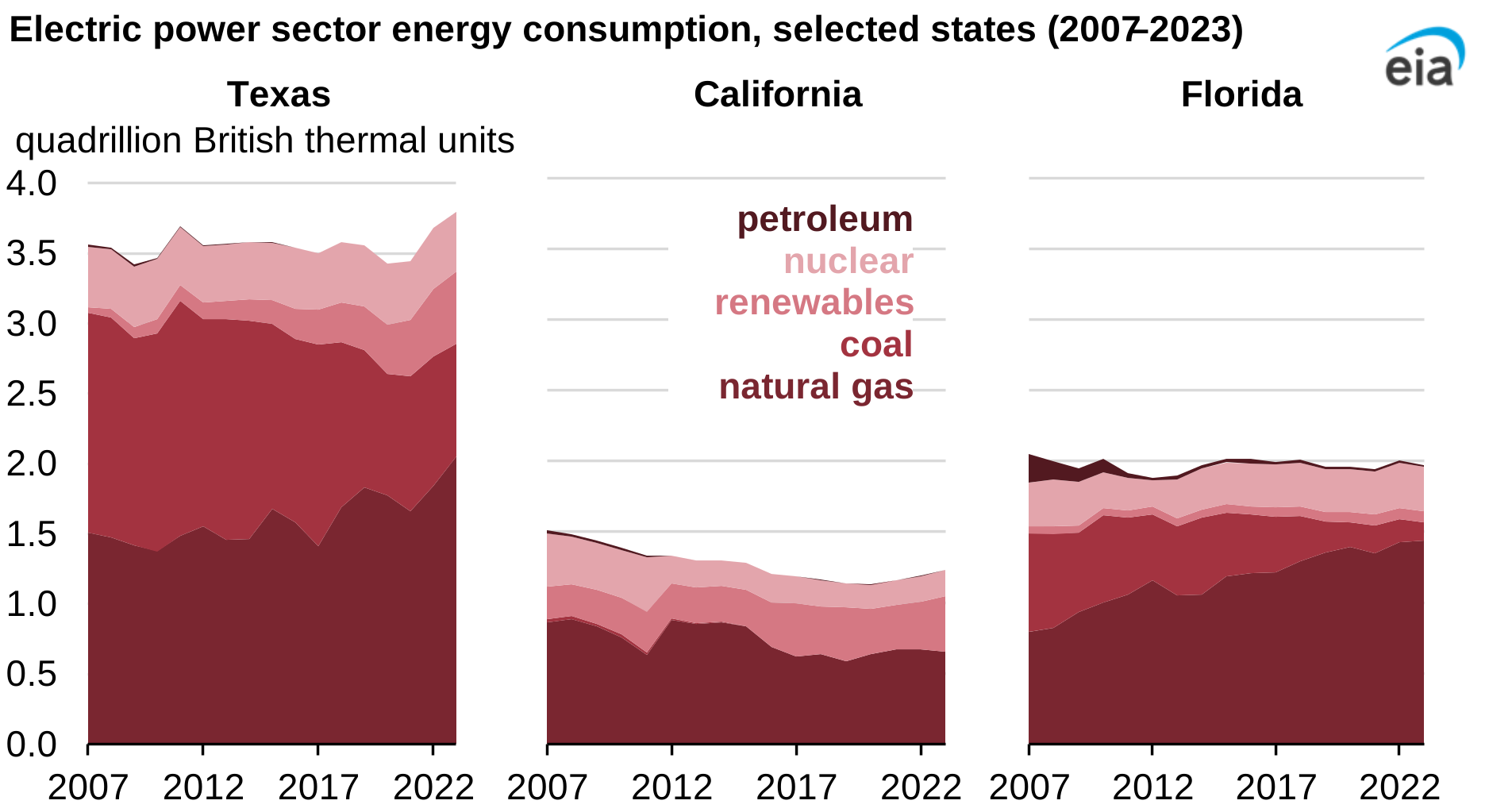
Data values: Electric power sector energy consumption by source
Principal contributors: Mickey Francis, Melissa Alejandro