
North America’s LNG export capacity is on track to more than double by 2028
From December 26 to January 3, Today in Energy will feature some of our favorite articles from 2024. Today’s article was originally published on September 3.
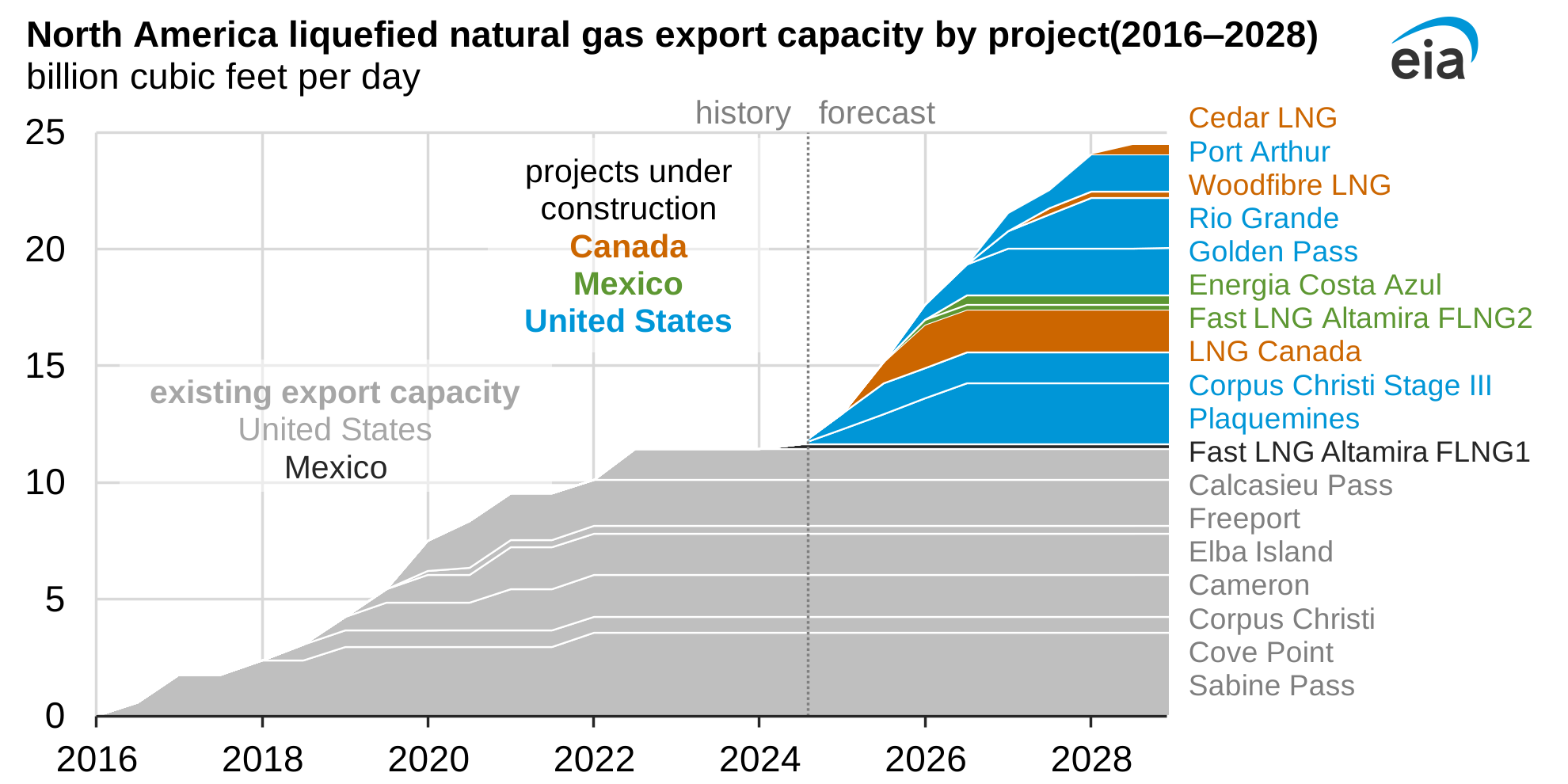
Note: Export capacity shown is project's baseload capacity. Online dates of LNG export projects under construction are estimates based on trade press. LNG=liquefied natural gas; FLNG=floating liquefied natural gas
North America’s liquefied natural gas (LNG) export capacity is on track to more than double between 2024 and 2028, from 11.4 billion cubic feet per day (Bcf/d) in 2023 to 24.4 Bcf/d in 2028, if projects currently under construction begin operations as planned. Between 2024 and 2028, we estimate LNG export capacity will grow by 0.8 Bcf/d in Mexico, 2.5 Bcf/d in Canada, and 9.7 Bcf/d in the United States from a total of 10 new projects that are currently under construction in the three countries.
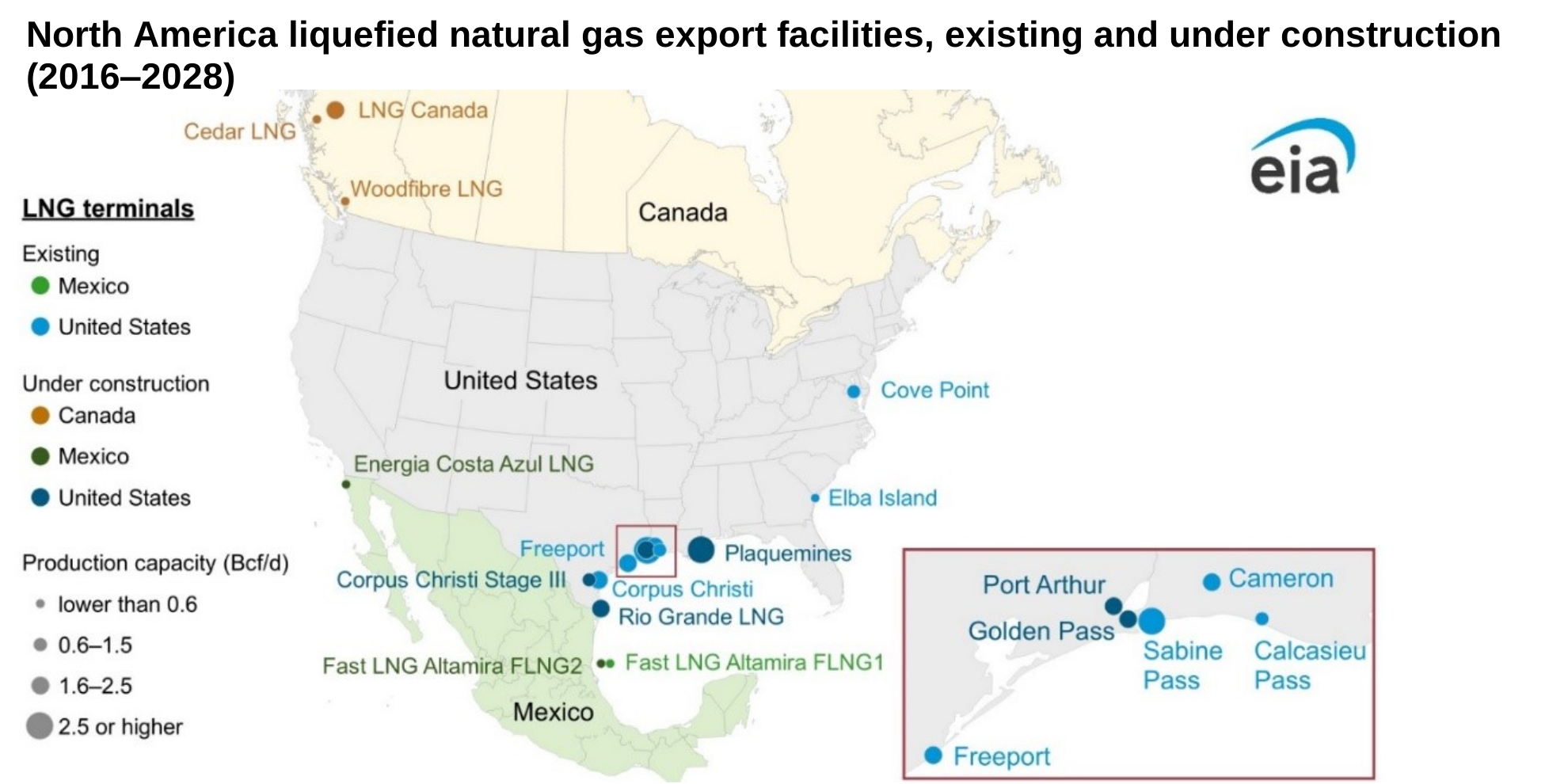
Note: Bcf/d=billion cubic feet per day; LNG=liquefied natural gas; FLNG=floating liquefied natural gas
Mexico. Earlier this year, developers completed one of the two Floating LNG production units (FLNG1) of the Fast Altamira LNG project with a capacity of 0.2 Bcf/d and are currently constructing two projects with a combined LNG export capacity of 0.6 Bcf/d—Fast LNG Altamira FLNG2 offshore on Mexico's east coast, and Energía Costa Azul, located on Mexico's west coast.
- Fast LNG Altamira consists of two Floating LNG production units (FLNG), each with a capacity to liquefy up to 0.199 Bcf/d of natural gas, located off the coast of Altamira, in the state of Tamaulipas, Mexico. Natural gas from the United States delivered via the Sur de Texas-Tuxpan pipeline will supply these units. The FLNG1 unit started production this summer, and the first LNG cargo from this facility was shipped in August 2024. The FLNG2 unit is still under construction.
- The Energía Costa Azul LNG export terminal (0.4 Bcf/d export capacity) is located at the site of the existing LNG regasification (import) terminal in Baja California in western Mexico. Developers proposed an expansion of this project in Phase 2 by 1.6 Bcf/d. This project will be supplied with natural gas from the Permian Basin in the United States.
Developers have proposed other LNG export projects, all for Mexico’s west coast, including Saguaro Energia LNG (2.0 Bcf/d capacity), Amigo LNG (1.0 Bcf/d capacity), Gato Negro LNG (0.6 Bcf/d capacity), Salina Cruz LNG (0.4 Bcf/d capacity), and Vista Pacifico LNG (0.5 Bcf/d capacity), with a combined capacity of 4.5 Bcf/d; however, none of these projects have reached a final investment decision or started construction.
Canada. Currently, three LNG export projects with a combined capacity of 2.5 Bcf/d are under construction in British Columbia on Canada’s west coast. Developers of LNG Canada (1.8 Bcf/d export capacity) plan to start LNG exports from Train 1 in the summer 2025. Woodfibre LNG (export capacity 0.3 Bcf/d) targets the startup of LNG exports in 2027. Cedar LNG—a FLNG project with capacity to liquefy up to 0.4 Bcf/d—made a final investment decision in June 2024 and expects to start LNG exports in 2028. These projects will be supplied with natural gas from western Canada.
In addition, the Canada Energy Regulator (CER) has authorized four LNG export projects, including an expansion of LNG Canada, with a combined proposed LNG export capacity of 4.1 Bcf/d.
United States. Five LNG export projects are currently under construction with a combined export capacity of 9.7 Bcf/d—Plaquemines (Phase I and Phase II), Corpus Christi Stage III, Golden Pass, Rio Grande (Phase I), and Port Arthur (Phase I). Developers expect to produce the first LNG from Plaquemines LNG and Corpus Christi LNG Stage III and ship first cargoes from these projects by the end of 2024.
Principal contributor: Victoria Zaretskaya
Data visualization: Jim O’Sullivan