
Ethane to outpace growth in all other U.S. petroleum product consumption through 2023
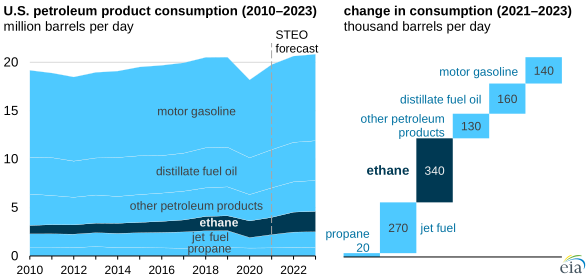
Consumption of ethane has grown every year since 2010 in the United States, and more ethane is now consumed in the country than either jet fuel or propane. Consumption of ethane, which we estimate using product supplied, grew by 50,000 barrels per day (b/d) in 2021, according to data from our March 2022 Petroleum Supply Monthly. We forecast in our March 2022 Short-Term Energy Outlook (STEO) that by 2023, U.S. consumption of ethane will grow by another 340,000 b/d.
Annual U.S. ethane consumption has increased in every year since 2010 because demand for ethane as a petrochemical feedstock has grown. Ethane mainly serves as a petrochemical feedstock to produce ethylene, which is used to make plastics and resins.
Domestic ethane consumption over the past two years has increased due to increased ethylene cracking capacity. In contrast, consumption of most other petroleum products has decreased these past two years as a result of less travel during the COVID-19 pandemic.
U.S. ethane consumption grew in 2021 despite the mid-February winter storm on the U.S. Gulf Coast, which took more than one-third of U.S. ethylene cracking capacity offline. Because about 90% of U.S. ethane consumption is concentrated along the Gulf Coast, storm disruptions reduced ethane consumption by 655,000 b/d in February 2021. Despite this drop, the additional capacity from two new ethylene crackers during the second half of 2021 contributed to an overall increase in ethane consumption in 2021.
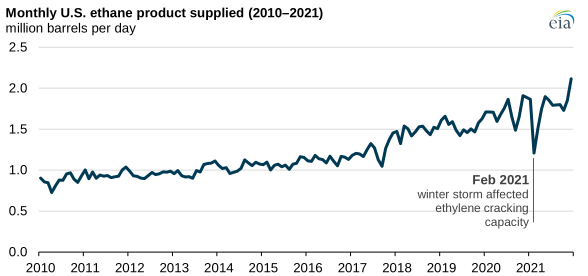
We expect U.S. ethane consumption to average 2.1 million b/d in both 2022 and 2023 because another ethylene cracker was recently completed in Monaca, Pennsylvania, which will add an estimated 96,000 b/d of ethane feedstock capacity, and because we expect that existing ethylene crackers will operate at higher utilization rates.
In the United States, cracking ethane has a higher profit margin than cracking naphtha to produce ethylene, a key component needed to produce many resins and plastics. Ethane’s relatively low cost and high ethylene yield have spurred growth in ethane use as an ethylene feedstock in the United States and, increasingly, around the world. Although naphtha cracking can yield valuable co-products such as propylene, butadiene, benzene, toluene, and xylene, demand for ethylene has been outpacing demand for those co-products of naphtha cracking.
Principal contributor: Josh Eiermann