
EIA’s Short-Term Energy Outlook is the source for EIA’s latest analysis of energy markets
From December 18 through December 31, Today in Energy will feature a selection of EIA product highlights and some of our favorite articles from 2020.
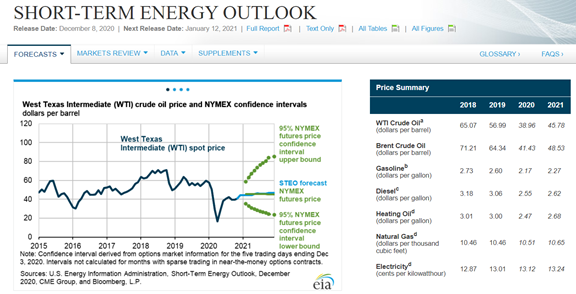
The Short-Term Energy Outlook (STEO) provides the U.S. Energy Information Administration’s (EIA) near-term perspective on energy markets. Each month, the STEO provides forecasts through the end of the next calendar year for consumption, supply, trade, and prices across major fuel types. In addition, the STEO provides in-depth market analysis for crude oil, petroleum products, and natural gas markets. Although its emphasis is on U.S. energy markets, the STEO also includes forecasts for certain international liquid fuels markets.
The historical data underpinning the STEO forecast each month come from a wide range of EIA publications, such as the Petroleum Supply Monthly, the Electric Power Monthly, the Natural Gas Monthly, and the Weekly Natural Gas Storage Report. Each STEO forecast also relies on external data sources for information, such as weather data from the National Oceanic and Atmospheric Administration (NOAA), spot and futures market prices, and global and U.S. macroeconomic indicators.
Economic models provide the foundation for the STEO forecast. In the STEO, EIA also incorporates analyst judgment to account for recent market developments and events such as regulatory changes, weather disruptions, supply and demand disruptions, and pipeline or fuel distribution constraints.
To provide context for the forecast, each edition of the STEO includes forecast highlights and a near-term markets review section for crude oil, petroleum products, and natural gas markets. In January and July of each year, the STEO contains a comprehensive analysis of the forecast for the entire energy industry, including global and U.S. liquid fuels markets, U.S. energy-related emissions, and domestic natural gas, coal, electricity, and macroeconomic markets.
Every April and October, EIA publishes a Summer Fuels Outlook and Winter Fuels Outlook, respectively, as supplements to the monthly STEO. The Summer Fuels Outlook focuses on prices and consumption of gasoline, diesel, and electricity—fuels whose consumption is highest during the summer months. The Winter Fuels Outlook focuses on residential winter heating fuels expenditures.
Principal contributor: EIA staff