
Gasoline and diesel refining margins that diverged in March have moved closer together
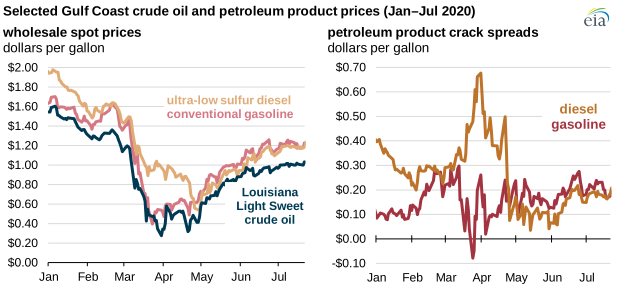
U.S. gasoline and diesel crack spreads diverged sharply in March and April as a result of the mitigation efforts aimed at slowing the spread of the 2019 novel coronavirus disease (COVID-19), but they have moved closer since May. Crack spreads are the difference between the price of crude oil and the wholesale price of a refined petroleum product, and they are used by industry to estimate refining margins.
As COVID-19 mitigation efforts and travel restrictions were put in place, gasoline demand (as measured by product supplied) fell from 9.7 million barrels per day (b/d) in the week ending March 20 to a record low of 5.1 million b/d in the week ending April 3. This record low demand caused gasoline prices to fall lower than oil prices, making gasoline crack spreads go negative. At the time, the gasoline crack spread fell to a low of -8 cents per gallon, the lowest since January 2019. In contrast to gasoline demand, distillate demand in the United States in March and April did not decrease as sharply. The consistent demand for diesel contributed to an increase of diesel refining margins because the price of crude oil dropped faster than the price of diesel, allowing refiners to potentially refine low cost crude oil into a higher cost diesel.
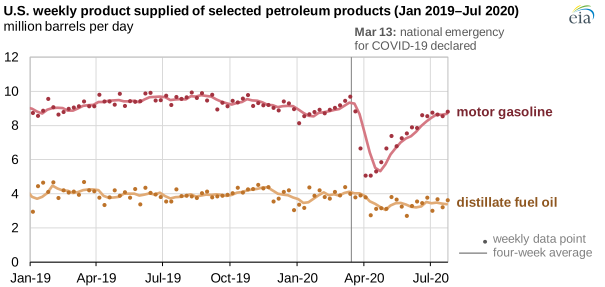
In April, U.S. refiners curtailed runs and shifted yields to increase distillate production and decrease gasoline production in response to the changing demands of each product. Inputs of crude oil to refineries fell steeply beginning in late March, reaching a low of 12.8 million b/d the week ending April 17, the lowest level since 2008. Since its low points in late April and early May, U.S. gasoline demand has been generally increasing, and distillate demand has varied. The increased gasoline demand led gasoline crack spreads to rise higher than distillate crack spreads in late April and supported higher refinery runs overall. Gross inputs into refineries have been generally increasing since the week ending May 8, and refiners have shifted back to producing more gasoline to meet the increasing gasoline demand.
Principal contributor: Matthew French
Tags: gasoline, liquid fuels, crude oil, diesel, oil/petroleum, COVID-19