
How does EIA compare different types of energy?
Note: Btu=British thermal units
To compare production and consumption across different resources, we convert to a common energy metric, British thermal units (Btu), which typically measures the heat content of the fuels such as petroleum, natural gas, and coal that are burned for energy. For energy sources such as hydropower, wind, solar, and geothermal that aren’t combusted to create energy, we apply a constant conversion factor based on the heat content of electricity.
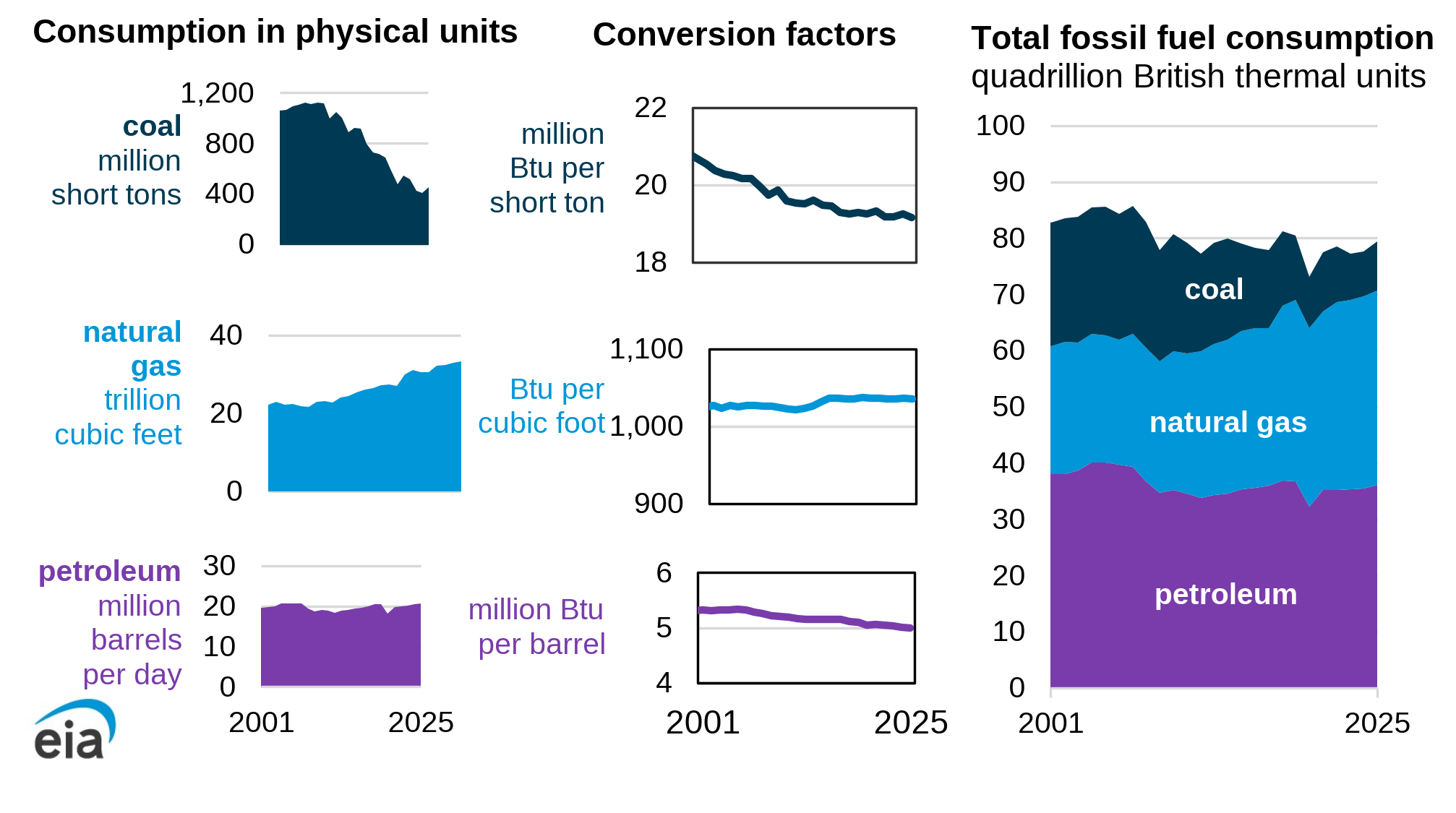
For combustible fuels, EIA uses thermal conversion factors to convert the physical units into heat content values. Because these factors can change based on the specific characteristics of fuels being produced at different points in time, we update our conversion factors each year.
We publish heat content data for more than 30 petroleum products, 4 types of coal, and natural gas. Each fuel has a unique chemistry and heat content, and the heat content can vary based on the different types of fuel in the mix. For example, the heat content of anthracite coal is higher than the heat content of lignite. The aggregate heat content of coal generally varies based on the mix of the different types of coal produced and consumed.
The aggregate heat contents for petroleum consumption and production have declined in recent decades because of decreasing use of residual fuel oil, which has relatively high heat content, and increasing use of fuels with a lower heat content—such as motor gasoline, distillate fuel oil, and hydrocarbon gas liquids.
Our heat content estimates for natural gas have fluctuated within a relatively narrow range because of highly consistent pipeline specifications. Methane, the primary component of natural gas, has a heat content of 1,010 Btu per cubic foot. Other gases such as ethane, biomass gases, synthetic gases, and supplemental gases, which may be left in the natural gas stream, have higher heat content values.
Total coal thermal conversion factors depend on the relative mix of coal types consumed and produced that year. Anthracite and bituminous coals have higher heat contents than lignite and subbituminous coals. Subbituminous coal production and consumption have increased over time, bringing down coal’s aggregate heat contents.
To measure how efficient a power plant is at converting the fuel into electricity, we use heat rates. While thermal conversion factors measure the heat content of a fuel, heat rates measure the efficiency of power plants to convert fuel into heat and then into electricity. The heat rate is the amount of energy used to generate one kilowatthour (kWh) of electricity. The lower the heat rate, the higher the efficiency of a power plant to convert fuel into electricity.
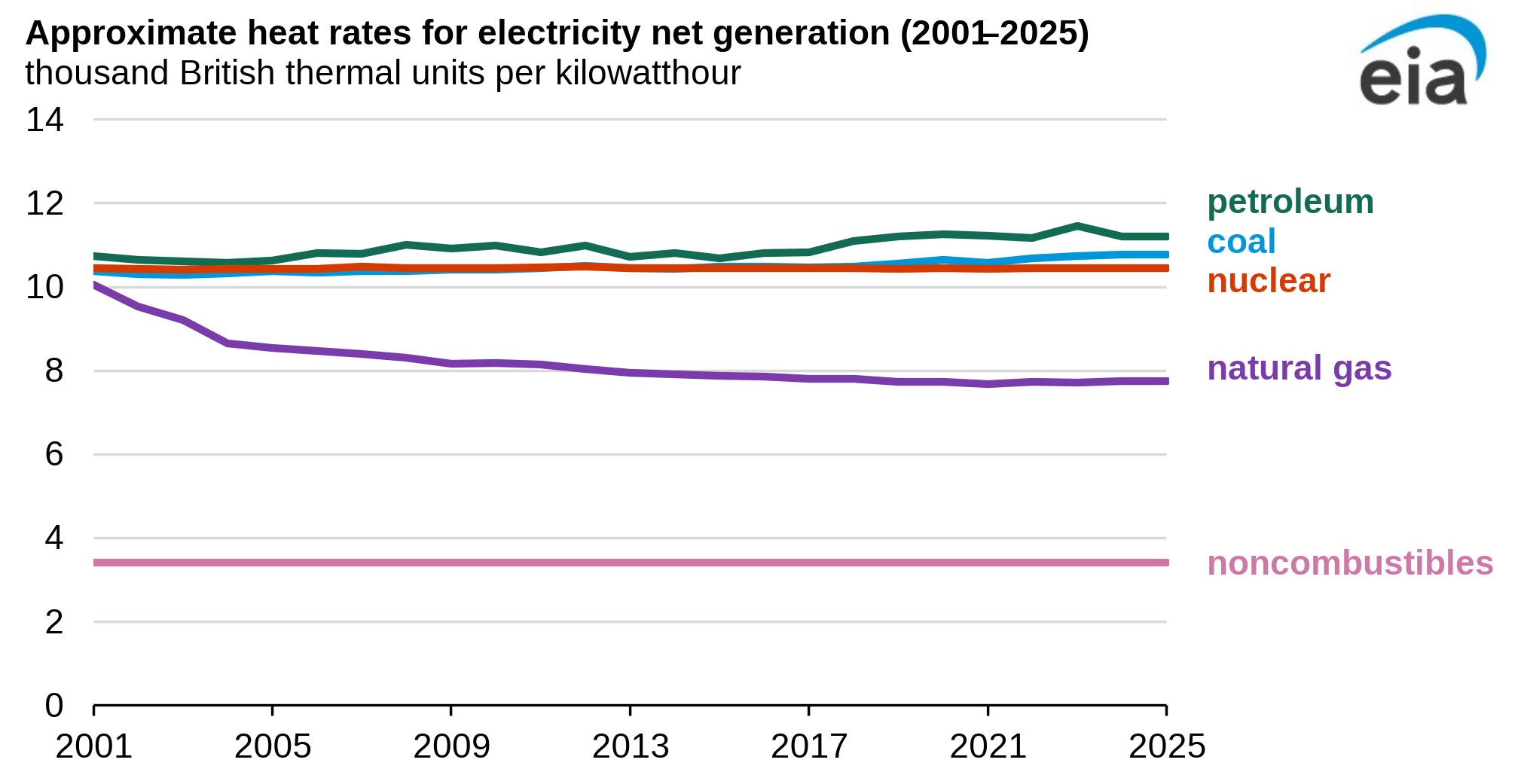
Since 2001—the earliest year in our data—heat rates for electricity generation from coal and petroleum have risen slightly, while the heat rate for electricity generation from natural gas has gone down, due in part to more efficient combined-cycle plants coming online.
Power plants using nuclear energy and noncombustible renewables—such as hydro, wind, solar, and geothermal—generate electricity without burning fuel. For nuclear energy, EIA uses a measurement of the heat produced from nuclear fission in the reactor core.
For noncombustible renewable energy, we use the captured energy approach. Captured energy is the energy available for consumption after converting a renewable resource into electricity, net of conversion losses. The captured energy approach uses the heat content of electricity, which is constant (3,412 Btu/kWh).
Principal contributor: Allen McFarland
Tags: monthly, methods, consumption/demand, electricity, total energy