
The Gulf of Mexico saw its largest decrease in crude oil production since 2008 in August
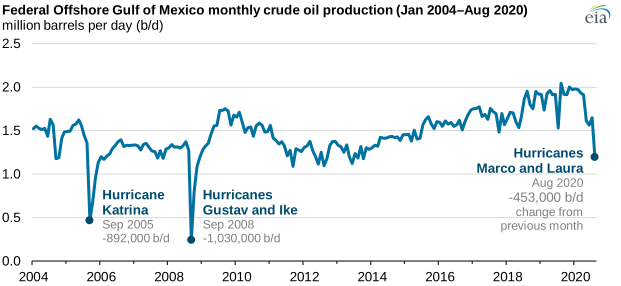
In August 2020, the Federal Offshore Gulf of Mexico (GOM) saw its largest monthly decrease in production of crude oil since September 2008, dropping by 453,000 barrels per day (b/d), or 27%. Production of crude oil in the GOM totaled 1.2 million b/d in August 2020, which is its lowest production rate in nearly seven years. The regional drop in production resulted from the path of both Hurricanes Laura and Marco in late August.
Hurricane Laura and Hurricane Marco, which came through the GOM consecutively, caused shut-ins (in other words, not operating) starting on August 22, 2020, and led operators to reduce output for 15 days. Hurricane Marco (the weaker of the two storms) came through first, making landfall on August 24, which affected the magnitude and timing of shut-ins from Hurricane Laura.
Three days later, Hurricane Laura (the 10th-strongest U.S. hurricane on record, as determined by the speed of its winds) made landfall on August 27. The U.S. Bureau of Safety and Environmental Enforcement (BSEE) estimates that 14.4 million barrels of crude oil production was curtailed over the course of 15 days because of the storms. BSEE estimates that about 84% of GOM crude oil production was shut in at the peak of the disruption as a result of crew evacuations.
In 2020, so far, five hurricanes and one tropical depression have caused disruptions to crude oil production in the GOM. Hurricane Zeta was the most recent storm to hit the GOM, and it caused production curtailments through November 4, 2020. To date, 30 named storms have formed in the Atlantic in 2020, surpassing the 28 storms of 2005 and making the 2020 Atlantic hurricane season the most active on record.
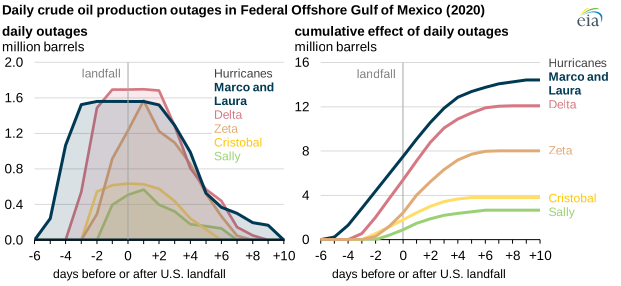
In the November 2020 Short-Term Energy Outlook, the U.S. Energy Information Administration (EIA) estimates that the production of crude oil in the GOM averaged 1.73 million barrels per day (b/d) in September and fell to 1.29 million b/d in October because of Hurricanes Delta and Zeta. EIA expects crude oil production in the GOM to recover to nearly 1.92 million b/d by December 2020 and to average 1.71 million b/d in 2020.
Principal contributors: Emily Geary, Kirby Lawrence