
2019 U.S. coal production falls to its lowest level since 1978
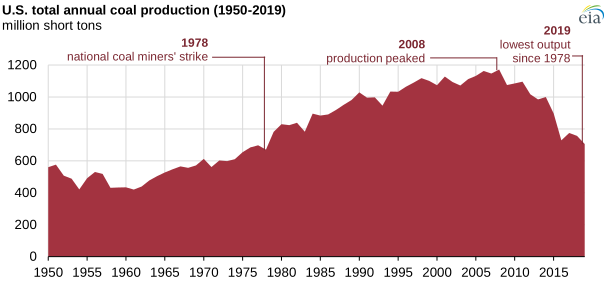
In 2019, U.S. coal production totaled 706 million short tons (MMst), a 7% decrease from the 756 MMst mined in 2018. Last year’s production was the lowest amount of coal produced in the United States since 1978, when a coal miners’ strike halted most of the country’s coal production from December 1977 to March 1978. Weekly coal production estimates from the U.S. Energy Information Administration (EIA) show the United States is on pace for an even larger decline in 2020, falling to production levels comparable with those in the 1960s.
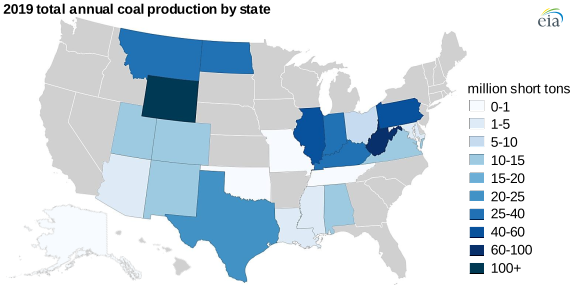
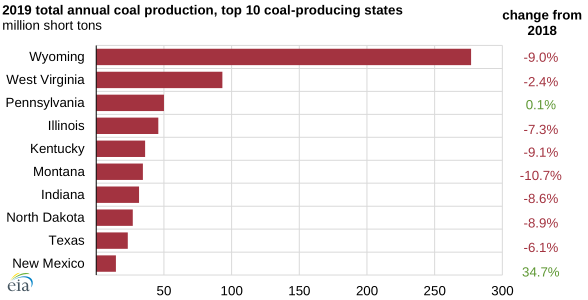
Wyoming produces more coal than any other state, representing 39% of U.S. coal production in 2019, at 277 MMst, which is 9% lower than its coal production in 2018. Coal production in West Virginia, the state with the second-highest coal output, fell by a relatively smaller 2% in 2019. West Virginia is a primary producer of metallurgical coal, which saw sustained demand for exports in 2019. Coal production recently stopped in two states, Kansas in 2017 and Arkansas in 2018. Arizona stopped producing coal in the fall of 2019 when the coal-fired Navajo Generating Station and adjacent Kayenta coal mine that supplied it both closed.
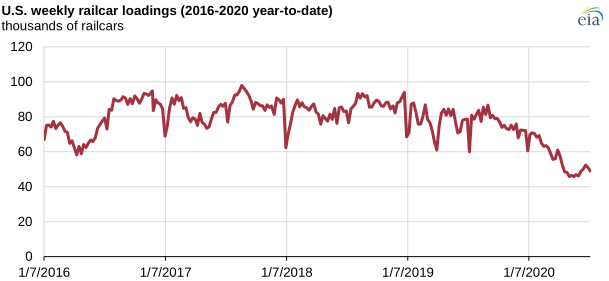
EIA estimates weekly coal production using coal railcar loadings. In 2020, weekly coal railcar loadings have been trending much lower than 2019 levels, and most recent year-to-date coal railcar loadings were down 27% compared with 2019.
The decline of U.S. coal production so far in 2020 reflects less demand for coal internationally and less generation from U.S. coal-fired power plants. U.S. coal exports through May 2020 are 29% lower than during the first five months of 2019. U.S. coal-fired generation fell to a 42-year low in 2019, decreasing nearly 16% from the previous year, and has fallen another 34% through May 2020.
Estimated U.S. coal production through mid-July 2020 is 27% lower than the average annual 2019 output, and EIA expects these reductions in production to persist during the remainder of the year. In the latest Short-Term Energy Outlook (STEO), EIA forecasts a 29% decline in U.S. coal production in 2020.
EIA forecasts that U.S. coal production will increase by 7% in 2021, when rising natural gas prices may cause some coal-fired electric power plants to become more economical to dispatch. Much of EIA’s projected recovery in coal production is in the western United States.
Principal contributor: Rosalyn Berry
Tags: production/supply, coal, map