
Coal stockpiles above five-year range in first quarter of 2012
Download CSV Data
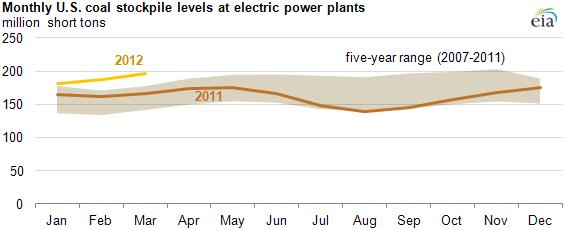
Estimated coal stockpiles at U.S. electric power plants in March 2012 (latest EIA data available) were about 196 million short tons, almost 18% above the level in March 2011 and above the five-year range. Coal stockpiles are up as a result of declines in coal consumption by electric power plants.
Coal stockpile levels typically decline during summer and winter months as power plants burn through stocks to meet seasonal peak electric demand for cooling and heating load, respectively. However, mild weather during the winter of 2011/2012 combined with falling natural gas prices dampened demand for coal-fired electricity.
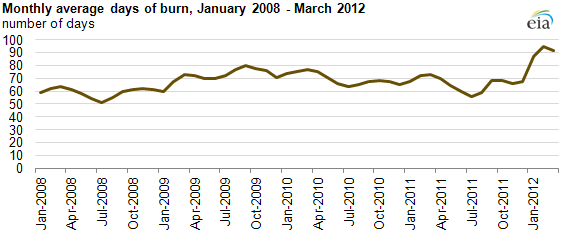
One measure of the disposition of coal stocks, called days of burn, is an estimate of how many days a stockpile of coal would last at a plant based on past consumption patterns. This measure creates a forward-looking estimate of coal supply at a power plant. Days of burn in February 2012 were at their highest levels since 2008, when EIA began computing the statistic. Days of burn in March 2012 were slightly below the February levels, reaching a national average of 91 days of burn. Mostly for reliability reasons, plant operators maintain stockpiles within certain ranges (usually about 50 to 80 days) even though coal supply disruptions of that duration are relatively unlikely.
Download CSV Data
Coal-fired generators are using various commercial strategies to manage their growing coal stockpiles, including:
- Not accepting additional purchases of coal by executing a contractual procedure known as force majeure. For example, GenOn, a merchant generator, described its invocation of force majeure in a recent quarterly filing with the Securities and Exchange Commission due to a lack of physical space to store additional coal receipts.
- Identifying new coal storage facilities.
- Renegotiating or buying out long-term contracts with coal sellers, as Duke Energy Indiana testified to the Indiana Utility Regulatory Commission.
- Deferring purchases of coal to later years in a long-term contract. Consequently, some generators are then dispatching natural gas-fired units ahead of coal-fired units or using other hedges against further price fluctuations in coal markets.