
Development of new fields in Gulf of Mexico to offset production decline in 2024 and 2025
Data values: U.S. Petroleum and Other Liquids Supply, Consumption, and Inventories and U.S. Natural Gas Supply, Consumption, and Inventories
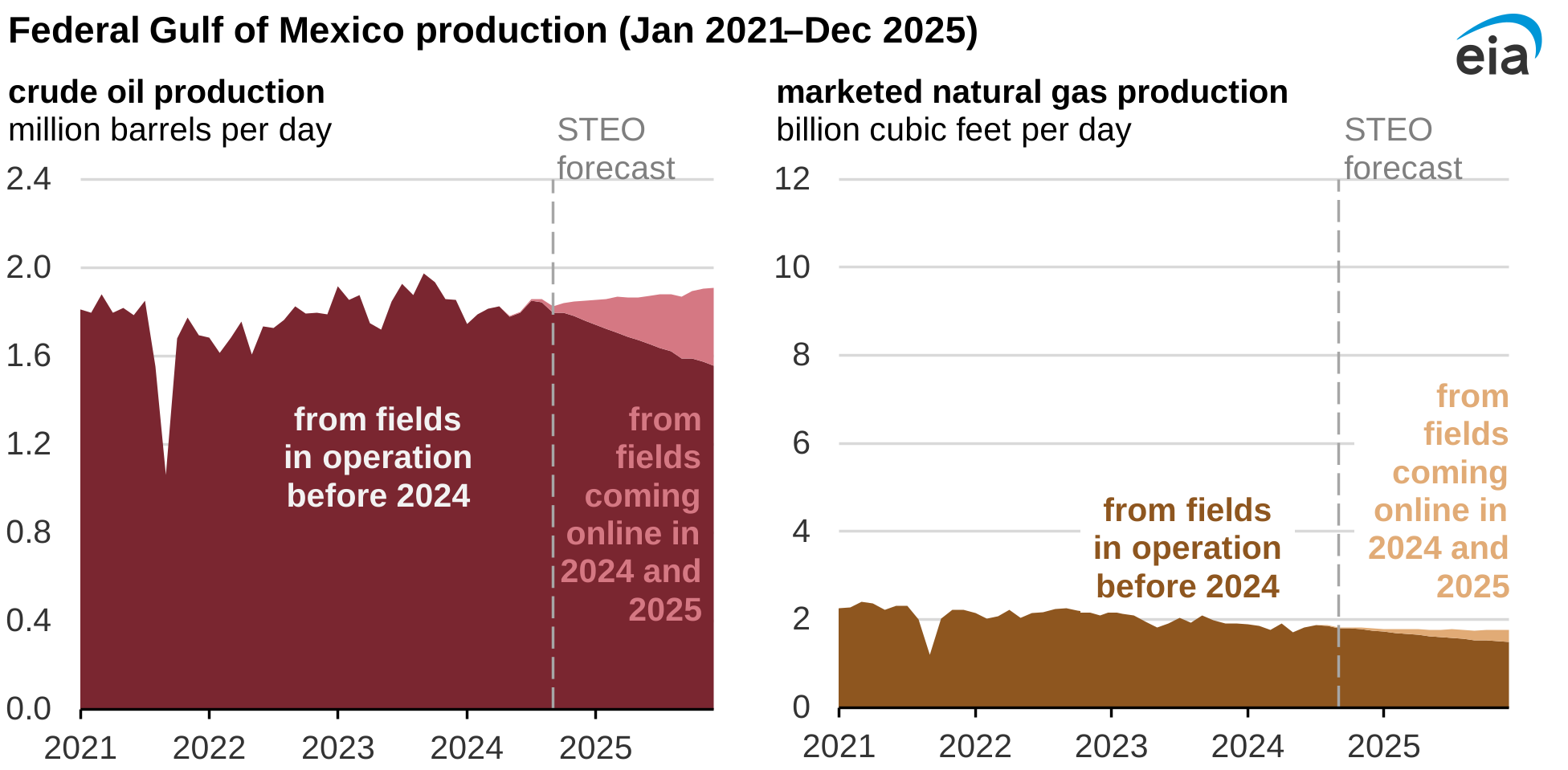
We recently implemented a new model for forecasting crude oil and natural gas production from the U.S. Federal Offshore Gulf of Mexico (GOM) in the Short-Term Energy Outlook (STEO). In our latest outlook, we forecast that GOM production will remain relatively flat with new fields offsetting the natural production declines from existing fields.
We forecast that 1.8 million barrels per day (b/d) of crude oil will be produced in the GOM in 2024 and 1.9 million b/d in 2025, compared with 1.9 million b/d in 2023. We expect GOM natural gas production to average 1.8 billion cubic feet a day (Bcf/d) in both 2024 and 2025, compared with 2.0 Bcf/d in 2023. At these volumes, the GOM would contribute about 14% of U.S. oil production and 2% of U.S. marketed natural gas production.
We expect 12 new fields to start production in the GOM during 2024 and 2025, without which we would expect GOM production to decline. Seven of these fields will be developed using subsea tiebacks, or underwater extensions from existing Floating Production Units (FPUs) at the surface. We expect four new FPUs, which would produce crude oil and natural gas from five more fields. We expect that fields that have already started in 2024 will contribute 22,000 b/d of crude oil production in 2024, and fields that will start production in 2024 or 2025 will contribute 231,000 b/d on average in 2025 as additional production comes online and ramps up.
For more information on our new model, our forecast and supporting assumptions, and new infrastructure coming online, please refer to our recently released article, EIA expects flat oil and natural gas production from the Gulf of Mexico after model update.
Principal contributor: Eulalia Munoz-Cortijo