
EIA forecasts lower oil prices in 2026 and 2027 due to persistent stock builds
Data values: International Petroleum and Other Liquids Production, Consumption, and Inventories and Energy Prices
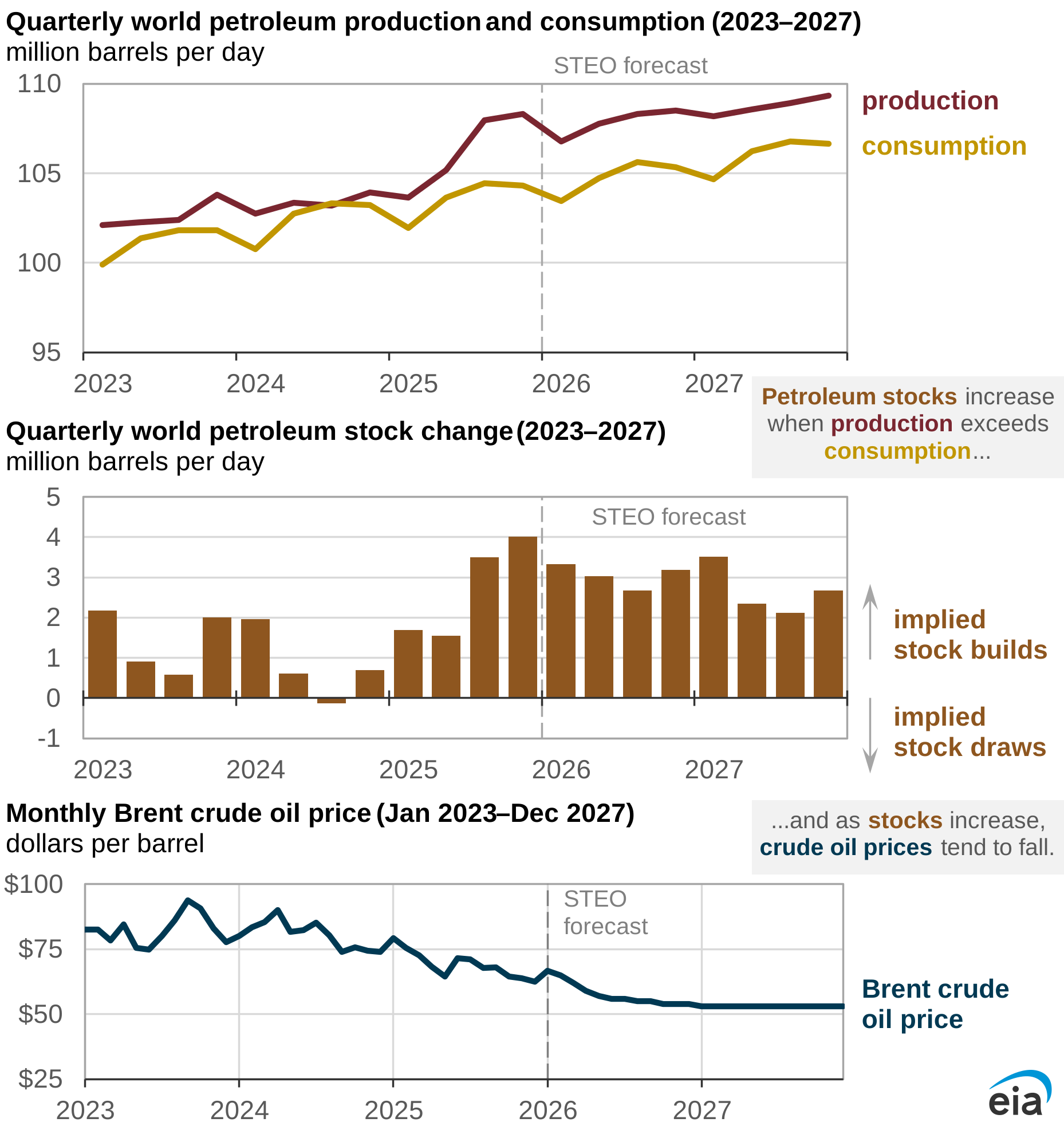
We forecast that production of petroleum and other liquids will continue to exceed global demand, which results in Brent crude oil prices falling from an average of $69 per barrel (b) in 2025 to $58/b in 2026 and $53/b in 2027. Crude oil prices tend to decrease as global petroleum stocks increase. Persistently high implied global oil inventory builds in the near-term are putting downward pressure on crude oil prices despite heightened uncertainty around the volume of crude oil exports from Russia and Venezuela.
We estimate implied global inventory changes in the Short-Term Energy Outlook (STEO) as the difference between global oil supply and demand. Global oil inventories have been growing as OPEC+ members have increased their production targets. We also expect that countries outside of the OPEC+ agreements, especially the South American countries Brazil, Guyana, and Argentina, will increase their output this year and next year. This production growth, combined with slower growth in global petroleum demand, has gradually pushed crude oil prices lower since early 2024.
China’s strategic stockpile and trends in floating storage have increased non-OECD inventories
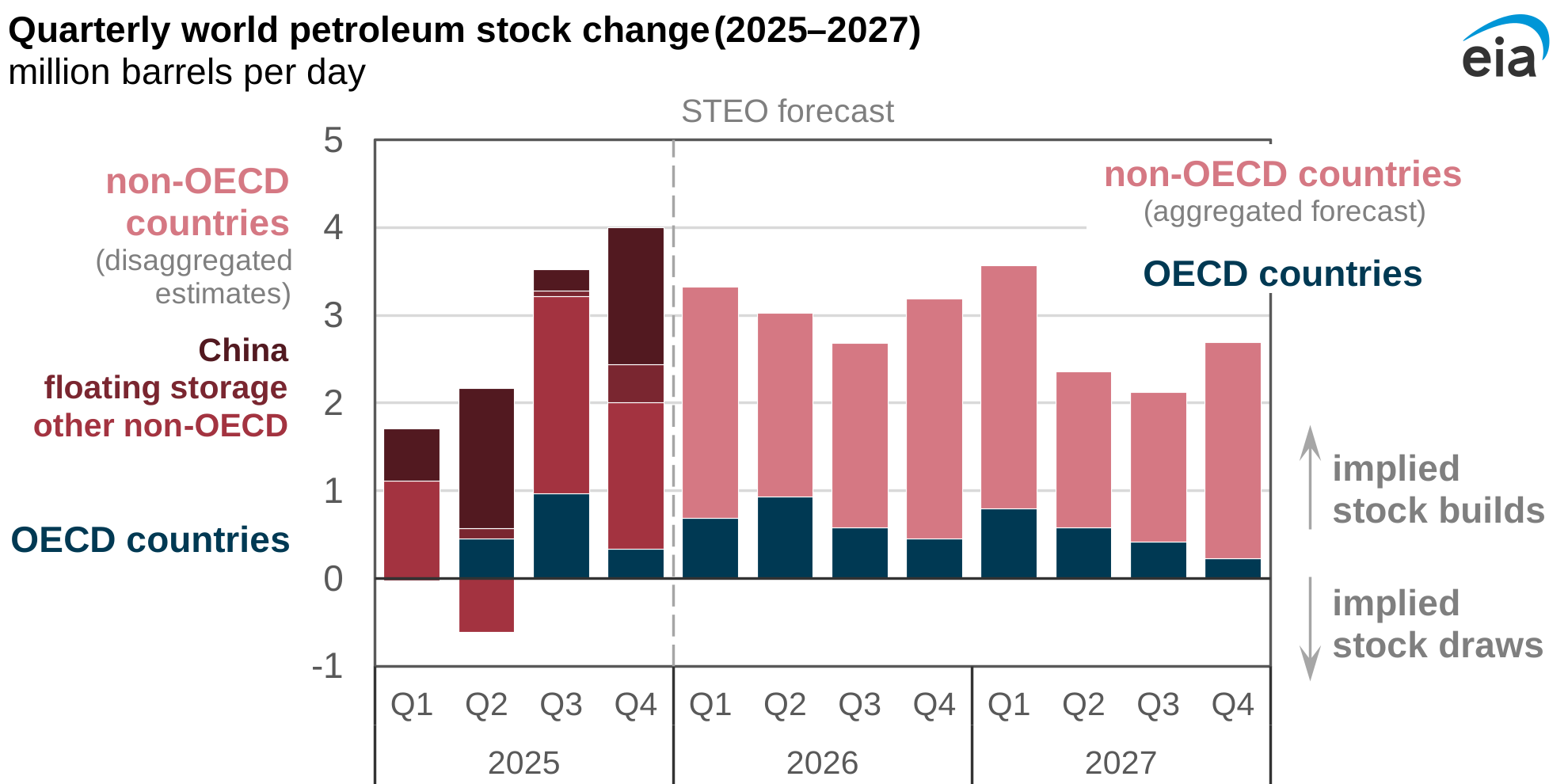
One factor affecting prices in our forecast has been the buildup of strategic oil stockpiles in China. At the same time oil supply growth has increased and crude oil prices have fallen, China has purchased more crude oil to place into strategic inventories. This buildup has, in a way, acted as a secondary source of oil demand.
Data values: International Petroleum and Other Liquids Production, Consumption, and Inventories
Note: Estimates of past non-OECD stock changes were derived from China National Bureau of Statistics, Vortexa Analysis, Argus Media, and Global Trade Tracker.
About half of our estimated 2.3 million barrels per day (b/d) of non-OECD inventory builds in 2025 can be attributed to strategic oil stocks in China and increases to floating storage for sanctioned oil volumes. We expect China will continue to fill its strategic reserves in 2026 and 2027 at a similar rate as in 2025: about 1.0 million b/d.
As a result of obscured crude oil trade and increased oil flows towards less observable non-OECD inventories, as well as China’s demand for strategic stock builds, major global benchmark crude oil prices like Brent have not fallen as much as our implied inventory growth in the STEO would otherwise suggest.
OECD commercial stocks are also increasing
Although much of the crude oil inventory builds are going to China and other markets that are harder to observe, stocks are also increasing in OECD nations, which collectively accounted for an estimated 44% of global petroleum consumption in 2025. As OECD commercial storage options begin to fill, the higher marginal cost of storage should prompt market participants to seek other, more expensive options for storing crude oil, which would result in lower crude oil prices and slower global oil production growth over the STEO forecast.
Principal contributors: Sean Hill, Jimmy Troderman