U.S. Energy Information Administration logo
Skip to sub-navigation
In-brief analysis
June 26, 2024

U.S. energy production exceeded consumption by record amount in 2023
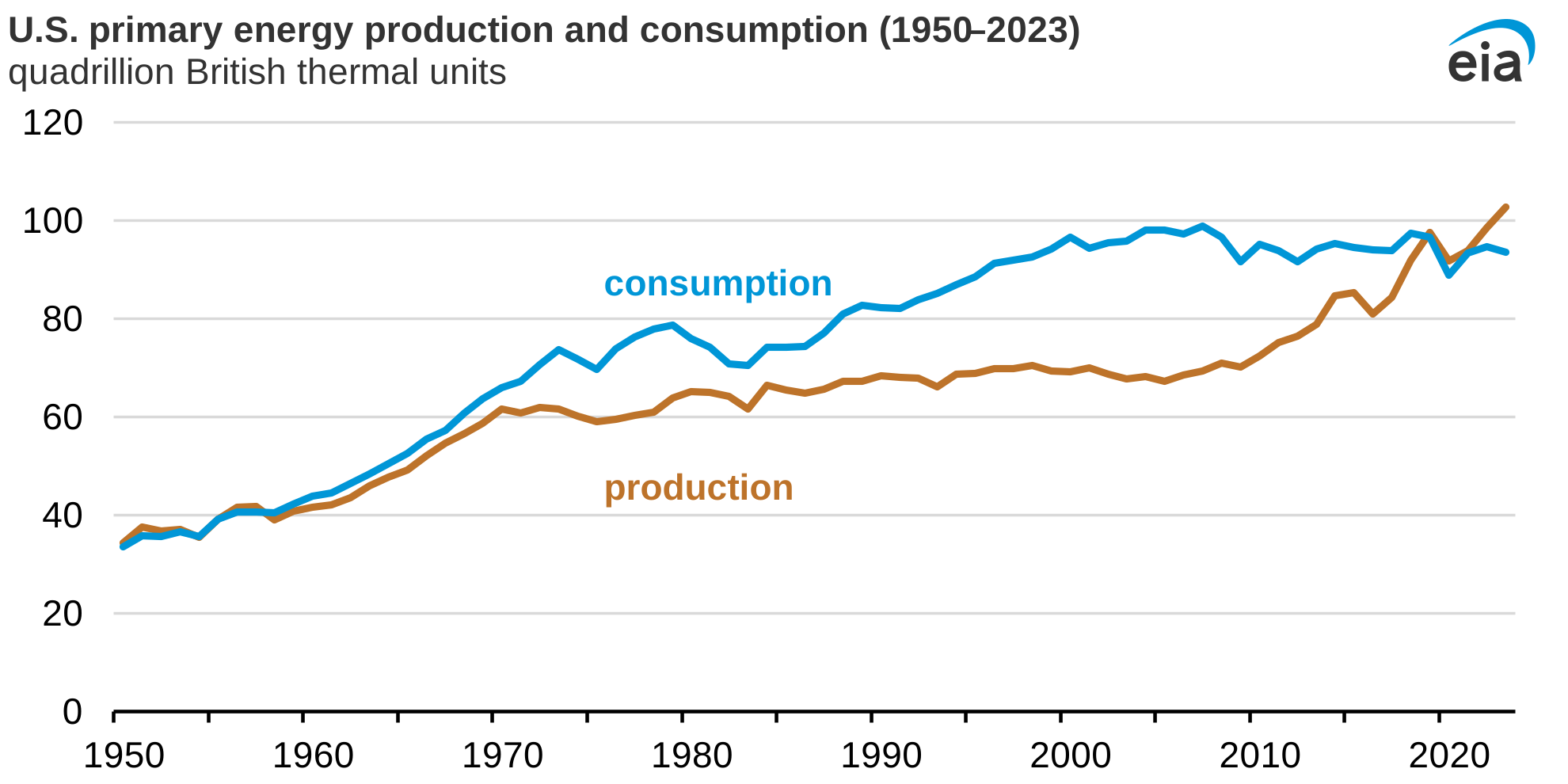
U.S. primary energy production and consumption

Data source: U.S. Energy Information Administration, Monthly Energy Review

In 2023, energy production in the United States rose 4% to nearly 103 quadrillion British thermal units (quads), a record. Energy consumption in the United States fell 1% to 94 quads during the same period. Production exceeded consumption by 9 quads, more than at any other time in our records, which date to 1949.
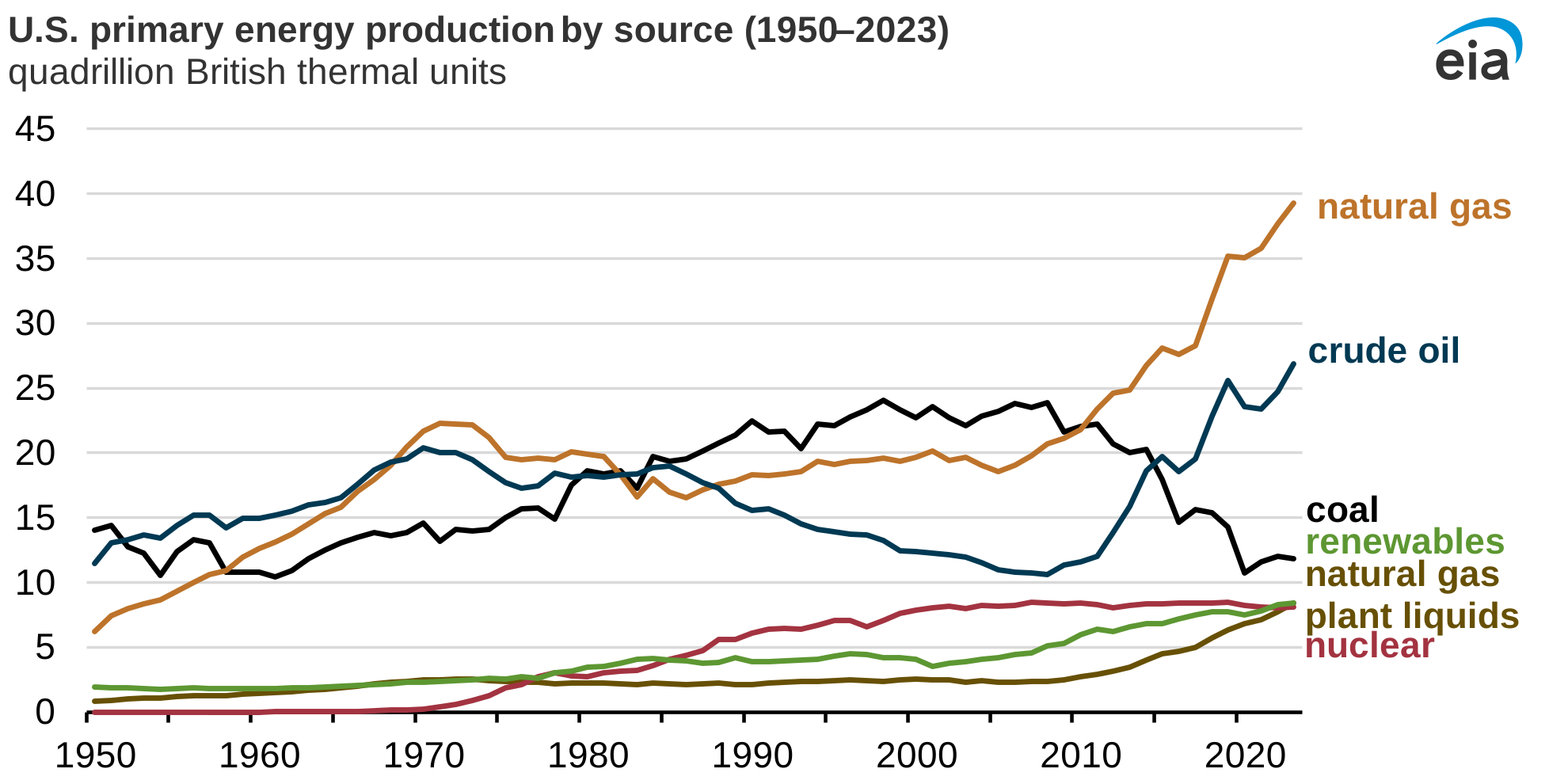
U.S. primary energy production by source
Data source: U.S. Energy Information Administration, Monthly Energy Review

To compare different types of energy reported in different types of physical units (such as barrels, cubic feet, tons, and kilowatthours), we convert sources of energy to common units of heat called British thermal units (Btu). Noncombustible renewable sources such as hydroelectric and solar energy are converted to Btu using the constant conversion of 3,412 Btu per kilowatthour.

The increase in total U.S. energy production was driven largely by growth in the production of natural gas and crude oil in 2023. Dry natural gas production grew 4% to a record 39 quads in 2023, growing 58% since 2013. Crude oil production grew 9% from 2022 and reached a record of 27 quads in 2023, a 69% increase since 2013. Production of natural gas plant liquids, a byproduct of natural gas production, increased by 8% from 2022 to 8 quads in 2023. Natural gas plant liquids production has increased by 143% since 2013.

Energy production from renewable sources increased 1% from 2022 to a record 8 quads in 2023, a 28% increase since 2013. Solar energy production grew by 15% last year, reaching almost 1 quad, and biomass energy production grew nearly 2% to more than 5 quads. Wind production fell last year by 2% to about 1.5 quads, with wind speeds slower last year.
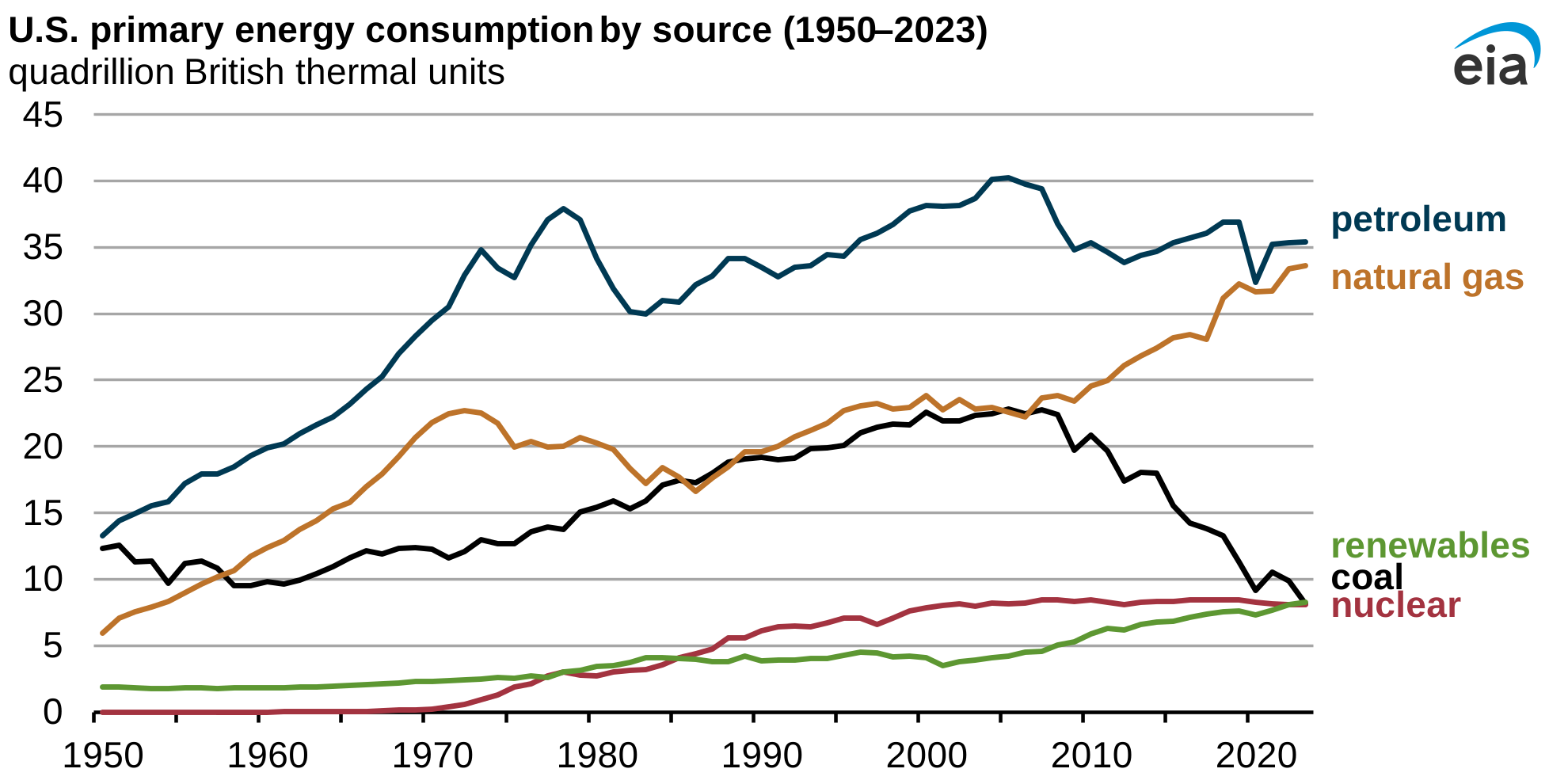
U.S. primary energy consumption by source
Data source: U.S. Energy Information Administration, Monthly Energy Review

U.S. energy consumption declined slightly in 2023. Since reaching a record 99 quads in 2007, U.S. energy consumption has fluctuated between 89 quads and 97 quads per year. The combined consumption of petroleum and natural gas, the most-consumed energy sources in the United States in 2023, remained virtually unchanged from 2022 to 2023. Coal consumption fell 17% to 8 quads, the least since the 19th century, largely due to decreased use of coal for electricity generation.

Principal contributor: Brett Marohl

Statistics
Analysis
Tools
Education
News

Petroleum & Other Liquids

Crude oil, gasoline, heating oil, diesel, propane, and other liquids including biofuels and natural gas liquids.

Natural Gas

Exploration and reserves, storage, imports and exports, production, prices, sales.

Electricity

Sales, revenue and prices, power plants, fuel use, stocks, generation, trade, demand & emissions.

Coal

Reserves, production, prices, employment and productivity, distribution, stocks, imports and exports.

Nuclear & Uranium

Uranium fuel, nuclear reactors, generation, spent fuel.

Renewable & Alternative Fuels

Includes hydropower, solar, wind, geothermal, biomass and ethanol.

EIA Survey Forms

Forms EIA uses to collect energy data including descriptions, links to survey instructions, and additional information.

Total Energy

Comprehensive data summaries, comparisons, analysis, and projections integrated across all energy sources.

U.S. States

State energy information, including overviews, rankings, data, and analyses.

International

International energy information, including overviews, rankings, data, and analyses.

Environment

Greenhouse gas data, voluntary reporting, electric power plant emissions.

Data Tools, Apps, & Maps

Tools to customize searches, view specific data sets, study detailed documentation, and access time-series data.

Open Data

EIA's free and open data available as API, Excel add-in, bulk files, and widgets

EIA Beta

Come test out some of the products still in development and let us know what you think!

Open Source Code

EIA's open source code, available on GitHub.

RSS Feeds

Subscribe to feeds for updates on EIA products including Today in Energy and What's New.