
Waste-to-energy plants are a small but stable source of electricity in the United States
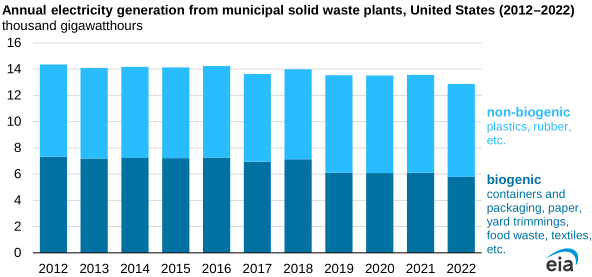
Commonly known as waste-to-energy (WTE) plants, facilities that burn municipal solid waste (MSW), or garbage, in boilers to produce steam are a small but steady source of electric power in the United States.
Over the last decade, WTE plants in the United States generated around 14,000 gigawatthours (GWh) of electricity each year, according to data from our Power Plant Operations Report. Although that amount accounts for less than 1% of electricity generation in the United States, the facilities are a consistent source of baseload power. Baseload power is electricity that is generated at a steady rate all the time to meet electricity demand.
At the beginning of 2022, 60 WTE plants were operating in the United States, with a total generating capacity of 2,051 megawatts (MW). The plants are located throughout the country, and the majority are in urban areas along the East Coast. WTE plants are relatively small, with an average size of 34 MW. No single WTE plant currently in operation has a generating capacity greater than 100 MW.
Fuel for WTE plants is primarily composed of residential solid waste but also includes some non-hazardous wastes from commercial, institutional, and industrial sources.
WTE plants benefit from having access to a reliable, inexpensive energy source as part of their role in helping to dispose of MSW. Often WTE plants receive tipping fees, which are payments to facilities to take waste materials. However, despite the low cost of the energy source and the tipping fees, which can be an additional source of revenue, WTE facilities tend to be expensive to build and operate, especially to control emissions.
About 90% of the energy produced by WTE plants is delivered to the electric grid. The remaining 10% consists of steam that some WTE facilities send to nearby industrial plants and institutions.
WTE plants burn two types of MSW. One is made up of biogenic components, mostly consisting of organic material, including paper. The other is made up of non-biogenic material, such as plastics. Over the past several years, the share of non-biogenic material being combusted has increased because more plastics and less paper and paper products are being discarded.
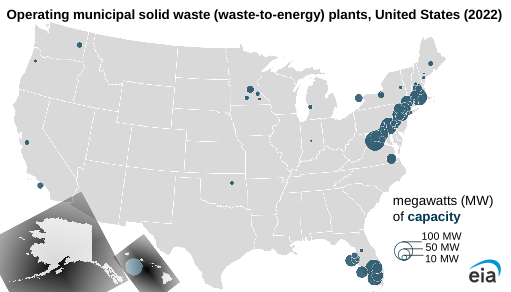
The increased share of non-biogenic material typically improves the output from WTE facilities because certain plastics have a higher heat content than many biogenic materials, such as yard trimmings. In 2022, WTE facilities consumed 16.0 million tons of biogenic waste material and 10.3 million tons of non-biogenic waste material.
Principal contributor: Mark Morey
Tags: generation, electricity, waste-to-energy, power plants, map, renewables