
Pennsylvania sent more electricity to neighboring states than any other state in 2020
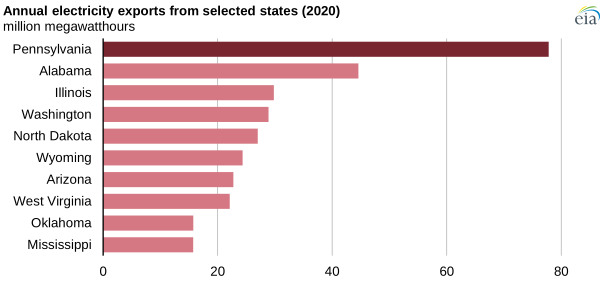
Nearly 78 million megawatthours (MWh) of electricity generated in Pennsylvania was delivered to neighboring states in 2020, more than from any other state, according to our State Electricity Profiles. More than 230 million MWh of electricity was generated in Pennsylvania during 2020, exceeding electricity generation in all states except for Texas and Florida.
Electricity retail sales in Pennsylvania totaled 140 million MWh in 2020, and after direct use and transmission losses, the remaining electricity was sent to other states.
Natural gas accounted for about 52% of all the electricity generated from both utility- and small-scale facilities in Pennsylvania in 2020, up from 15% in 2010. Natural gas surpassed nuclear in 2019 as the state’s largest source of generation. Nuclear energy accounted for 33% of the electricity generation in Pennsylvania in 2020. Pennsylvania had the second-highest level of nuclear generation among states in 2020, after Illinois. Coal, which was Pennsylvania’s leading source of electricity generation until 2015, accounted for nearly half of the state’s electricity generation in 2010. But by 2020, coal accounted for 10% of Pennsylvania’s electricity generation. During the recent cold weather in January 2022, coal generated more electricity than in the recent past.
Renewable electricity, including wind, hydro, biomass, and solar, accounted for 4% of Pennsylvania’s electricity generation in 2020, up from 3% in 2010. Renewable generation increased by nearly 50% from 2010 to 2020. Pennsylvania’s wind power generation more than doubled from 2010 to 2020. Solar power generation doubled from 2015 to 2020. Over the past decade, wind power and hydroelectricity have alternated as the state’s leading renewable generation source because hydroelectric output fluctuates with rainfall.
Additional state-level analysis for all types of energy is available in our State Energy Portal.
Principal contributor: Brett Marohl
Tags: electricity, Pennsylvania, exports/imports, states