
Pre-Labor Day retail gasoline prices at highest level since 2014
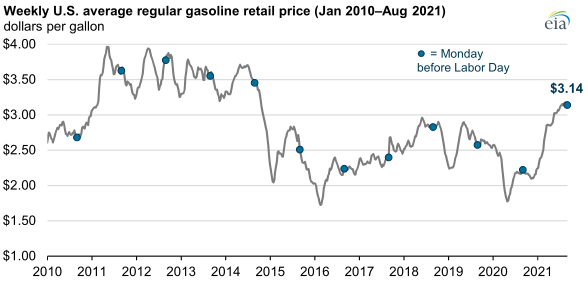
On August 30, 2021, the Monday before Labor Day weekend, the U.S. retail price of regular gasoline averaged $3.15 per gallon (gal), an increase of 92 cents/gal (42%) compared with the same time in 2020, according to our Gasoline and Diesel Fuel Update. Pre-Labor Day gasoline prices have increased to their highest levels since 2014.
After the onset of the COVID-19 pandemic in March 2020, U.S. retail gasoline prices fell and eventually declined below $2.00/gal, and they remained below $2.50/gal through the end of 2020. Increasing mobility because of rising COVID-19 vaccination rates in the United States, lower gasoline inventories, and higher crude oil prices all contributed to rapidly increasing gasoline prices. U.S. average regular gasoline retail prices increased to above $3.00/gal beginning in May 2021.
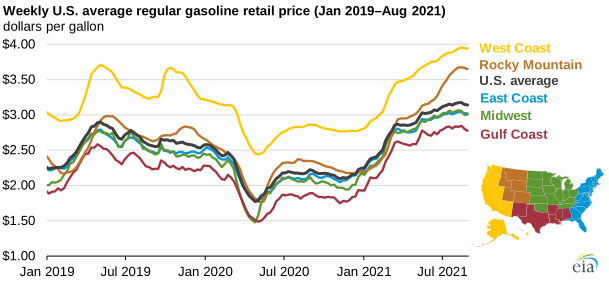
U.S. gasoline prices vary regionally, reflecting local supply and demand conditions, different fuel specifications required by state laws, and taxes. Regional gasoline prices are usually the highest on the West Coast because of the region’s limited interconnections with other major refining centers (including the Gulf Coast), tight local supply and demand conditions, and requirements for gasoline specifications that are more costly to manufacture. West Coast prices as of August 30 were $3.94/gal, an increase of $1.08/gal (38%) over the same time last year.
The Rocky Mountain region faces similar logistical constraints as the West Coast, and particularly low inventories this year have contributed to gasoline retail prices averaging $3.65/gal, an increase of $1.30/gal (56%) over 2020. The year-on-year increase for the Rocky Mountain region is the largest of the five U.S. regions in both dollar and percentage terms.
The Gulf Coast accounted for 54% of the country’s total refining capacity as of January 2021, and it produces more gasoline than it consumes. As a result, the price of gasoline in the Gulf Coast is often the lowest in the United States. As of August 30, the average retail gasoline price for the Gulf Coast was $2.77/gal, an increase of 89 cents (47%) compared with the same time last year.
On the East Coast, the largest gasoline demand market of the five regions, retail gasoline prices were $3.02/gal on August 30, an increase of 86 cents (40%) compared with 2020. Midwest prices increased 88 cents (42%) compared with 2020, at $3.00/gal this year. The Midwest and East Coast prices were the closest to the U.S. average price.
Principal contributor: Kevin Hack