
Japan’s electricity prices rising or stable despite recent fuel cost changes
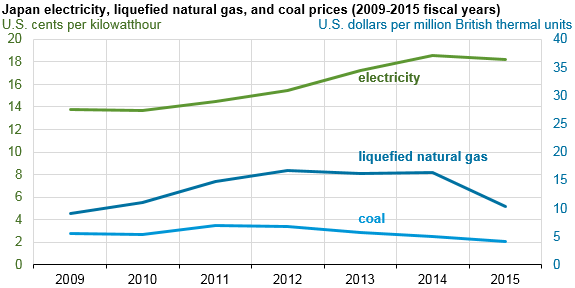
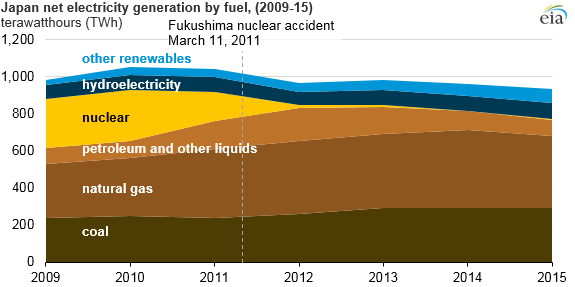
As Japan's electricity generation mix shifted away from nuclear energy toward the increased use of coal and natural gas after the Fukushima accident, Japan became increasingly reliant on generating electricity using imported coal and liquefied natural gas (LNG). However, even as the imported cost of coal and LNG declined, Japan's electricity price increased. According to data from Japan's 10 major utilities, the average retail electricity price rose for four consecutive fiscal years (2011–14). In fiscal year 2015, as LNG prices fell by 37% and coal prices fell by 19%, Japan's retail electricity price fell by 2%.
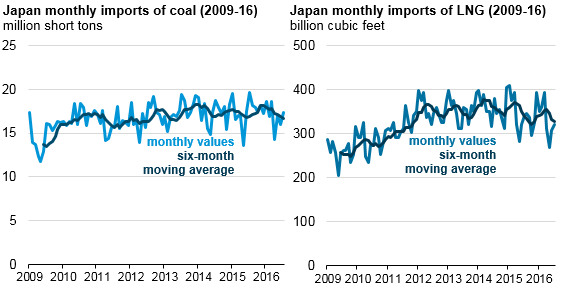
Because Japan has little or no domestic resources of natural gas or coal, the country relies heavily on imports of these fuels. As nuclear generation was shut down following the incident at the Fukushima Dai-ichi plant, electricity generation from coal and natural gas plants increased. From 2011 through 2014, Japanese imports of LNG and coal increased by 8% and 9%, respectively.
In 2015, however, LNG imports decreased for the first time since 2009, as low coal prices led to increased imports of coal. LNG prices fell 37% from 2014 to 2015 as a result of oversupply in the global LNG market, but this price decrease was not enough to make LNG imports more economic than lower-priced coal, particularly as Japanese utilities dealt with stagnant or declining electricity demand. Continued price drops could lead to increased imports of LNG in the near future, as LNG supply continues to grow and transportation logistics provide access to new markets. However, the long-term potential for LNG demand growth in Japan is limited.
Ten regional utility companies currently supply more than 90% of the electricity in Japan. Each of these companies has been a monopoly in its region. Believing more competition could ease the price pressure on consumers, Japan initiated reforms aimed at deregulating the electricity sector in three phases by 2020. The first phase established an independent system operator to dispatch electricity across the national grid in 2015. On April 1, 2016, regional monopoly control of existing utilities was removed, so competition could enter the market and give consumers the choice of supplier. The removal of pricing regulations and unbundling of the utilities' transmission, distribution, and retail businesses are the final steps in deregulating Japan's electricity market by 2020.
Japan is looking to restart a portion of its nuclear fleet and increase coal capacity in order to continue lowering its electricity prices. Japan restarted two nuclear reactors at their Sendai nuclear plant in 2015. Two additional reactors at the Takahama nuclear plant had been restarted by early 2016. However, on March 9, 2016, a court-ordered injunction called for a shutdown of the Takahama reactors. Another reactor, Ikata Unit 3, was restarted in early August.
Principal contributor: Andrew Estes