U.S. Energy Information Administration logo
Skip to sub-navigation
May 19, 2014

Industrial facilities get most of their electricity from the grid
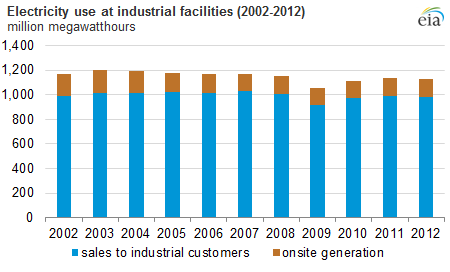
graph of electricity use at industrial facilities by year, as explained in the article text
Source: U.S. Energy Information Administration, Electric Power Annual

Many industrial electric facilities have the economic option of generating their own electricity or pulling directly from the electric grid to run their processes, though most electricity use at industrial facilities comes from purchases through the grid. Traditionally, an industrial onsite generation project is developed by a facility that intends to meet its electric and heat demands on its own. In addition, recent reports on devastating, weather-related events have also identified increased system resiliency and operational benefits of onsite generation.
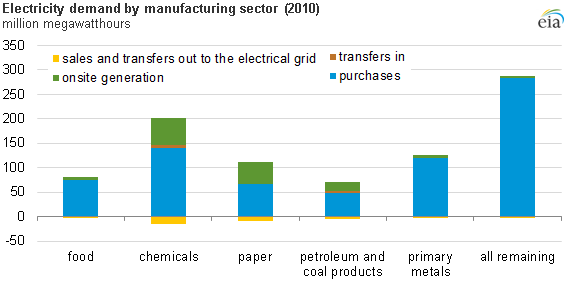
graph of electricity demand by industrial sector, as explained in the article text
Source: U.S. Energy Information Administration, Manufacturing Energy Consumption Survey, Table 11.1

Some facilities require generation onsite to produce both electricity and heat that is also used in their industrial process (these facilities are generally referred to as industrial combined heat and power, or CHP). Other facilities have smaller needs for electric generation and instead just pull electricity from the grid, similar to a commercial or residential building with no generation onsite, though small generator units do operate in the United States.

Large industrial customers (including both those with and without onsite generation) often participate in demand response or load management programs that allow grid operators to reduce the amount of electricity they are using in times of high demand. Recent extreme weather events such as Hurricane Sandy (and before that Hurricanes Isaac, and Irene) highlighted the benefits of onsite generation at industrial facilities as contributors to resiliency during widespread power outages.

Principal contributors: Mark Schipper, M. Tyson Brown

Statistics
Analysis
Tools
Education
News

Petroleum & Other Liquids

Crude oil, gasoline, heating oil, diesel, propane, and other liquids including biofuels and natural gas liquids.

Natural Gas

Exploration and reserves, storage, imports and exports, production, prices, sales.

Electricity

Sales, revenue and prices, power plants, fuel use, stocks, generation, trade, demand & emissions.

Coal

Reserves, production, prices, employment and productivity, distribution, stocks, imports and exports.

Nuclear & Uranium

Uranium fuel, nuclear reactors, generation, spent fuel.

Renewable & Alternative Fuels

Includes hydropower, solar, wind, geothermal, biomass and ethanol.

EIA Survey Forms

Forms EIA uses to collect energy data including descriptions, links to survey instructions, and additional information.

Total Energy

Comprehensive data summaries, comparisons, analysis, and projections integrated across all energy sources.

U.S. States

State energy information, including overviews, rankings, data, and analyses.

International

International energy information, including overviews, rankings, data, and analyses.

Environment

Greenhouse gas data, voluntary reporting, electric power plant emissions.

Data Tools, Apps, & Maps

Tools to customize searches, view specific data sets, study detailed documentation, and access time-series data.

Open Data

EIA's free and open data available as API, Excel add-in, bulk files, and widgets

EIA Beta

Come test out some of the products still in development and let us know what you think!

Open Source Code

EIA's open source code, available on GitHub.

RSS Feeds

Subscribe to feeds for updates on EIA products including Today in Energy and What's New.