
Rooftop solar photovoltaic systems account for 20% of Puerto Rico’s capacity mix
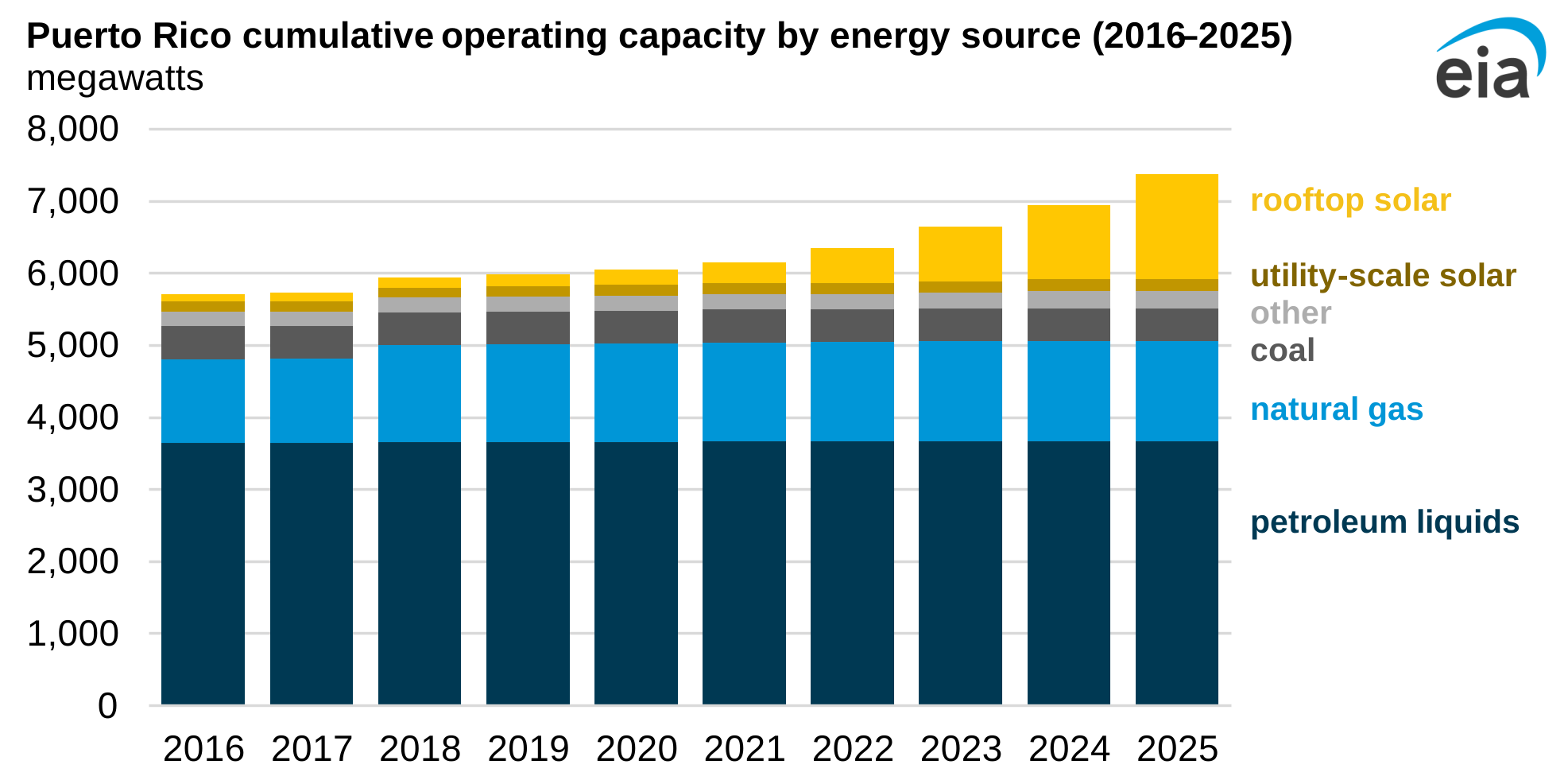
Note: Other includes conventional hydropower, landfill gas and other gases, onshore wind, and utility-scale batteries.
Rooftop solar generating capacity in Puerto Rico totaled 1,456 megawatts (MW) at the end of 2025, 20% of the overall capacity mix. Rooftop solar capacity has increased faster than other sources over the past decade. Between 2016 and 2025 rooftop solar installations accounted for 81% of the new generating capacity in Puerto Rico, according to data from our Electric Power Monthly and Puerto Rico Energy Bureau’s (PREB) Quarterly Report on System Data. In 2025, rooftop solar became the second-largest capacity source, after petroleum liquids capacity (3,671 MW), and surpassed natural gas capacity (1,391 MW).
Distributed generation resources, particularly rooftop solar coupled with battery systems, have grown as Puerto Rico has grappled with electricity reliability and frequent power outages. On average, 3,850 rooftop solar panel systems were installed in homes and businesses per month in 2025, with a cumulative 191,929 systems in place at the end of the year.
In addition to rooftop solar capacity, distributed battery storage has also increased in Puerto Rico. According to data from PREB, 171,372 households and businesses had a distributed battery storage system at the end of 2025, with a total energy capacity of 2,864 megawatthours.
Puerto Rico established net metering policies in August 2007 allowing rooftop solar owners to sell excess electricity to the grid. Last summer, Puerto Rico’s grid operator, LUMA, expanded the Customer Battery Energy Sharing program, allowing power stored in distributed battery storage units to supply power to the grid when the operator forecasts electricity supply shortages. Thousands of these batteries form systems known as virtual power plants (VPP). VPPs are an aggregation of geographically dispersed distributed energy resources, like batteries that can dispatch power to the grid as one singular power plant. Companies like Sunrun, Tesla, and others work with LUMA and manage these VPPs. Participating battery owners are financially compensated for exporting excess electricity to the grid.
Principal contributor: Lindsay Aramayo
Tags: solar, electricity, generation, capacity