
Nigeria was the top crude oil producer in Africa, but disruptions threaten production
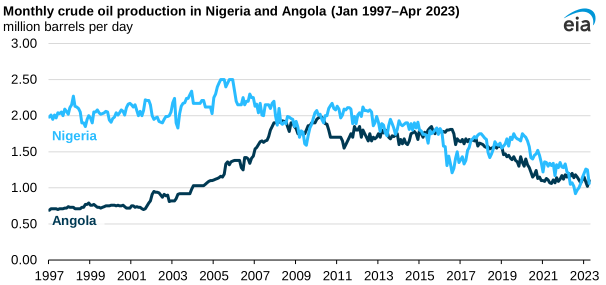
For many years, more crude oil was produced in Nigeria than in any other country in Africa. However, unplanned production outages—or disruptions—in Nigeria have, at times, resulted in its crude oil production falling below that of Angola, the second-highest producing country in Africa. Disruptions remain a significant and persistent downside risk to Nigeria’s crude oil production, according to our updated Country Analysis Brief: Nigeria.
After a decades-long civil war in Angola ended in 2002, Angola’s crude oil production grew rapidly and, in February 2008, briefly surpassed Nigeria’s crude oil production for the first time. Production in Angola has remained, for the most part, nearly the same as production in Nigeria since then. In 2016, disruptions to Nigeria’s crude oil production, stemming from militant attacks on oil export infrastructure, resulted in Angola surpassing Nigeria’s crude oil production for more than a year.
In the third quarter of 2022, operators of the Trans Niger pipeline and the Forcados export terminal closed their facilities for repairs. The closures triggered a sharp drop in Nigeria's crude oil output, from 1.1 million barrels per day (b/d) in the second quarter to below 1 million b/d in the third quarter. Nigeria’s production recovered by the beginning of 2023, but an oil workers’ strike disrupted production again in April 2023. Crude oil production in Nigeria fell to slightly more than 1 million b/d in April of this year, dropping below Angola’s production, which was estimated at 1.1 million b/d that month.
The Nigerian government has taken steps to make Nigeria more attractive for oil and natural gas investment. On August 16, 2021, the Petroleum Industry Act was passed in Nigeria. The legislation is the culmination of a 20-year effort to overhaul the hydrocarbon industry’s legal framework, attract investor interest in upstream development, and address grievances of communities affected by oil extraction. Changes to Nigeria’s hydrocarbons legal framework include:
- Creating two distinct industry regulators: the Nigerian Upstream Regulatory Commission and the Nigerian Midstream and Downstream Petroleum Regulatory Authority
- Restructuring the Nigerian National Petroleum Corporation (the national oil company)
- Lowering the tax and royalty structure for crude oil production
- Modifying terms and conditions for upstream licensing and leasing
Despite the legislative changes, oil theft and sabotage to export infrastructure continue to be major concerns because the damage causes production losses and environmental pollution. Crude oil disruptions often force oil companies to shut down production and limit their ability to export crude oil.
Principal contributors: Kimberly Peterson, Eric Han