
Commercial buildings have gotten larger in the United States, with implications for energy
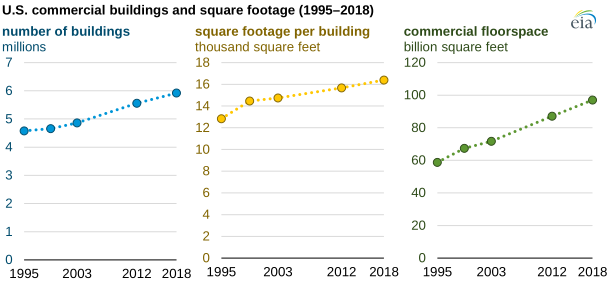
Commercial buildings have gotten larger in the United States as their floorspace continues to grow faster than the number of commercial buildings, according to preliminary results from the U.S. Energy Information Administration’s (EIA) 2018 Commercial Buildings Energy Consumption Survey (CBECS). CBECS estimates that 5.9 million U.S. commercial buildings contained a total of 97 billion square feet as of 2018. The number of commercial buildings increased by 6%, and commercial square footage increased by 11% since the CBECS was last conducted in 2012.
Lodging, health care, and public order and safety buildings saw significant growth in building stock between 2000 and 2018. More than one-third of the 2018 building stock in these categories was constructed after 2000. These buildings tend to be larger than the average commercial building in the United States, which contributed to the increase in commercial floorspace relative to commercial building stock.
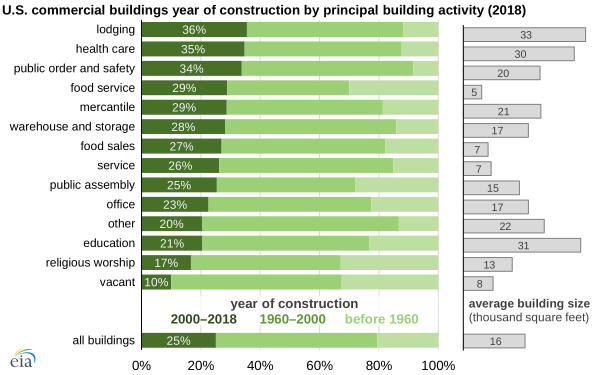
Building types that are more likely to be occupied more often, such as lodging, health care, and public order and safety, tend to be newer than building types that are less likely to be in constant use throughout the year, like religious worship, education, and vacant buildings.
More heating and cooling is required for buildings with longer operating hours. According to CBECS data for 2012, a building that was used for 80 hours a week consumed 86,300 British thermal units per square foot per year, while a building that was used for all 168 hours in a week consumed 126,200 British thermal units per square foot per year.
EIA's CBECS is the only nationally representative data collection for building characteristics and energy use for commercial buildings in the United States. The preliminary 2018 CBECS data, released on November 18, includes information on building counts, square footage, building activity, year of construction, and census region and division. EIA expects to publish more detailed building characteristic data in summer 2021, and in 2022 EIA will publish energy consumption and expenditure data based on information collected on respondents’ utility bills.
Principal contributors: Zack Marohl, Jen Taub, Chrishelle Lawrence