
Light-duty vehicles’ share of transportation energy use is projected to fall
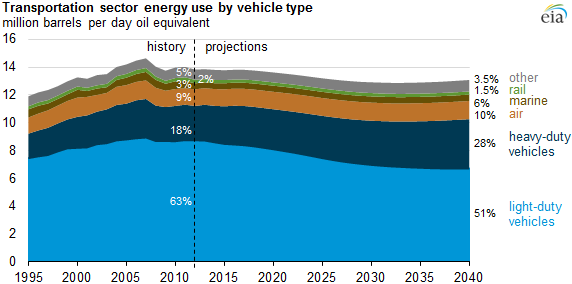
Transportation energy consumption, including energy demand from light-duty vehicles, heavy-duty vehicles, aircraft, marine vessels, rail, and other sources, reached 13.8 million barrels per day oil equivalent (boe/d) in 2012 (28% of all energy consumption in the United States), down from a peak of 14.6 million boe/d in 2007. In EIA's Annual Energy Outlook 2014 Reference case, light-duty vehicle energy consumption made up 63% of all transportation consumption in 2012, but its share is projected to drop to 51% in 2040. Heavy-duty vehicle energy consumption is projected to rise from 18% in 2012 to 28% of the total 13.1 million boe/d transportation energy consumption in 2040. The declining share of light-duty vehicles in transportation energy use over time is mainly the result of improvements in vehicle fuel efficiency.
The breakdown by vehicle type is as follows:
Light-duty vehicles (LDV). Light-duty vehicles include passenger and fleet cars and trucks with a gross vehicle weight rating (GVWR) of 8,500 pounds or less. Light-duty vehicle energy consumption can be influenced by vehicle fuel economy or through passenger behavior and vehicle use. LDV fuel efficiency, the number of vehicles on the road (vehicle stock and new sales each year), and the vehicle mix between cars and light-duty trucks are key factors that determine fuel consumption. Driving behavior, distance traveled, and driver response to fuel price and vehicle price also influence energy consumption by LDVs.
Heavy-duty vehicles (HDV). Heavy-duty vehicles include commercial vehicles (utility van, delivery truck, etc.), buses, and freight trucks (tractor trailers) with a GVWR of more than 8,500 pounds. HDV consumption can be affected by truck and bus efficiency, load factors, weight of freight haul, driving behavior, and vehicle technologies, including aerodynamics, and other factors.
Air. The air mode consists of three types of aircraft: regional, narrow-body, and wide-body jets. Energy consumption from the air mode can be affected by aircraft technology and efficiency, passenger and freight load factors, volume and type of freight moved, and distance traveled.
Marine. The marine mode consists of recreational boating, domestic shipping, and international shipping. Marine energy consumption can be affected by the marine vessel technology and efficiency, freight and passenger load factors, volume and type of freight moved, and distance traveled.
Rail. The rail mode includes both passenger rail (transit, intercity, and commuter) and freight rail. Rail energy consumption can be affected by rail engine technology and efficiency, freight and passenger load factors, and volume and type of freight moved by rail.
Other. This category includes pipeline transportation, military transportation fuel use, and lubricants.
Principal contributor: Trisha Hutchins