
Texas and New Mexico led U.S. crude oil production in 2022
Reposted to correct data errors.
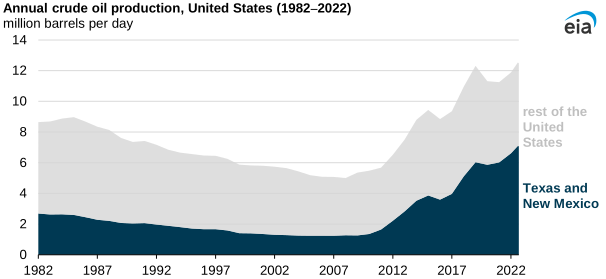
U.S. crude oil production grew 5.6%, or 0.6 million barrels per day (b/d), in 2022 compared with 2021, averaging 11.9 million b/d according to our Monthly Crude Oil and Natural Gas Production report. The two states the Permian Basin spans—Texas and New Mexico—contributed the most growth to U.S. crude oil production in 2022.
The Permian Basin, a productive oil basin located on the border of West Texas and eastern New Mexico, leads in oil production for these two states. In 2022, for the third consecutive year, crude oil production grew more in New Mexico than in any other U.S. state. New Mexico production grew by 0.3 million b/d to 1.6 million b/d, a record for the state.
Crude oil production in the rest of the United States grew by 0.6% (33,000 b/d). Of the eight remaining states with 0.1 million b/d or more of oil production in 2022, production increased from 2021 in five states and decreased in three states. Production in California decreased for the eighth consecutive year, and production in Alaska decreased for the fifth consecutive year. In North Dakota, which had been one of the leading states in oil production growth in the past decade, production declined for the third consecutive year in 2022.
More drilling activity leads to more oil production growth, and we follow the number of active drilling rigs reported by Baker Hughes. Based on this data, the number of land rigs increased by 8 in New Mexico, by 100 in Texas, and by 85 in all other states combined in 2022. In 2023, through the first week of May, the number of land rigs decreased in Texas by 8 and increased in New Mexico by 5.
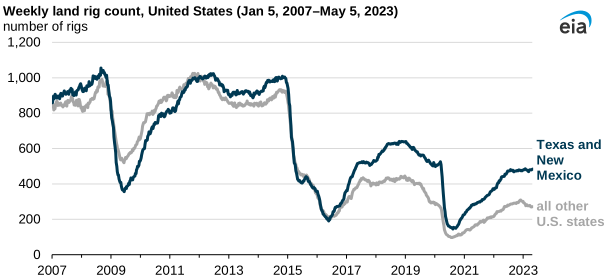
U.S. crude oil production continued to grow year over year by an average 1.2 million b/d in January and February 2023. We forecast U.S. crude oil production will continue to increase in 2023 and 2024. In our May Short-Term Energy Outlook, we forecast total U.S. crude oil production will climb to 12.5 million b/d in 2023 and to 12.7 million b/d in 2024.
Principal contributor: Merek Roman