
Hurricane Ian temporarily disrupts Florida’s gasoline supply chain
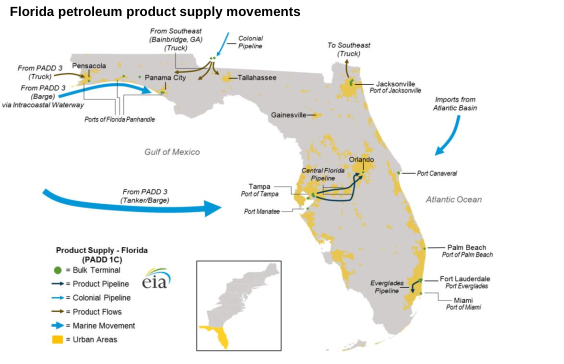
Hurricane Ian made landfall on Florida’s western coast on September 28 as a Category 4 hurricane. The hurricane-related rain and wind and the resulting flooding disrupted key gasoline supply chains to the state. Florida does not have any refineries or gasoline pipelines that connect it to states with excess supply. Florida's gasoline is delivered by ship from domestic and international sources. Because of the storm, several ports were temporarily closed, and the remaining ports were open with restrictions.
Florida’s gasoline arrives through several large ports located along its coastlines, each transporting fuel to nearby markets by truck and short-distance pipeline:
- Western Florida: trucked from terminals in the Port of Tampa
- Southern Florida: trucked from terminals in Port Everglades, just north of Fort Lauderdale
- Central Florida: transported by pipelines from Tampa (some petroleum products trucked from Port Canaveral on the Atlantic Coast)
- Northeastern Florida: trucked from terminals in the Port of Jacksonville
Some gasoline shipments arrive in Florida by both pipeline and truck. At a terminal in Bainbridge, Georgia, gasoline is transferred from the Colonial Pipeline system to a long-distance tanker truck for delivery to the Florida panhandle. Trucks and barges (moving by the Intracoastal Waterway) from nearby refineries in Alabama and Mississippi supply the rest of western Florida.
Shipments from domestic refineries along the Gulf Coast, supplemented with imports from abroad, supply most of Florida. In the first half of 2022, tanker and barge movements of gasoline from the Gulf Coast to the Lower Atlantic region (Florida, Georgia, North Carolina, South Carolina, Virginia, and West Virginia) averaged 414,000 barrels per day.
Hurricane Ian may also disrupt supply in other states, such as Georgia and South Carolina, which receive petroleum products shipped by pipeline from Gulf Coast refineries.
Principal contributors: Kevin Hack, Kimberly Peterson
Tags: production/supply, weather, gasoline, disruption, liquid fuels, Florida, states, map