
Nonpowered dams can be converted to hydroelectric dams for electricity generation
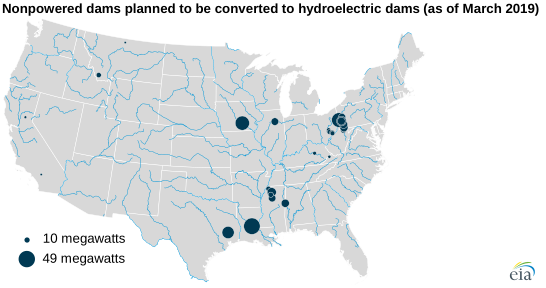
According to EIA’s most recent electric generator inventory, 32 dams that currently do not generate electricity are planned to be converted to hydroelectric dams, which will add more than 330 megawatts (MW) of electric generating capacity to the grid over the next several years.
The United States has more than 90,000 dams, but only 3% of those currently support hydroelectric generators. Those generators have a total hydroelectric capacity of nearly 80,000 MW as of February 2019. Other dams are used solely for water management or navigational purposes and are referred to as nonpowered dams (NPDs).
Although many NPDs lack the hydrological attributes to support electric power generation, a 2012 U.S Department of Energy report estimated that NPDs have 12,000 MW of potential capacity that could be used to increase U.S. hydroelectric generation. Project developers continue to pursue this potential by using existing waterway infrastructure to add hydroelectric generation capacity. The U.S. Congress passed the America’s Water Infrastructure Act of 2018, which, among other provisions, supports the development of new hydroelectric resources.
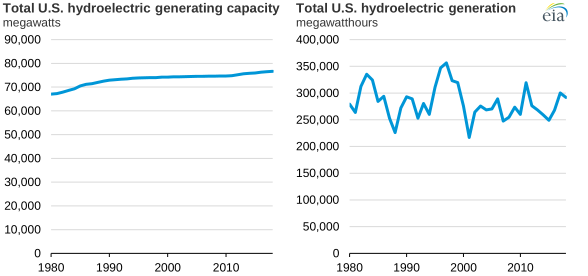
Recent growth in NPD projects is notable because conventional hydroelectric generation capacity growth has been relatively modest across the United States. Incremental capacity changes—either from adding generators to NPDs or from uprating existing units—are comparatively small on a national level but can be more meaningful on a state and watershed level.
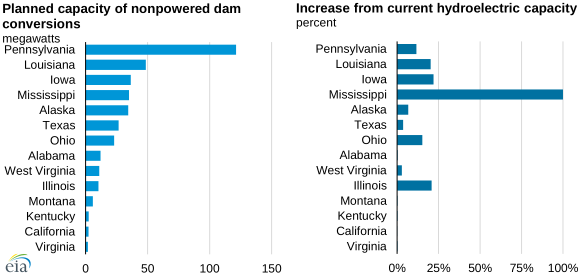
For example, if these projects are realized, the Ohio River will gain 66 MW and reach a total operational capacity of 750 MW, an increase of nearly 10%. Other rivers such as the Red River in Louisiana and the Allegheny River in Pennsylvania will also increase their hydroelectric capacity, by 49 MW (a nearly 50% increase) and 9 MW (nearly 20%), respectively. For other rivers, NPDs converted to hydroelectric dams will be the first utility-scale hydroelectric plants (those with a capacity of at least one megawatt) on the river. For example, the Muskingum River in southeastern Ohio, which currently has no hydroelectric capacity, would gain 23 MW.
Some states will also gain significant hydroelectric capacity. Proposed NPD projects will add 121.3 MW of hydroelectric generation capacity in Pennsylvania, 48.6 MW in Louisiana, and 36 MW in Iowa. As a result of these capacity additions, Pennsylvania, Louisiana, and Iowa will increase their hydroelectric capacity by about 12%, 20%, and 22%, respectively. Mississippi will gain its first hydroelectric capacity with the conversion of four dams in the state’s northwest totaling 35 MW.
The development of many generator sites within a close time frame by a single company can provide cost advantages related to permits, schedules, equipment, and construction management. For example, in 2016 and 2017, American Municipal Power developed 313 MW of NPD projects at Cannelton, Meldahl, Smithland, and Willow Island on the Ohio River.
Currently, of the 330 MW of NPD projects proposed, Rye Development is developing more than half (236 MW) at 22 NPDs in Kentucky, Louisiana, Mississippi, Ohio, Pennsylvania, and West Virginia.
Principal contributor: Alex Mey
Tags: generation, electricity, hydroelectric