U.S. Energy Information Administration logo
Skip to sub-navigation
July 17, 2015

U.S. nuclear outages are low during summer peak electricity demand season
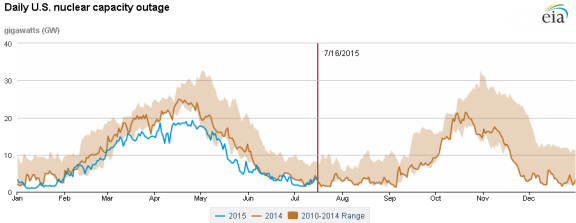
graph of daily U.S. nuclear capacity outage, as explained in the article text
Source: U.S. Energy Information Administration, Status of U.S. Nuclear Outages
Note: Outage data reflect only nuclear units that have operated or were intended to operate in the past year.

As the country reaches the summer peak electricity demand season, nearly all U.S. nuclear generators have returned from refueling outages. Total outages were less than 1.5 gigawatts (GW) on July 6, the lowest level since late January. Daily nuclear outage levels and plant-by-plant status updates can be found in EIA's new Status of U.S. Nuclear Outages page.

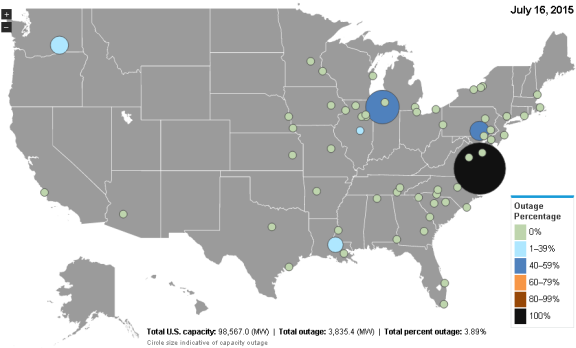
This analysis tool draws from data gathered by the EIA-860 and 860M surveys, as well as the Nuclear Regulatory Commission's Power Reactor Status Report. The page includes two maps showing the capacity and outage status of U.S. nuclear plants.
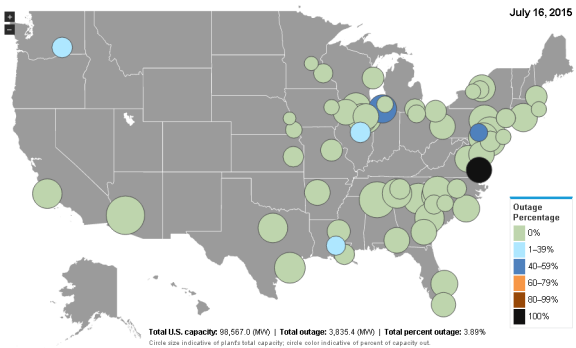
Graph of status of U.S. nuclear outages, as described in the article text

Source: U.S. Energy Information Administration, Status of U.S. Nuclear Outages

Graph of status of U.S. nuclear outages, as described in the article text

Source: U.S. Energy Information Administration, Status of U.S. Nuclear Outages

Nuclear power reactors are typically refueled every 18 to 24 months. Although the refueling process can be completed in as few as 10 days, outage periods are typically longer because of noncritical maintenance that is completed concurrently with refueling to minimize downtime over the course of the year.

Nuclear generators provide a large, baseload source of electricity and typically operate at maximum capacity around the clock. Nuclear plant operators generally plan refueling outages to occur during the fall and spring months when demand for electricity is usually at its lowest because of modest cooling or heating needs. Outage levels have been below the previous five-year range (2010-14) for much of this year and consistently lower than last year.

Principal contributors: Timothy Shear, April Lee

Statistics
Analysis
Tools
Education
News

Petroleum & Other Liquids

Crude oil, gasoline, heating oil, diesel, propane, and other liquids including biofuels and natural gas liquids.

Natural Gas

Exploration and reserves, storage, imports and exports, production, prices, sales.

Electricity

Sales, revenue and prices, power plants, fuel use, stocks, generation, trade, demand & emissions.

Coal

Reserves, production, prices, employment and productivity, distribution, stocks, imports and exports.

Nuclear & Uranium

Uranium fuel, nuclear reactors, generation, spent fuel.

Renewable & Alternative Fuels

Includes hydropower, solar, wind, geothermal, biomass and ethanol.

EIA Survey Forms

Forms EIA uses to collect energy data including descriptions, links to survey instructions, and additional information.

Total Energy

Comprehensive data summaries, comparisons, analysis, and projections integrated across all energy sources.

U.S. States

State energy information, including overviews, rankings, data, and analyses.

International

International energy information, including overviews, rankings, data, and analyses.

Environment

Greenhouse gas data, voluntary reporting, electric power plant emissions.

Data Tools, Apps, & Maps

Tools to customize searches, view specific data sets, study detailed documentation, and access time-series data.

Open Data

EIA's free and open data available as API, Excel add-in, bulk files, and widgets

EIA Beta

Come test out some of the products still in development and let us know what you think!

Open Source Code

EIA's open source code, available on GitHub.

RSS Feeds

Subscribe to feeds for updates on EIA products including Today in Energy and What's New.