
Fuel economy standards drive down projected gasoline use; diesel use, product exports rise
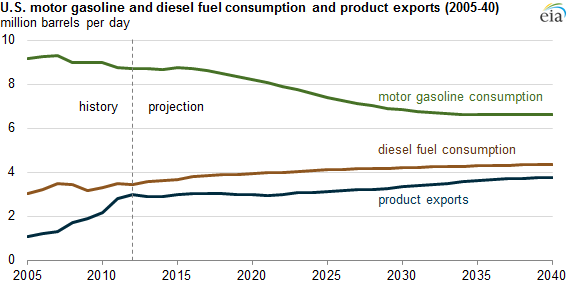
In the U.S. Energy Information Administration's Annual Energy Outlook 2014 (AEO2014) Reference case, more-stringent vehicle fuel economy standards contribute to a decline in motor gasoline consumption through 2040. At the same time, growth in heavy-duty vehicle miles traveled (VMT) is greater than increasing heavy-duty vehicle fuel economy, contributing to rising diesel fuel demand.
One of the primary drivers of the decrease in motor gasoline consumption is more stringent fuel economy standards that, based on National Highway Transportation Safety Administration (NHTSA) estimates, will require new light-duty vehicles to average about 49 miles per gallon in vehicle model year (MY) 2025, versus their current compliance estimate of about 33 miles per gallon in MY 2012. The Reference case projects an increase in VMT that, all else equal, would increase motor gasoline fuel consumption. However, higher fuel efficiency standards more than offset this increase to result in an overall decline in motor gasoline consumption.
In contrast to the projected decline in gasoline use, a strong increase in heavy-duty VMT leads to an increase in consumption of diesel fuel, even as heavy-duty vehicle fuel economy increases in response to EPA fuel efficiency and greenhouse gas emission standards. New refinery projects are expected to focus on shifting production from gasoline to distillate fuels to meet growing domestic and global demand for diesel. In addition to meeting domestic demand, refineries continue to export finished products to international markets throughout the projection. The United States became a net exporter of finished petroleum products in 2011, with net petroleum product exports growing in the Reference case through 2040.
The projections for gasoline and diesel use in the Reference case reflect current laws and policies, including fuel efficiency standards that have already been issued as final rules. Further efficiency standards and changes in travel behavior are key uncertainties that could result in future fuel use being different from the Reference case projections. Their potential effects are also considered in AEO2014 in side cases and an Issues in Focus article.
Principal contributor: Arup Mallik