
The United States exported more propane than distillate in 2020
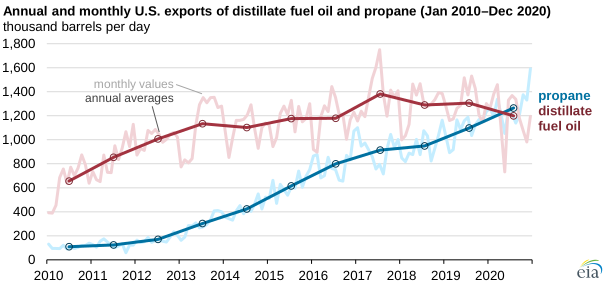
In 2020, according to the U.S. Energy Information Administration’s (EIA) Petroleum Supply Monthly, U.S. exports of propane reached record levels, increasing 13% and surpassing distillate fuel oil as the country’s top petroleum product export. U.S. exports of distillate fuel oil fell to its lowest level since 2016.
The increase in propane exports was driven by strong petrochemical and heating demand in Asia during a year of more U.S. production and less U.S. consumption. The United States experienced warmer-than-normal heating seasons in both the first and final months of the year, resulting in lower domestic propane consumption than in the previous two years.
Although natural gas and crude oil production fell in the United States during 2020, propane production at natural gas processing plants increased 5.6% from 2019, which more than outweighed the decline in refinery production of propane. In 2020, 76% of U.S. propane was produced at natural gas processing plants; the remaining 24% was produced at petroleum refineries.
Propane production outside of the United States decreased because major exporters such as Saudi Arabia and Russia reduced their propane production as a result of crude oil curtailments; most propane production in these countries is associated with crude oil. Expanded U.S. export capacity, along with increased domestic production and lower domestic consumption, allowed the United States to fill the supply gap and capture greater global market share. U.S. export capacity grew by an average of 330,000 barrels per day (b/d) during the second half of 2020.
In contrast, distillate fuel oil exports, which usually account for the largest share of U.S. petroleum product exports, decreased in 2020. U.S. distillate exports of 733,000 b/d in May 2020 were the lowest for any month since June 2011, mostly because of less global demand. Distillate demand and production remained relatively low for the remainder of the year, unlike propane demand and production.
U.S. distillate exports were also relatively low in the fourth quarter of 2020, when propane exports were at their highest. U.S. refiners may have faced increased competition in world distillate markets as a result of less expensive distillate from Europe. Spot prices for distillate from Europe were, on average, 12 cents per gallon (cents/gal) lower than U.S. New York Harbor distillate prices in the fourth quarter, compared with 7 cents/gal lower in the first three quarters.
Principal contributors: Josh Eiermann, Jimmy Troderman