
Residential heating oil and propane prices up from last winter
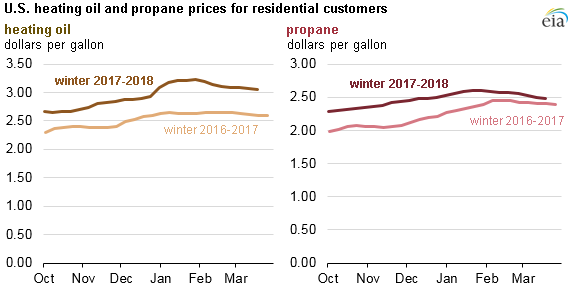
Residential heating oil and propane prices have been higher this winter than last winter. U.S. average heating oil and propane prices this season were 17% and 11% higher, respectively, because of slightly higher crude oil prices, colder winter temperatures, and lower fuel inventories than last winter.
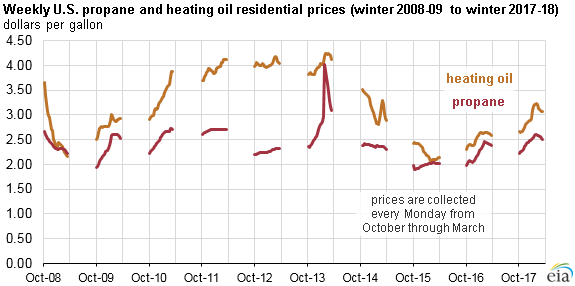
Prices for U.S. petroleum products such as heating oil and propane tend to follow changes in Brent crude oil spot prices, the most widely used global benchmark crude oil price. Last winter, Brent crude oil prices averaged $51 per barrel, but they have since increased, averaging $64/b from October through February. Because a barrel of oil contains 42 gallons, each dollar of change in the price of oil results in about a 2.4 cent-per-gallon change in the price of petroleum products such as heating oil, assuming no change in other price components, such as refinery margins or taxes.
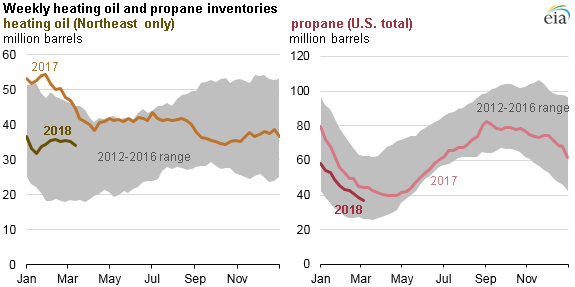
Although inventories of heating oil and propane have been lower this year than last year, they have still fallen within the range of values experienced in the previous five years. As of March 16, distillate fuel oil inventories in the Northeast (Petroleum Administration for Defense Districts 1A and 1B), where most heating oil is consumed, totaled 34.2 million barrels, 23% lower than at the same time last year. Total U.S. propane inventory levels were 36.8 million barrels as of March 16, 17% lower than at the same time last year.
EIA's State Heating Oil and Propane Program (SHOPP), a joint effort between EIA and state energy offices, collects state-level residential heating oil and propane price data in many states where residential use of heating oil and propane is common. SHOPP started in 1978 and has expanded over the years in response to greater need for timely price data during the winter—which is particularly valuable during periods of supply disruption to heating oil and propane markets. EIA publishes residential heating oil and propane prices each week from October through March.
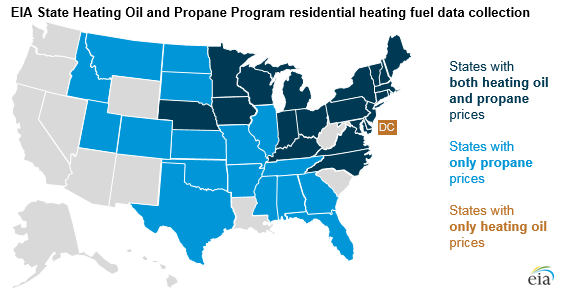
SHOPP data are used by state and federal governments, the press, policy makers, consumers, and analysts to monitor markets and to facilitate emergency response to supply shortages of these heating fuels during the winter months. SHOPP collects residential heating oil and propane data in 21 states. In 17 additional states, SHOPP collects propane prices but not heating oil prices, and in the District of Columbia, heating oil prices but not propane prices.
On March 18, EIA revised the reported residential propane price data from October 2 through December 11, 2017, to correct inconsistent reporting by respondents early in the season. The most significant revisions were for the month of October. On average, U.S. residential propane prices were underreported by 4.6 cents per gallon in that month. A comprehensive table of the price revisions is available on the Heating Oil and Propane Update webpage, where price data are made available each Wednesday at 1:00 p.m. Eastern Time. SHOPP price data are also available on the Winter Heating Fuels webpage.
Principal contributor: Marcela Rourk
Tags: heating oil, liquid fuels, map, oil/petroleum, prices, propane, residential, states