
Biomass and waste fuels made up 2% of total U.S. electricity generation in 2016
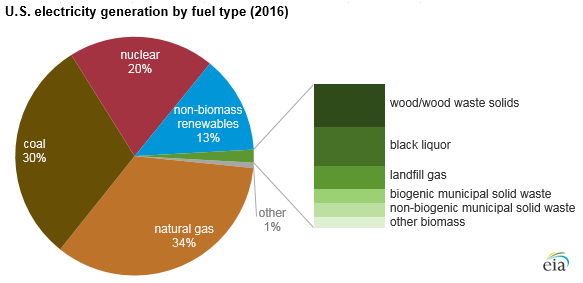
Note: Other biomass includes other biomass gas, tire-derived fuels, agricultural by-products, other biomass solids, other waste, wood waste liquids, sludge waste, and other biomass liquids.
Biomass and waste fuels generated 71.4 billion kilowatthours of electricity in 2016, or 2% of total generation in the United States, according to EIA’s recently released annual electric power data. Biomass fuels are defined as all non-fossil, carbon-based (biogenic) energy sources. Waste fuels are defined as all other non-biogenic wastes.
Wood solids accounted for nearly one-third the electricity generated from biomass and waste. Most wood solids come from one of three sources: logging and mill residues; wood, paper, and furniture manufacturing; and discarded large timber products, such as railway ties, utility poles, and marine pilings.
Fuels that are byproducts of chemically processing wood are known as wood-derived fuels. Almost all wood-derived fuels are waste that was created as a byproduct of making paper-related products. The dominant wood-derived fuel is black liquor, a byproduct of the kraft pulping process. Black liquor accounted for 27% of 2016 biomass- and waste-generated electricity. Other paper-making wastes used as fuel—including sludge waste, wood-waste liquids, and other biomass liquids—are also byproducts of the paper-making process, but combined they produced less than 0.5% of 2016 biomass-generated electricity.
Municipal solid waste (MSW), which comes from landfills, provided 20% of biomass- and waste-generated electricity in 2016. EIA estimates that 51% of MSW-based electricity came from biogenic sources—wood, paper, food, rubber, and yard trimmings were the most common sources. The remaining MSW came from non-biogenic sources such as plastics.
Landfill gas is created by decomposing organic material in landfills. Its composition is about half methane (the primary component of natural gas) and half carbon dioxide (CO2). Landfill gas provided nearly 16% of 2016 biomass-generated electricity.
The remaining biogenic fuels account for just 5% of biomass-generated electricity. Most other biomass gas generation comes from wastewater treatment plants. As a result of the steady and constant availability of this fuel source, other biomass gas-generating plants typically operate at high utilization rates. Other biomass solids include wastes that are byproducts of producing ethanol as well as crop-based and wood-based wastes. Agricultural biomass consists mostly of field crop residues and animal excretions.
Aside from non-biogenic municipal waste, the largest non-biogenic waste fuel is tire-derived fuel. Tire-derived fuel has one of the highest relative heat contents of any generating fuel. Tire-derived fuel provided less than 2% of biomass-generated electricity in 2016.
Principal contributor: Fred Mayes
Tags: biomass, electricity, generation