U.S. Energy Information Administration logo
Skip to sub-navigation
September 8, 2011

EPA rule requires SO2 emissions reduction from Texas coal power plants in 2012
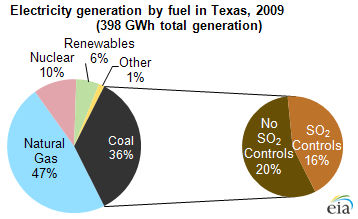
graph of electricity generation by fuel in Texas, 2009, as described in the article text
Source: U.S. Energy Information Administration, Form EIA-923 "Annual Power Plant Operations Report".
Download CSV Data

Starting in 2012, power plants in 23 states must meet new sulfur dioxide (SO2) emissions caps in order to comply with the Cross State Air Pollution Rule (CSAPR). Including Texas in CSAPR was a key difference between the final rule and the draft version released last year. The rule requires power plants in Texas to reduce SO2 emissions 53% below 2010 levels by 2012. Almost all SO2 emissions attributed to the power sector in Texas come from coal plants that do not have flue gas desulfurization (FGD or scrubber) units installed. Eleven percent of the available electric capacity in Texas consists of coal plants without scrubbers, and those plants generated 20% of the state's electricity in 2009.

Potential compliance strategies to meet CSAPR include switching to a lower sulfur coal or curtailing coal plant operations and replacing that generation with other sources that emit less or no SO2.

The Electric Reliability Council of Texas (ERCOT) and several power plant owners in the state have expressed concern that the rule would limit operations from plants without FGD scrubbers, and this might reduce reliability. The recent heat wave in Texas has strained the electricity supply system, breaking previous load records.
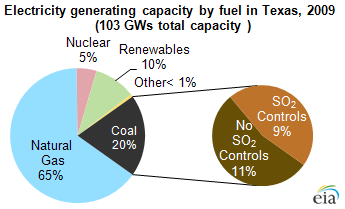
graph of electricity generating capacity by fuel in Texas, 2009, as described in the article text
Source: U.S. Energy Information Administration, Form EIA-860 "Annual Electric Generator Report".
Download CSV Data

Statistics
Analysis
Tools
Education
News

Petroleum & Other Liquids

Crude oil, gasoline, heating oil, diesel, propane, and other liquids including biofuels and natural gas liquids.

Natural Gas

Exploration and reserves, storage, imports and exports, production, prices, sales.

Electricity

Sales, revenue and prices, power plants, fuel use, stocks, generation, trade, demand & emissions.

Coal

Reserves, production, prices, employment and productivity, distribution, stocks, imports and exports.

Nuclear & Uranium

Uranium fuel, nuclear reactors, generation, spent fuel.

Renewable & Alternative Fuels

Includes hydropower, solar, wind, geothermal, biomass and ethanol.

EIA Survey Forms

Forms EIA uses to collect energy data including descriptions, links to survey instructions, and additional information.

Total Energy

Comprehensive data summaries, comparisons, analysis, and projections integrated across all energy sources.

U.S. States

State energy information, including overviews, rankings, data, and analyses.

International

International energy information, including overviews, rankings, data, and analyses.

Environment

Greenhouse gas data, voluntary reporting, electric power plant emissions.

Data Tools, Apps, & Maps

Tools to customize searches, view specific data sets, study detailed documentation, and access time-series data.

Open Data

EIA's free and open data available as API, Excel add-in, bulk files, and widgets

EIA Beta

Come test out some of the products still in development and let us know what you think!

Open Source Code

EIA's open source code, available on GitHub.

RSS Feeds

Subscribe to feeds for updates on EIA products including Today in Energy and What's New.