
U.S. biodiesel and renewable diesel imports increase 61% in 2015
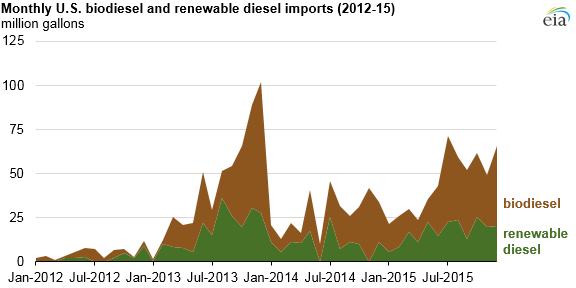
After reaching its highest level to date in 2013, U.S. imports of biomass-based diesel fuel (both biodiesel and renewable diesel) fell in 2014 amid uncertainty surrounding future Renewable Fuel Standard (RFS) targets and the elimination of the biodiesel blender's tax credit. As higher targets for biomass-based diesel were finalized in 2015, U.S. imports of biodiesel and renewable diesel increased by 61% in 2015 to reach 538 million gallons.
The strongest drivers of the increase in U.S. biomass-based diesel demand since 2012 have been increasing RFS targets and the biodiesel tax credit, which has lapsed and been reinstated several times. Biodiesel and renewable diesel qualify for the two major renewable fuel programs in the United States: the RFS applied at the national level, and the Low Carbon Fuel Standard (LCFS) in California. Biomass-based diesel fuels have additional advantages over other renewable fuels because of their relatively high energy content and low carbon intensity, which allow them to qualify for higher credit values in both renewable fuel programs.
Biodiesel and renewable diesel fuels are produced by refining vegetable oils or animal fats. Biodiesel is blended with petroleum diesel up to 5% or 20% by volume (referred to as B5 and B20, respectively). Renewable diesel is a diesel-like fuel that meets specifications for use in existing infrastructure and diesel engines, so it is not subject to any blending limitations.
Of the 334 million gallons of biodiesel imported into the United States in 2015, more than half (183 million gallons) were from Argentina. The U.S. Environmental Protection Agency's January 2015 approval of an RFS pathway for Argentine biodiesel volumes established a streamlined process for Argentina's biodiesel producers to generate Renewable Identification Number (RIN) credits. The remaining volumes of regular biodiesel imports were sourced primarily from Indonesia and Canada, at 73 million gallons and 61 million gallons, respectively. U.S. renewable diesel imports reached 204 million gallons in 2015, up 69% from the level in 2014. All U.S. renewable diesel imports in 2015 were sourced from Singapore and entered the United States primarily through West Coast ports, likely destined for California LCFS compliance.
Principal contributor: Sean Hill