U.S. Energy Information Administration logo
Skip to sub-navigation
April 18, 2014

Eleven states generated electricity from nonhydro renewables at double U.S. average
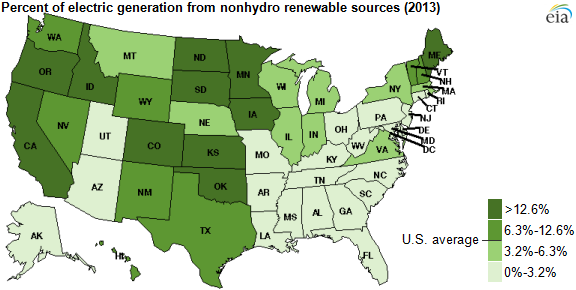
map of percent of electric generation from non-hydro renewable sources by state (2013), as explained in the article text
Source: U.S. Energy Information Administration, Electric Power Monthly

About 6.2% of total U.S. electricity supplies in 2013 were generated from nonhydro renewable energy sources such as wind, solar, biomass, and geothermal, up from 5.4% in 2012. But 11 states produced electricity at more than twice the national average from these sources—accounting for between 14% and 32% of their net electric generation—according to preliminary 2013 generation data in EIA's Electric Power Monthly report.

Maine led all states by generating 32% of its electricity from nonhydro renewables—primarily biomass generation by the wood products industry. The state had one-fourth of its net electric generation come from biomass resources.

Nearly all other states with high proportions of renewable generation relied primarily on wind power. Iowa and South Dakota each got more than 25% of their net electricity from wind generation, and Idaho, Kansas, Minnesota, North Dakota, Oklahoma, Oregon, and Colorado generated 12%-20% of their power from wind resources.

California generated more than 18% of its electricity from nonhydroelectric renewable sources, but 2013 was the first year that wind produced more electricity than the state's geothermal resources, which are the nation's largest. Biomass and solar generating resources also contributed to the state's renewable portfolio.

The largest amount of nonhydroelectric renewable power was generated in Texas, with California a close second. But Texas produced more electricity than any other state, so the proportion of nonhydroelectric renewable sources in its generation was about 9%.

Principal contributor: Tom Doggett

Statistics
Analysis
Tools
Education
News

Petroleum & Other Liquids

Crude oil, gasoline, heating oil, diesel, propane, and other liquids including biofuels and natural gas liquids.

Natural Gas

Exploration and reserves, storage, imports and exports, production, prices, sales.

Electricity

Sales, revenue and prices, power plants, fuel use, stocks, generation, trade, demand & emissions.

Coal

Reserves, production, prices, employment and productivity, distribution, stocks, imports and exports.

Nuclear & Uranium

Uranium fuel, nuclear reactors, generation, spent fuel.

Renewable & Alternative Fuels

Includes hydropower, solar, wind, geothermal, biomass and ethanol.

EIA Survey Forms

Forms EIA uses to collect energy data including descriptions, links to survey instructions, and additional information.

Total Energy

Comprehensive data summaries, comparisons, analysis, and projections integrated across all energy sources.

U.S. States

State energy information, including overviews, rankings, data, and analyses.

International

International energy information, including overviews, rankings, data, and analyses.

Environment

Greenhouse gas data, voluntary reporting, electric power plant emissions.

Data Tools, Apps, & Maps

Tools to customize searches, view specific data sets, study detailed documentation, and access time-series data.

Open Data

EIA's free and open data available as API, Excel add-in, bulk files, and widgets

EIA Beta

Come test out some of the products still in development and let us know what you think!

Open Source Code

EIA's open source code, available on GitHub.

RSS Feeds

Subscribe to feeds for updates on EIA products including Today in Energy and What's New.