U.S. Energy Information Administration logo
Skip to sub-navigation
February 10, 2022

Oil-fired generators helped meet electric demand in New England this January
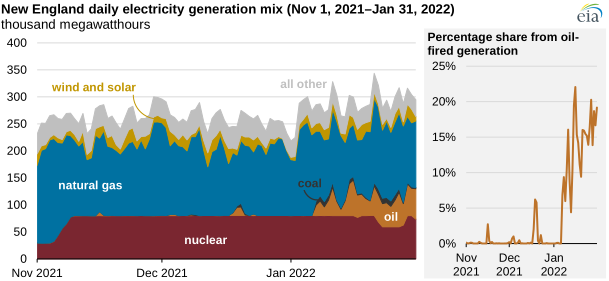
New England daily electricity generation mix
Source: U.S. Energy Information Administration, Hourly Electric Grid Monitor

As strong winter storms and cold temperatures blanketed the northeastern United States this January and increased the demand for electricity to heat homes and businesses, utilities used oil-fired generation to help meet electricity demand in New England. Although oil-fired generators are infrequently used in New England, they play an important role in meeting electricity demand in the region during times of high demand and limited supply of alternative fuel sources such as natural gas.

Cold weather and constraints on natural gas pipelines to New England can sometimes limit the availability of natural gas delivered to power plants during winter months. These constraints can increase the price of natural gas in the region. In response, some generators may switch to lower cost or more readily available sources, including petroleum liquids. In addition, some generators that were offline may be brought online.

Some generators can co-fire or switch between natural gas and petroleum sources such as distillate or residual fuel oil. Other generators are primarily fueled by oil and can be dispatched when the wholesale price of electricity is high enough that running the generator is economical. Of the approximately 35,000 megawatts (MW) of electric generating capacity in New England, petroleum liquids primarily fuel nearly 4,000 MW, according to data from our Annual Electric Generator Report. Natural gas primarily fuels another nearly 7,000 MW that has the ability to switch to petroleum liquids.

Principal contributor: M. Tyson Brown

Statistics
Analysis
Tools
Education
News

Petroleum & Other Liquids

Crude oil, gasoline, heating oil, diesel, propane, and other liquids including biofuels and natural gas liquids.

Natural Gas

Exploration and reserves, storage, imports and exports, production, prices, sales.

Electricity

Sales, revenue and prices, power plants, fuel use, stocks, generation, trade, demand & emissions.

Coal

Reserves, production, prices, employment and productivity, distribution, stocks, imports and exports.

Nuclear & Uranium

Uranium fuel, nuclear reactors, generation, spent fuel.

Renewable & Alternative Fuels

Includes hydropower, solar, wind, geothermal, biomass and ethanol.

EIA Survey Forms

Forms EIA uses to collect energy data including descriptions, links to survey instructions, and additional information.

Total Energy

Comprehensive data summaries, comparisons, analysis, and projections integrated across all energy sources.

U.S. States

State energy information, including overviews, rankings, data, and analyses.

International

International energy information, including overviews, rankings, data, and analyses.

Environment

Greenhouse gas data, voluntary reporting, electric power plant emissions.

Data Tools, Apps, & Maps

Tools to customize searches, view specific data sets, study detailed documentation, and access time-series data.

Open Data

EIA's free and open data available as API, Excel add-in, bulk files, and widgets

EIA Beta

Come test out some of the products still in development and let us know what you think!

Open Source Code

EIA's open source code, available on GitHub.

RSS Feeds

Subscribe to feeds for updates on EIA products including Today in Energy and What's New.